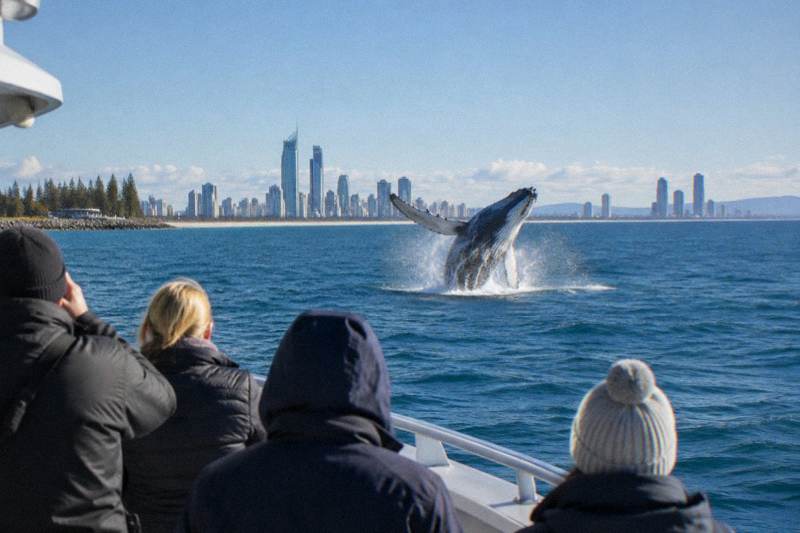
Where Is The Best Place In Queensland For Whale Watching?
A region by region comparison of Queensland whale watching: Hervey Bay, Moreton Bay, the Sunshine Coast and the Gold Coast, compared by season length, swim tours, travel time from Brisbane and who each place suits.
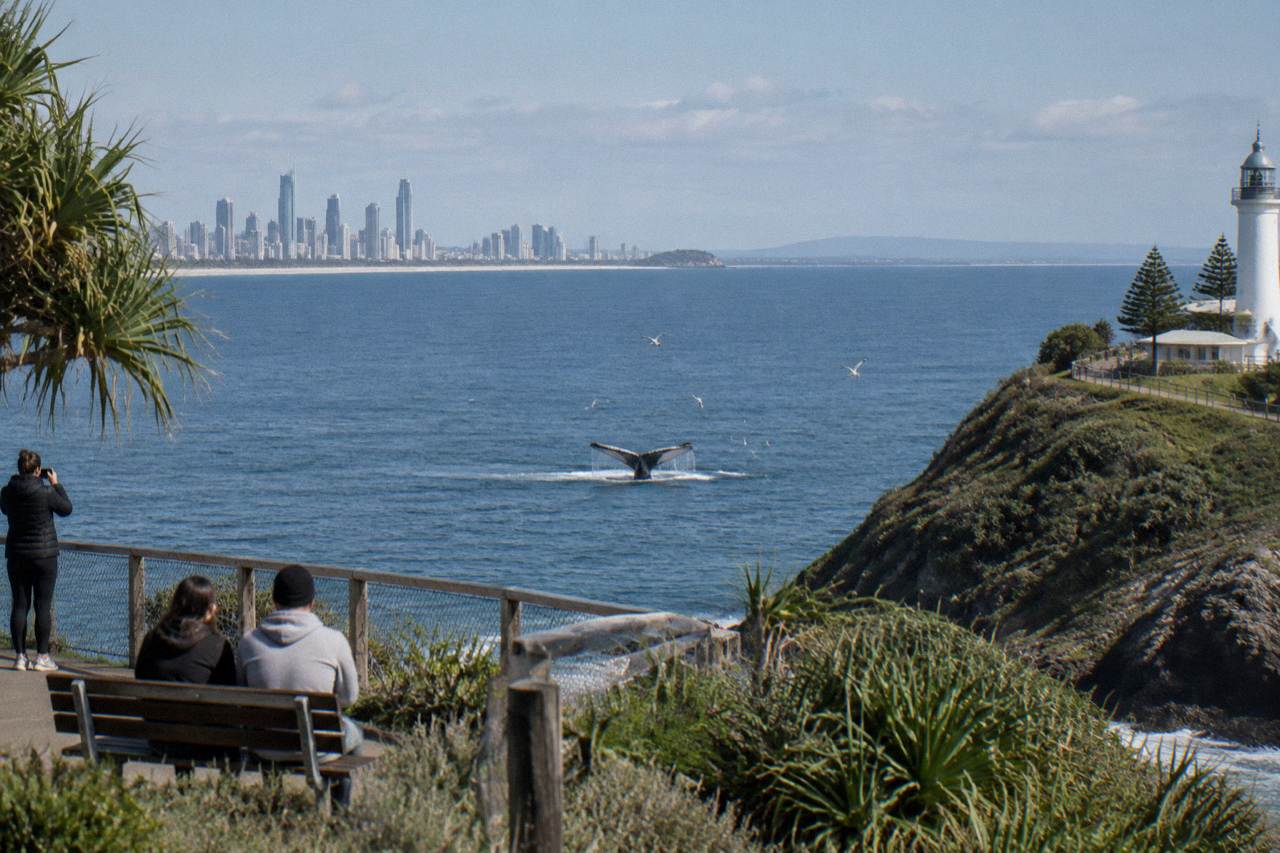
Humpback whales travel the entire Queensland coast between roughly May and November, which means the state offers more whale watching options than anywhere else in Australia. The east coast population is now estimated at more than 50,000 animals, up from about 8,000 in 2006, so the question is no longer whether you will find whales in Queensland but which departure point fits your trip. The four main regions, Hervey Bay, Moreton Bay off Brisbane, the Sunshine Coast and the Gold Coast, each sell a genuinely different morning on the water, from calm sheltered encounters to fast offshore runs. If Brisbane is your starting point, the full guide to whale watching in Brisbane and Moreton Bay covers departure points, tour styles and what to expect on the water.
Where Is The Best Place In Queensland For Whale Watching?
The best place in Queensland for whale watching depends on your priority: Hervey Bay for calm, sheltered water and the longest close encounters, the Gold Coast for the longest season and the easiest big-city base, the Sunshine Coast for licensed swim-with-whales tours, and Moreton Bay for whales within sight of Brisbane. Every one of the four works in peak season, and the east coast migration of more than 50,000 humpbacks passes them all. The differences are in the water conditions, the style of boat, the season window and the drive time from Brisbane, and those differences decide which region suits you far more than any single ranking does. If you're torn between the two most popular picks, our Hervey Bay versus Gold Coast whale watching comparison weighs calm, sheltered encounters against a longer season with big-city convenience.
The comparison that matters most is sheltered water versus open water. Hervey Bay sits inside the lee of Fraser Island, so its tours run in calm, shallow bay water where mother whales often rest for days at a time with their calves. The Gold Coast, by contrast, sends its boats out through the Gold Coast Seaway onto open ocean, which gives you breaching and tail-slapping in wild water but a livelier deck. The Sea World Cruises premium cruise, the Spirit of Gold Coast catamaran, the Kokomo boat and the Boattime superyacht all work this open-water side, while the Blue Seafaris and Cooly Eco small boats run from the Tweed side of the border at the southern end of the same coastline.
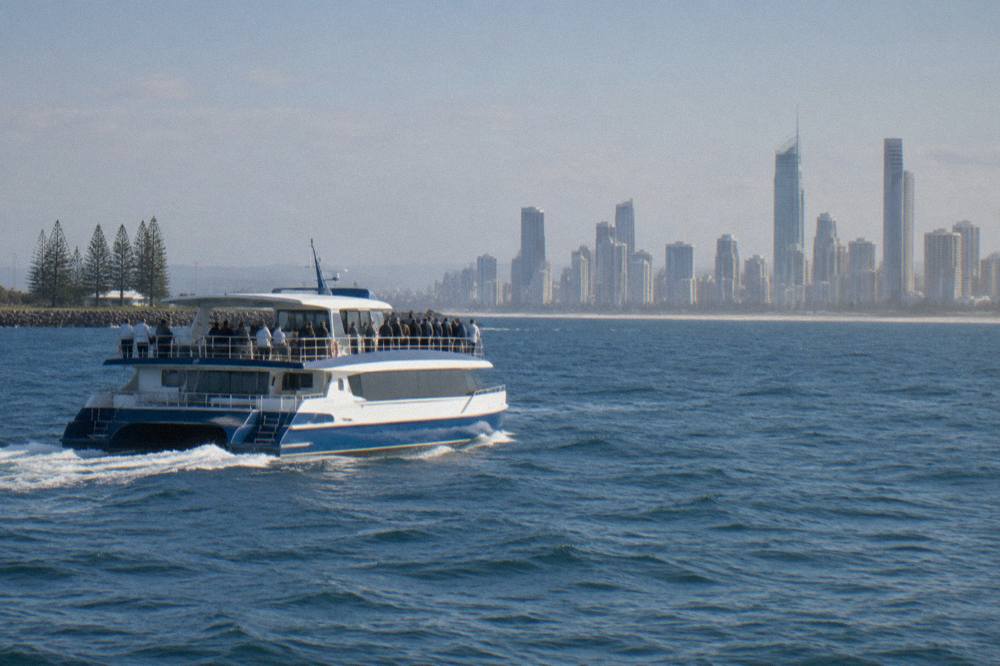
The tourism board's own summary of the Gold Coast season, June to November with July and August peak numbers, gives that region one of the longest continuous whale watching windows in the country, as Tourism and Events Queensland notes on its whale watching page. Hervey Bay counters with a shorter but famously concentrated window from July to mid-September, when the bay fills with resting pods. If you want the full picture of how the two regions trade blows, the Hervey Bay versus Gold Coast comparison guide breaks down the season, the water and the boat styles region by region.
| Region | Main departure points | Season character | Travel time from Brisbane | Swim with whales |
|---|---|---|---|---|
| Hervey Bay | Hervey Bay marina | July to mid-September, calm sheltered bay | About 3.5 to 4 hours drive north | Licensed operators, permitted |
| Moreton Bay | Brisbane bayside departure points | June to October, bay and offshore trips | Under 1 hour | Not a permitted swim region |
| Sunshine Coast | Mooloolaba | July to October, offshore trips | About 1 to 1.5 hours drive north | Licensed operators, permitted |
| Gold Coast | Main Beach, Southport, plus Tweed Heads South and Chinderah in NSW | Late May or June to early November, open ocean | About 1 hour drive south | Not permitted in Queensland waters |
Hervey Bay: The Calm-Water Classic
Hervey Bay is the best place in Queensland for whale watching if calm water and long, close encounters matter more than anything else, because the bay sits in the shelter of Fraser Island and mother whales stop there to rest with newborn calves between July and mid-September. The whales are not merely passing through; they pause, which is why the bay has a global reputation for extended interactions. Boats there can sit with a resting pod while mothers nurse calves metres away in water flat enough to reflect the animals. The trade-off is the drive, roughly four hours north of Brisbane, and a season window that is shorter than the Gold Coast's.
The bay's character comes from geography. Humpbacks heading south from the breeding grounds cut through the shallow, protected water between the mainland and Fraser Island, and pregnant cows and cow-calf pairs use it as a resting stop, behaviour the federal environment department describes when it notes that pregnant cows and cow-calf pairs bring up the rear of the migration. That resting behaviour is what the licensed Hervey Bay swim operators build their trips around: swimmers enter the water and hold a line or float while the whales choose whether to approach, and the whales frequently do. It is the single most reliable place in Queensland to be in the water near humpbacks.
Hervey Bay suits travellers who are already road-tripping the Fraser Coast or who will fly in specifically for whales. It does not suit a Brisbane-based weekend, and it is the wrong choice if you want the buzz of a big city around your cruise. If your trip is anchored in the south-east corner, the honest comparison to run next is between the bay and the open-ocean style of the southern coast, which is exactly what the Brisbane and Moreton Bay whale watching guide covers for the capital's own departure options.
The Gold Coast: The Longest Season And The Easiest Big-City Base
The Gold Coast is the best place in Queensland for whale watching if you want the longest season, the widest choice of boats and a departure point inside a major city, with cruises running from late May or early June to early November and seven distinct bookable products on one stretch of coast. Four cruises depart the Broadwater and Main Beach side, two small boats depart from Tweed Heads South and Chinderah in New South Wales just over the border, and one swim trip runs from Chinderah, covering the same migration from a different departure point. No other Queensland region packs that much choice into a one-hour drive from Brisbane.
The featured option here is the Sea World Cruises premium whale watching cruise. It runs about 2.25 to 2.5 hours from the Sea World Cruises Terminal on Seaworld Drive, Main Beach, and carries a 4.6 rating from 655 reviews. Hotel pickup is not included, so you make your own way to the terminal, and the operator advertises a 100% whale sighting guarantee with a free return cruise if none appear. It also carries a real "Likely to sell out" badge on its live listing, which in peak August weeks is worth taking seriously. The full Sea World Cruises premium whale cruise page has the departure details and the cancellation terms.
The Gold Coast fleet spreads well beyond one operator. The Spirit of Gold Coast trip runs a 24 m power catamaran with a marine biologist guide and 360 degree views, about 2 hours 50 minutes from Aqua Adventures at Southport, from $52.30 per person, and with the deepest review pool on the local roster at 4.6 from 920 reviews. The Kokomo cruise takes a smaller boat capped at 47 travellers out of Marina Mirage, from $62.19 per person, rated 4.9 from 381 reviews, though its listing states no sighting guarantee. The Boattime superyacht runs a luxury yacht with a marine biologist from the Marine Stadium Jetty at Main Beach, from $52 per person, the cheapest listed price on the roster, though it also carries the lowest rating at 3.7 from 138 reviews.
What the Gold Coast gives up in shelter it returns in theatre. Open ocean means humpbacks breach, tail-slap and pec-slap in water deep enough for full displays, and the 2026 season opened remarkably early, with the first humpbacks of the year reported off the Gold Coast Seaway on 2 June 2026, a mother and newborn calf noted as unusually early for the season. Cruises there also report dolphins, turtles and seabirds alongside the whales. The trade-off is honest: open water moves, so anyone prone to seasickness should read up on conditions before choosing a date, and the seasickness on a whale watching tour explainer covers what actually helps.
| Gold Coast area listing | Departure point | Price from | Rating and reviews | Duration |
|---|---|---|---|---|
| Sea World Cruises premium cruise | Sea World Cruises Terminal, Main Beach | $55 pp | 4.6 from 655 reviews | About 2.25 to 2.5 hours |
| Spirit of Gold Coast | Aqua Adventures, Southport | $52.30 pp | 4.6 from 920 reviews | About 2 hours 50 minutes |
| Kokomo cruise | Marina Mirage, Main Beach | $62.19 pp | 4.9 from 381 reviews | About 2.5 hours |
| Boattime superyacht | Marine Stadium Jetty, Main Beach | $52 pp | 3.7 from 138 reviews | About 2.5 hours |
| Blue Seafaris small boat | Tweed Heads South, NSW | $87 pp | 4.9 from 48 reviews | About 2.5 hours |
| Cooly Eco safari boat | Chinderah, NSW | $105.31 pp | 4.9 from 68 reviews | About 2.5 hours |
Moreton Bay And Brisbane: Whales Without Leaving The City
Moreton Bay is the best place in Queensland for whale watching if you are based in Brisbane and refuse to spend half a day driving, because its departure points sit under an hour from the city and its boats reach both bay water and the offshore migration corridor in a single morning. It is the compromise region: not as calm as Hervey Bay, not as long-seasoned as the Gold Coast, but unbeatable on access. Humpbacks pass along the outside of Moreton and North Stradbroke islands on both legs of the migration, and Brisbane-based operators work that corridor from roughly June into October.
The bay region suits three kinds of traveller. It suits the Brisbane local who wants a whale trip without a road trip, the family for whom a four-hour drive to Hervey Bay would eat the entire weekend, and the visitor already staying in the city who did not come for whales at all and would like to add them cheaply. What it does not offer is a licensed swim-with-whales product; Queensland's permitted swim operations sit at Hervey Bay and the Sunshine Coast, and no authorised swim tour departs Brisbane or the Gold Coast itself. That is a regulatory fact, not a marketing gap, and it shapes the whole regional map. The full index of guides sits on Whale Watching On The Gold Coast.
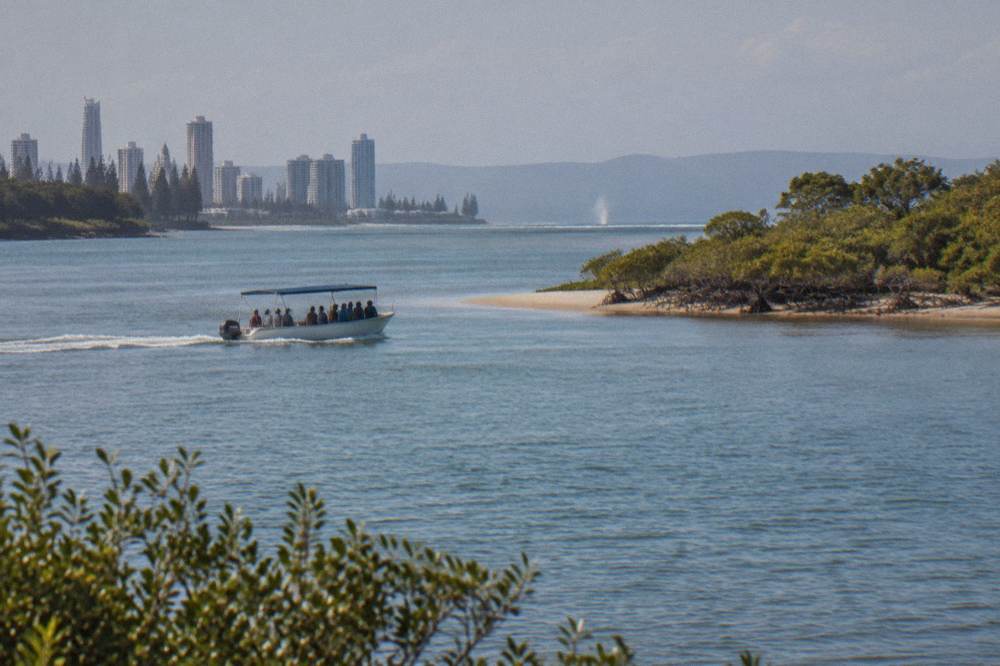
One point in Moreton Bay's favour is consistency of wildlife beyond the whales. The bay holds resident dolphins and turtles year-round, and boats regularly pass them on the way out to the humpback corridor, so a trip that misses a spectacular breach is rarely an empty morning. The honest weakness is the same as its strength: proximity means you are sharing the departure area with a lot of other traffic, and the whale encounters tend to be shorter drive-up-and-watch stops rather than the extended resting-pod sessions Hervey Bay is famous for.
The Sunshine Coast: Swim Tours And Mooloolaba
The Sunshine Coast is the best place in Queensland for whale watching if swimming with whales is the goal, because it is one of only two regions in the state, with Hervey Bay, where licensed swim-with-whales operators hold permits, running offshore trips out of Mooloolaba roughly July to October. The swim model is the same as Hervey Bay's: the boat positions in the whales' path, swimmers hold a line in the water, and the whales decide whether to come over. The federal rules matter here, and Queensland's rules for watching marine mammals set the distances every licensed operator works inside: boats stay 100 m from a whale, swimmers stay 100 m away, and the whales close the remaining distance themselves.
The Sunshine Coast also runs conventional boat watching, and it splits the difference between the two southern regions: more shelter than the Gold Coast's open ocean, less drive than Hervey Bay, and a genuine town, Mooloolaba, built around its marina. For a Brisbane or Gold Coast local who has already done a standard cruise, the swim trip is the natural next step, and it is the only whale experience in the south-east that puts you in the water legally.
That legal line is worth pausing on, because the marketing around "Gold Coast" swim trips blurs it. The one swim product on this site's roster, the Cooly Eco swim with whales trip, departs Chinderah on the Tweed River in New South Wales, just south of the Queensland border, not from the Gold Coast itself, and the listing is explicit that a whale sighting is guaranteed but a swim is not. It runs about 4 hours with a maximum of 9 travellers, from $310.26 per person, rated 4.9 from 50 reviews, with wetsuits, snorkel gear and spray jackets included. No authorised swim-with-whales tour departs the Gold Coast; licensed Queensland swim operations are at Hervey Bay and the Sunshine Coast, as the swim with whales guide explains in full.
Which Place Actually Suits Your Trip?
Choose Hervey Bay for calm water and the deepest encounters, the Gold Coast for season length, boat choice and a city base, the Sunshine Coast for a licensed swim tour, and Moreton Bay for the shortest drive from Brisbane; if you can only pick one and you are visiting between July and September, Hervey Bay edges it, and outside that window the Gold Coast is the safer bet. That is the whole decision in one sentence, and everything else is fine-tuning around dates, budget and how your stomach handles open water. The east coast population of more than 50,000 humpbacks means every region delivers animals in season; none of them can promise a breach on your particular morning.
Budget is where the regions genuinely diverge. On the Gold Coast roster, boat-based whale watching runs from $52 to $105.31 per person, and including the swim trip the full spread is $52 to $310.26, figures that make it one of the more affordable whale watching cities in Australia. Hervey Bay and Sunshine Coast pricing sits on each operator's own listing rather than on this site's roster, so check the live listing for those regions rather than assuming the Gold Coast's numbers carry north. The cost breakdown for Gold Coast whale watching shows exactly where the money goes on the southern option.
| If you want... | Best region | Why |
|---|---|---|
| Calm water and long encounters | Hervey Bay | Sheltered bay, resting mothers and calves, July to mid-September |
| The longest possible season | Gold Coast | Cruises from late May or early June to early November |
| To swim with whales | Hervey Bay or the Sunshine Coast | The only regions with licensed, permitted swim operators |
| The shortest trip from Brisbane | Moreton Bay | Departure points under an hour from the city |
| Small-boat, eye-level viewing | Gold Coast's Tweed side | The Blue Seafaris 21-guest boat and the Cooly Eco 12-guest safari boat |
| A marine biologist on board | Gold Coast | The Spirit of Gold Coast, Boattime and Blue Seafaris trips all carry one |
One final tiebreaker is the style of boat, and here the Gold Coast simply has more strings to its bow than any single northern region. The Blue Seafaris small boat runs out of Tweed Heads with a marine biologist on board for about 2.5 hours, food and drinks not included, rated 4.9 from 48 reviews, and carries a free cancellation policy. It also has a "Likely to sell out" badge. The Cooly Eco safari-style boat seats 12 for eye-level viewing from Chinderah, from $105.31 per person, the priciest boat-watching listing on the roster. Hervey Bay and the Sunshine Coast have their own vessel styles, but nowhere else in Queensland do you get a purpose-built catamaran, a 24 m power cat, a 47-guest boat, a superyacht, a 21-guest RIB-style boat and a 12-guest safari boat all working the same stretch of migration.
Common Questions About Whale Watching In Queensland
Where Is The Best Place In Queensland For Whale Watching?
Hervey Bay for calm water and long close encounters between July and mid-September, the Gold Coast for the longest season and the widest choice of boats, the Sunshine Coast for licensed swim-with-whales tours, and Moreton Bay for the shortest drive from Brisbane. All four regions sit on the same migration of more than 50,000 east coast humpbacks.
Can You Swim With Whales In Queensland?
Yes, but only in two permitted regions: Hervey Bay, roughly July to mid-September, and the Sunshine Coast out of Mooloolaba. No authorised swim-with-whales tour departs the Gold Coast itself; the swim product sold as a Gold Coast experience departs Chinderah on the Tweed River in New South Wales, and its listing states a sighting is guaranteed but a swim is not.
Which Month Has The Most Whales In Queensland?
July and August bring peak numbers as the northbound migration passes, and the tourism board cites those two months as the Gold Coast's peak. August to October is the southbound leg, when mothers with newborn calves travel slower and closer to shore, which is when Hervey Bay's resting encounters are at their best.
Is Hervey Bay Better Than The Gold Coast For Whales?
They are different products rather than better and worse. Hervey Bay offers sheltered, calm water with resting mothers and calves in a concentrated July to mid-September window. The Gold Coast offers open-ocean breaching displays, a season from late May or early June to early November, and a much bigger choice of boats and departure times.
How Close Do Boats Get To Whales In Queensland?
Queensland rules require boats to stay at least 100 m from a whale and 300 m in front of or behind it, slow to 6 knots inside 300 m, and share no more than three boats in one whale's caution zone. Whales sometimes approach vessels on their own, which is legal and common, but the boat may not close the distance itself.
Can You See Whales From The Shore In Queensland?
Yes, and it is free. On the Gold Coast the tourism board names Point Danger at Coolangatta, Burleigh Heads, Miami and Greenmount Point as shore vantage points, best in the early morning before wind picks up and with binoculars. Headlands along the whole coast work in the same way during the migration months.