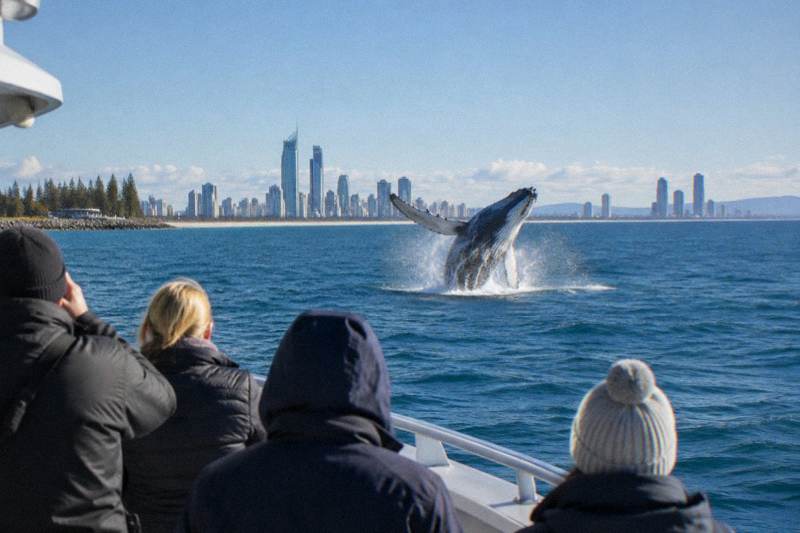
Will I Get Seasick On A Whale Watching Tour From The Gold Coast?
An honest look at seasickness on Gold Coast whale cruises: how vessel size, sea state and where you sit change the odds, plus general non-medical prevention tips.
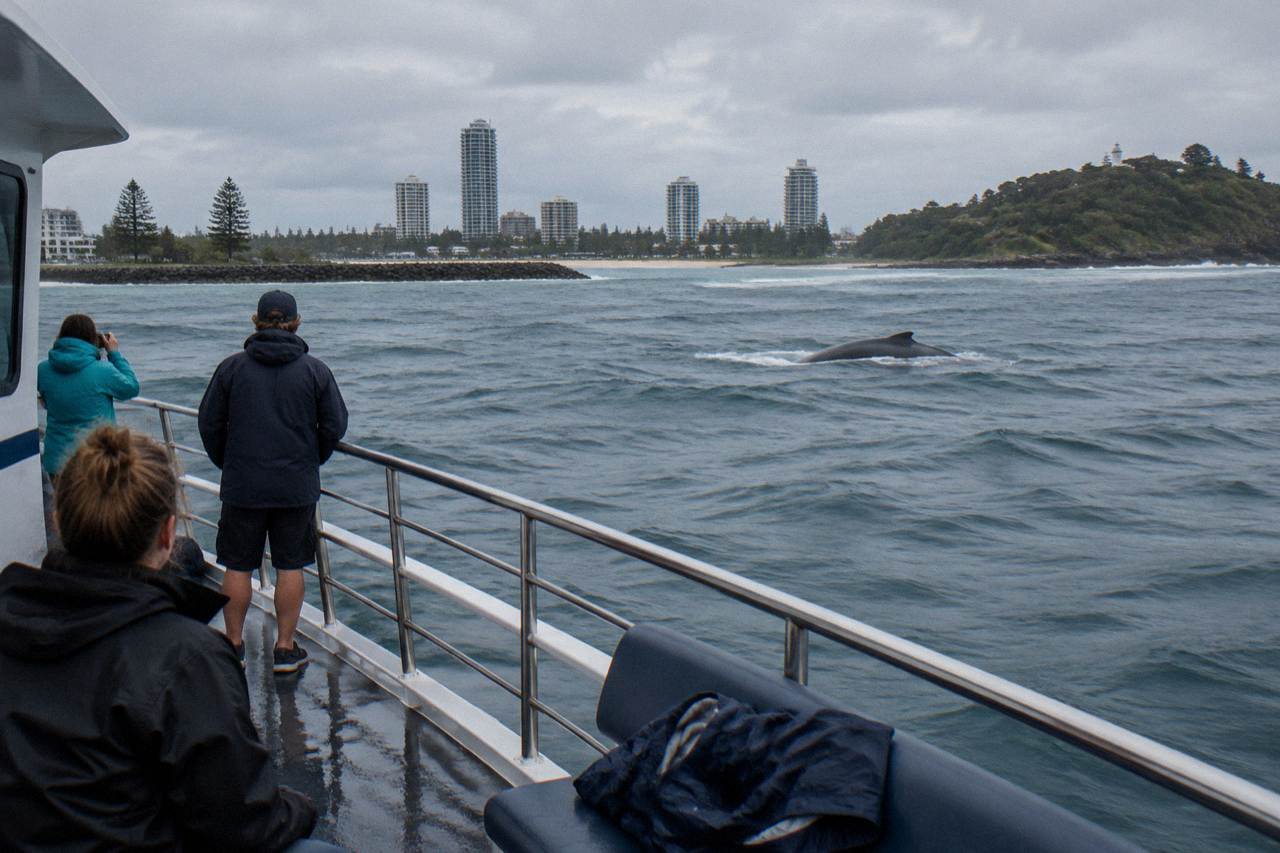
The first humpbacks of 2026 were reported off the Gold Coast Seaway on 2 June, a mother and newborn calf noted as unusually early, and from that week through to early November the boats run every day. Most of those trips last between two and three hours, which is long enough for a rough day to test anyone's stomach. Seasickness is the single most common worry first-time whale watchers raise, and it is a fair question, because the answer is genuinely different depending on which vessel you board: a large purpose-built cruise boat, the Kokomo cruise capped at 47 travellers, or the 12-guest Cooly Eco safari-style boat that runs eye-level with the water. This article compares them honestly, explains what triggers seasickness in general terms, and sticks to prevention advice that does not require a pharmacy, because no verified statistics on seasickness rates, swell heights or cancellation frequencies for these trips exist anywhere in the research behind this site, and nothing below invents one.
Will I Get Seasick On A Whale Watching Tour From The Gold Coast?
Not necessarily, and a lot of it comes down to the boat you choose, the conditions on the day and where you sit. Motion sickness happens when your inner ear senses movement your eyes cannot confirm, and it settles for many people once they are on open water watching the horizon. Larger vessels move less than small ones, calm mornings move less than windy afternoons, and a mid-boat seat moves less than the bow.
Nobody can give you a percentage chance of getting seasick on a Gold Coast cruise, because no operator publishes seasickness rates and no survey of the fleet exists. What is verifiable is the shape of the fleet. The Sea World Cruises premium trip runs on a purpose-built whale watching vessel, the largest style of boat in this market, and it carries a 4.6 rating from 655 reviews with a from price of $55 per person. The Kokomo cruise from Marina Mirage caps its boat at 47 travellers, from $62.19 per person, rated 4.9 from 381 reviews. At the small end, the Cooly Eco safari-style boat seats 12, and the Blue Seafaris small boat takes around 21 guests with a marine biologist on board. If you would rather not test your sea legs at all, the guide comparing whale watching in Byron Bay and the Gold Coast looks at whether the calmer conditions up north make for an easier day on the water.
Those are very different motion profiles. A large catamaran with multiple decks tends to roll slowly and predictably. A 12-guest safari-style vessel sits low, moves quickly and gives you a front-row, spray-in-your-face kind of ride that some travellers love precisely because it feels wild, and that others find harder on the stomach. Neither is wrong. It is a trade-off between stability and intimacy, and knowing which side of that trade-off you sit on is most of the decision.
It is also worth saying plainly that a quiet day is possible on any of them. Whales are wild animals, and no honest page will promise you a sighting, let alone a calm stomach. What you can control is the boat, the time of day and your seat.
Why Does A Moving Boat Trigger Seasickness?
Motion sickness is a mismatch between what your inner ear feels and what your eyes see, and a boat is a machine for creating it. Your inner ear registers every rise, fall and roll of the hull, while your eyes, fixed on a cabin wall or a phone screen, report a mostly still world. Your brain receives two conflicting accounts, and the result is often nausea, cold sweat and dizziness.
The classic triggers stack up fast on a whale boat. Below deck, with no visual reference to the outside, the mismatch is at its worst. Reading a phone or a map makes it worse again, because your eyes lock onto something that appears stationary while the deck keeps moving. Diesel fumes, a heavy breakfast and standing near the stern where engine vibration combines with pitch all add to it. Some people are barely affected at all, others are green within twenty minutes, and most regular travellers fall somewhere in between and can tip either way depending on the day.
The encouraging part is that the mismatch fades for a lot of people once they do the right things early: eyes on the horizon, mid-boat seat, light food, steady breathing. Seasickness also tends to ease once the boat stops or once you are back on solid ground, and it rarely lasts beyond the trip itself. If you have been seasick once on a ferry years ago, that is useful information, but it is not a life sentence, and it says nothing about how you will handle a two and a half hour cruise on a calm Gold Coast morning.
There is one Gold Coast-specific factor worth understanding, and it is covered in full in the guide to Gold Coast whale watching sea conditions: the Gold Coast Seaway is a designated coastal bar, a shallow crossing where conditions can change quickly without warning, and it is at its worst on an ebb tide with large swell or strong wind, per Maritime Safety Queensland's bar crossing advice. Cruises that head out through the Seaway can meet a short band of choppy water on the way past, then settle once clear of the entrance. Knowing that the lively part is often the first and last ten minutes, not the whole trip, helps a lot of first-timers psychologically.
Does Vessel Size Change How Much You Feel The Sea?
Yes, and it is the single biggest physical variable you control when booking, because a larger, heavier hull with a deeper draught slices through swell rather than riding over the top of it, so the motion is slower, longer and gentler. A smaller vessel answers every wave directly, which means quicker, sharper movement and a more immersive but more demanding ride.
The roster spans a wide physical range, and the guest caps alone tell much of the story before you look at anything else. Here is how the main bookable options compare on the numbers that matter for motion:
| Tour | Vessel style | Guest cap | Duration | From price | Rating |
|---|---|---|---|---|---|
| Sea World Cruises premium cruise | Large purpose-built whale watching vessel | Largest on this roster | About 2.25 to 2.5 hours | From $55 pp | 4.6 from 655 reviews |
| Spirit of Gold Coast trip | Power catamaran, lower and upper decks | Mid-sized | About 2 hours 50 minutes | From $52.30 pp | 4.6 from 920 reviews |
| Boattime whale escape | Luxury yacht with a marine biologist | Not stated on the listing | About 2.5 hours | From $52 pp | 3.7 from 138 reviews |
| Kokomo whale watching cruise | Smaller purpose-built boat | 47 travellers | About 2.5 hours | From $62.19 pp | 4.9 from 381 reviews |
| Blue Seafaris marine biologist trip | Small boat | Around 21 | About 2.5 hours | From $87 pp | 4.9 from 48 reviews |
| Cooly Eco safari-style boat | Custom safari vessel, eye-level | 12 | About 2.5 hours | From $105.31 pp | 4.9 from 68 reviews |
Read that table as a motion gradient as much as a price list. The Sea World Cruises vessel and the Spirit of Gold Coast catamaran sit at the stable end, and the Spirit of Gold Coast trip is also the longest on the roster at about two hours 50 minutes, so the extra time on the water is spent on a hull designed to soak up the swell. The Kokomo boat, capped at 47, splits the difference: small enough to feel nimble and close to the whales, large enough that its 4.9 from 381 reviews suggests plenty of first-timers have come off it happy. The Blue Seafaris small boat around 21 guests and the 12-guest Cooly Eco safari boat are the most immersive and the most physical rides of the lot.
One row deserves a plain note. The Boattime whale escape is the cheapest listing on this roster at from $52 per person, and it is also the lowest rated, at 3.7 from 138 reviews. That is not automatically a seasickness verdict, a superyacht hull is inherently stable, but it is a reminder that price and guest satisfaction do not always move together, and the review pool is the honest place to look.
The small-boat case deserves a fair hearing too, because the trade is not one-way. On a 21-guest Blue Seafaris trip you are never more than a few steps from the rail, the water is close enough to touch, and the marine biologist can run a conversation with the whole group at once. On the 12-guest Cooly Eco safari boat you are essentially at whale eye-level, with spray jackets provided and a marine naturalist on board. Many people who are mildly prone to motion sickness still choose these boats, and manage fine, because being outside in fresh air with a clear horizon is itself one of the best things you can do for your inner ear. The people small boats suit least are those who already know they are strongly affected, or who want the option to retreat to a cabin.
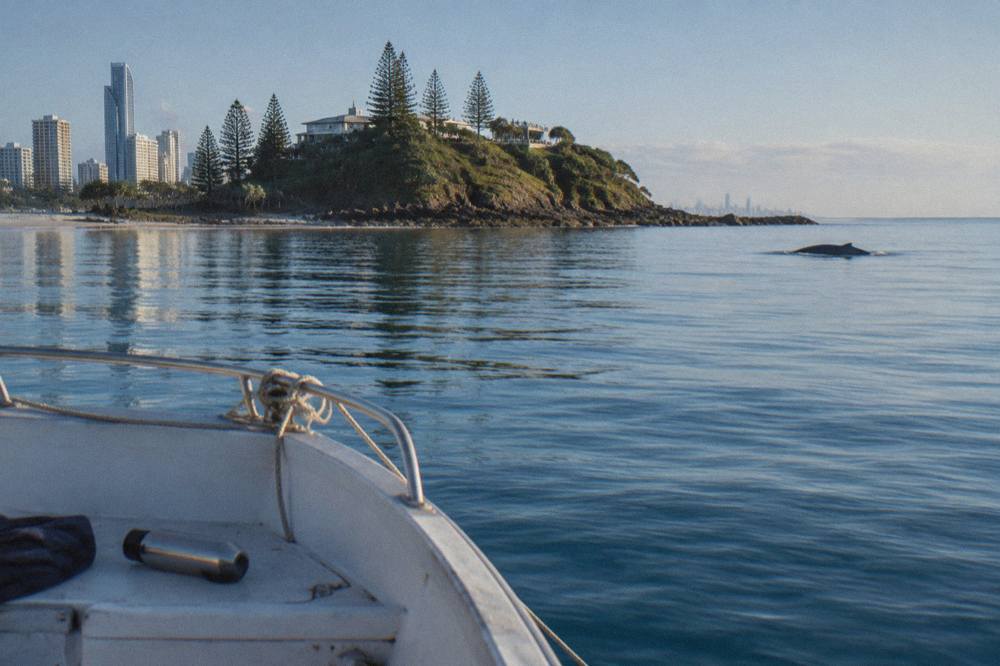
One more honest note on the smaller operators: both Tweed-side boats, Blue Seafaris and Cooly Eco, depart from New South Wales, from Tweed Heads South and Chinderah on the Tweed River respectively, and their trips cover the Coolangatta and Gold Coast waters per the listings. The river departure is actually a gentle start, protected from ocean swell for the first stretch, which some prone-to-queasiness travellers prefer.
Where Is The Best Place To Sit On The Boat?
Mid-boat, near the waterline, facing forward, with your eyes on the horizon, is the classic low-motion position, and it works on every vessel on this roster. The middle of a hull pitches and rolls least, the bow and stern move the most, and lower decks feel less motion than upper ones. Facing the direction of travel gives your eyes a consistent frame of reference, and outside in fresh air beats a cabin every time.
The seating logic breaks down like this:
| Position on the boat | How much you feel | Why | Best for |
|---|---|---|---|
| Mid-boat, lower deck, outside | Least | Closest to the hull's pivot point, horizon visible | Anyone worried about seasickness |
| Upper viewing deck | Moderate | Better view, but more roll with height | Photographers on calm days |
| Bow | Most pitch | Rises and falls furthest on each wave | Confident sailors who want spray |
| Stern, near engine | Moderate to high | Vibration plus pitch combined | Usually avoided by prone travellers |
| Inside cabin or below deck | Worst for nausea | No visual reference to the horizon | Only for brief breaks from weather |
A few practical notes sit behind that table. On a vessel with lower and upper decks, like the Spirit of Gold Coast catamaran, the lower deck is the steadier one, and the trade for the upper deck's panorama is extra roll. On the 47-guest Kokomo boat, unobstructed views are the selling point, which means there is rail space for most guests rather than assigned seating, so arriving early and claiming a mid-ship rail spot is a genuine tactic. On the 12-guest Cooly Eco safari boat there is effectively no bad seat because there are only twelve of them, but there is also no cabin to retreat to, so the whole trip is an outside, horizon-visible trip, which cuts both ways.
The standing-versus-sitting question comes up a lot too. Sitting low and still, braced against a bulkhead, gives your body fewer competing signals than walking around the deck. But standing at the rail, arms on the rail, weight spread, eyes out at the water, is also fine for many people, because the rail fixes your visual frame. What reliably hurts is the in-between state: standing in a moving cabin, head down at a screen, or crouched over a camera bag fiddling with settings. Set the camera up before the boat leaves the dock, then leave it alone.
How a boat positions itself around a whale, and which rail that leaves you standing at when something happens, interacts with all of this. The steadiest spot is still mid-boat, but the action can be on either side, which is one more argument for staying light on your feet and mobile rather than planted at one end of the vessel.
What Actually Helps Prevent Seasickness, Without Medication?
The reliable non-medical levers are sleep, light food, water, fresh air, a horizon you keep your eyes on, and an early start, applied before and during the trip rather than after you already feel rough. None of them are exotic, and together they move the odds further than most first-timers expect. This site gives no medication advice, so tablets, patches and ginger supplements are a conversation for a pharmacist or a doctor before travel day.
The before-the-boat list matters more than most first-timers realise. A short night's sleep and a hangover are the two most common self-inflicted setups for a bad trip. Eat lightly rather than nothing, because an empty stomach is not a stable one, and skip the greasy full breakfast in favour of something plain an hour or so before boarding. Drink water steadily. Arrive unhurried, because rushing across a marina car park with a heavy bag, then stepping straight onto a moving deck, is a stressful start your vestibular system does not need.
On the water, the core techniques are these:
| Technique | What you do | Why it helps |
|---|---|---|
| Horizon fixation | Pick a fixed point on the horizon and keep your eyes there | Reconciles what your eyes see with what your ears feel |
| Mid-boat low seat | Claim a position near the middle, lower, facing forward | Least pitch and roll on any hull |
| Stay outside | Remain on the open deck in fresh air | Removes cabin visual conflict, avoids stuffiness |
| Skip the screen | No phone, book or map while underway | Close focus amplifies the sensory mismatch |
| Light plain food | Dry crackers or plain bread if appetite fades | Keeps the stomach settled without heaviness |
| Steady breathing | Slow, even breaths at the rail | Settles the anxiety loop that worsens nausea |
| Talk to crew | Say early if you feel unwell | Crew see it every day and can help position you |
Timing is the quiet hero of that list. The Queensland Government's own whale watching guidance notes that calm mornings, before the wind picks up, are the best time to spot whales from shore and from the water, per the Queensland Government's whale watching page, and that logic applies doubly to seasickness: the sea is typically at its flattest early, and the breeze builds through the day. A morning departure is the single easiest decision you can make in your own favour, and it costs nothing. The site's article on morning versus afternoon whale watching unpacks this in full.
One caution that belongs here because it is a real pattern: the first ten to fifteen minutes after leaving the dock, and the bar crossing mentioned earlier, are when first-timers tend to feel the worst, and also when they panic that the whole trip will feel like that. It usually does not. Once the boat clears the entrance and settles onto its course, the motion becomes steadier and more predictable, and most people adapt within half an hour. Going in expecting an adjustment period, and having your horizon spot picked out before the boat even clears the marina, is genuinely half the battle.
How Do The Big Cruise And The Small Safari Boat Really Differ?
In one sentence: the large purpose-built vessel gives you the smoothest ride and the most escape routes, the 47-guest cruise keeps things intimate while staying mid-sized, and the 12-guest safari boat gives you the most intense experience with the least shelter. None of the three is a bad choice, they simply answer different priorities, and seasickness risk sits differently across them.
The Sea World Cruises premium cruise is the one to pick if stability is your main worry. It departs the Sea World Cruises Terminal on Seaworld Drive at Main Beach, with guests making their own way to the departure point. The cruise runs about 2.25 to 2.5 hours, with food and drinks available on board. The listing states a 100% whale sighting guarantee with a free return cruise if none are seen, which is the listing's own policy and worth knowing when you weigh the risk of a quiet trip. It also carries a likely-to-sell-out badge, so booking ahead is wise. The vessel's size is the seasickness point: multiple decks, indoor space, and a hull that handles the Gold Coast's typical winter conditions without drama. For a nervous first-timer, having the option to step inside, sit down and still see the water through windows is a real comfort.
The Kokomo cruise, from $62.19 per person and rated 4.9 from 381 reviews, is the middle path. It departs Marina Mirage on Seaworld Drive, Main Beach, and its 47-guest cap means the boat is small enough to be agile around whales but big enough that the ride stays civilised. The listing states no sighting guarantee, so judge it on what it is: a well-reviewed, mid-sized, close-to-the-water trip with free cancellation up to 24 hours ahead. For someone who wants intimacy without full small-boat commitment, it is the natural pick.
The Cooly Eco safari-style boat is the far end. Twelve guests, a custom-built vessel, spray jackets, a marine naturalist, and a departure from Chinderah on the Tweed River in New South Wales, from $105.31 per person, rated 4.9 from 68 reviews. The listing states no sighting guarantee. It is the priciest boat-watching listing on the roster and the most exposed to the elements, and for the right traveller that is the entire appeal: whales at eye level, no glass, no crowd. For a strongly seasickness-prone traveller it is the hardest sell, and honesty requires saying so, even though its rating suggests most guests come off delighted.
Sitting between the cruise and the safari boat in size, the Blue Seafaris marine biologist trip takes a small group, does not include food or drinks, and departs Tweed Heads South in New South Wales, with the price listed on the live booking page, rated 4.9 from 48 reviews. The listing says a free tour on the next available slot if no whales are sighted, which is that operator's own policy, and it carries a likely-to-sell-out badge. The river start is gentle, the group is small enough for real conversation with the biologist, and with no meal included, you can eat beforehand on dry land rather than managing food logistics on a rocking deck.
What Happens If Conditions Turn Rough On The Day?
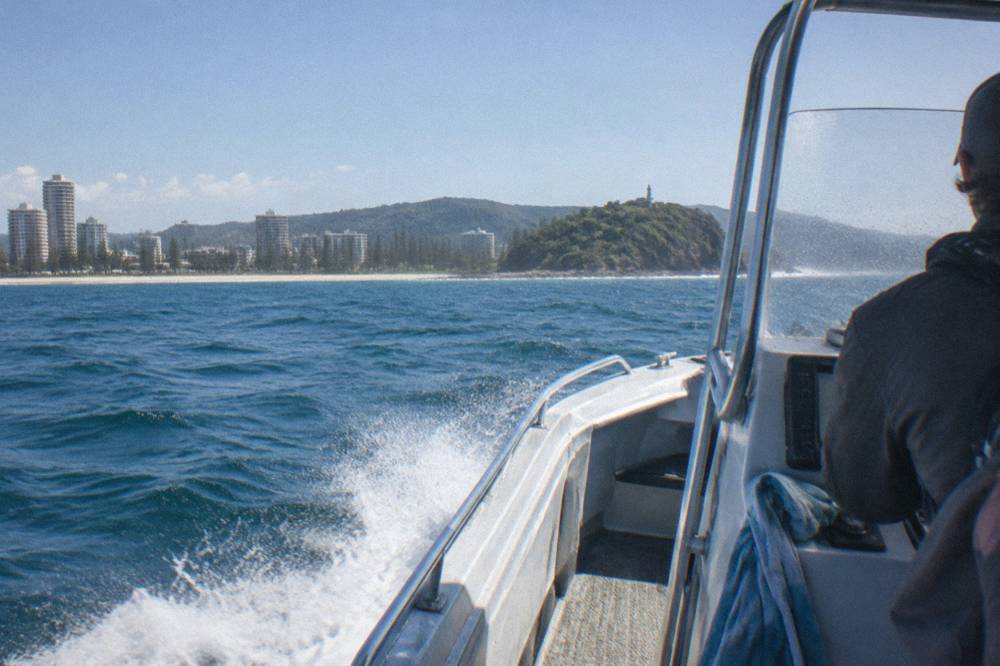
Operators monitor conditions and cancel or reschedule when a trip would be unsafe, and every listing on this roster offers free cancellation, so a rough forecast is a manageable problem rather than a lost booking. No verified statistics on how often Gold Coast whale cruises cancel exist, so no honest rate can be printed here, but the operators' published terms paint a clear picture and put the rough-weather decision in professional hands.
Sea World Cruises' published terms ask guests to notify staff at check-in if rough seas are expected, then offer a choice to proceed, reschedule, or take a full refund if conditions are unsafe, with operator cancellations notified by SMS at least two hours ahead, per Sea World Cruises' own FAQ. Spirit of Gold Coast's terms say operator weather cancellations mean a reschedule or, if a reschedule is not possible, a full refund requested within 14 days. Those are the operators' own published policies, quoted as such, and they mean the decision about rough weather is not one you face alone on the dock.
Your own side of it is simpler. If the forecast looks windy and you know you are prone, the free-cancellation windows matter: Kokomo allows free cancellation up to 24 hours ahead, and the other listings on the roster also carry free cancellation on the live listing. Checking the forecast a day out, and being willing to move your booking a day, is the cheapest seasickness prevention there is. The deeper guide to whether Gold Coast cruises run in rough weather covers the whole decision.
One general weather fact helps with planning. The Bureau of Meteorology's winter outlook for 2026, issued 28 May, pointed to below-average winter rainfall and above-average temperatures for the region, with El Nino likely to develop, per the Bureau of Meteorology's winter outlook. That broadly describes the dry, settled winter the Gold Coast is known for, and it reinforces the calm-morning pattern: book the early trip, and the odds of a glassy run out to the whales are on your side.
If the boat choice is still open after all of this, the trip picker on Whale Watching On The Gold Coast walks through the same three questions this article has raised, boat size, timing and budget, in about a minute, and it points to the listing that fits each answer.
Common Questions About Seasickness On Gold Coast Whale Cruises
Will I Get Seasick On A Whale Watching Tour?
Not necessarily. It depends on the vessel, the conditions and where you sit. Larger purpose-built boats move least, calm mornings are calmest, and sitting mid-boat near the waterline with your eyes on the horizon dramatically lowers the odds for most people. No operator publishes seasickness rates, so no percentage can honestly be given.
Which Gold Coast Boat Is Best If I Worry About Seasickness?
The large purpose-built vessels are the steadiest choice: the Sea World Cruises premium cruise, from $55 per person, and the Spirit of Gold Coast catamaran, from $52.30 per person, both offer multiple decks and indoor space. The 47-guest Kokomo cruise is a good middle option, while the 12-guest Cooly Eco safari boat and the roughly 21-guest Blue Seafaris boat are the most exposed rides.
Where Should I Sit On A Whale Watching Boat?
Mid-boat, near the waterline, facing forward, outside where you can see the horizon. The middle of the hull pitches and rolls least, upper decks feel more motion than lower ones, and cabins with no view of the outside world are the worst place for a prone stomach.
Do Whale Watching Cruises Get Cancelled For Rough Seas?
Yes, when conditions are unsafe. Operators monitor conditions and cancel or reschedule, with Sea World Cruises notifying guests by SMS at least two hours ahead and Spirit of Gold Coast offering a reschedule or full refund. Every listing on this roster also carries free cancellation on the live listing, so you can move your own booking if the forecast turns.
Is The Small Safari-Style Boat Worth It If I Am Prone To Motion Sickness?
Only if you want the eye-level experience enough to accept a physical ride. The 12-guest Cooly Eco boat is the most exposed to spray and motion of the roster, with no cabin retreat. Many prone travellers manage fine with horizon focus and an early start, but if you are strongly affected, a larger vessel is the safer pick.