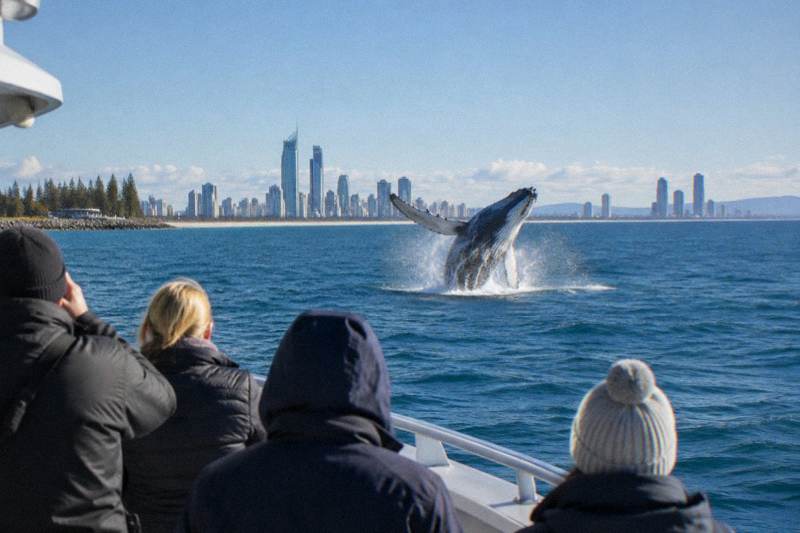
Do Whale Cruises On The Gold Coast Run In Rough Weather?
How Gold Coast whale watching cruises handle rough weather: operator cancellation policies, the Seaway bar, SMS notice windows, reschedules and full refunds explained.
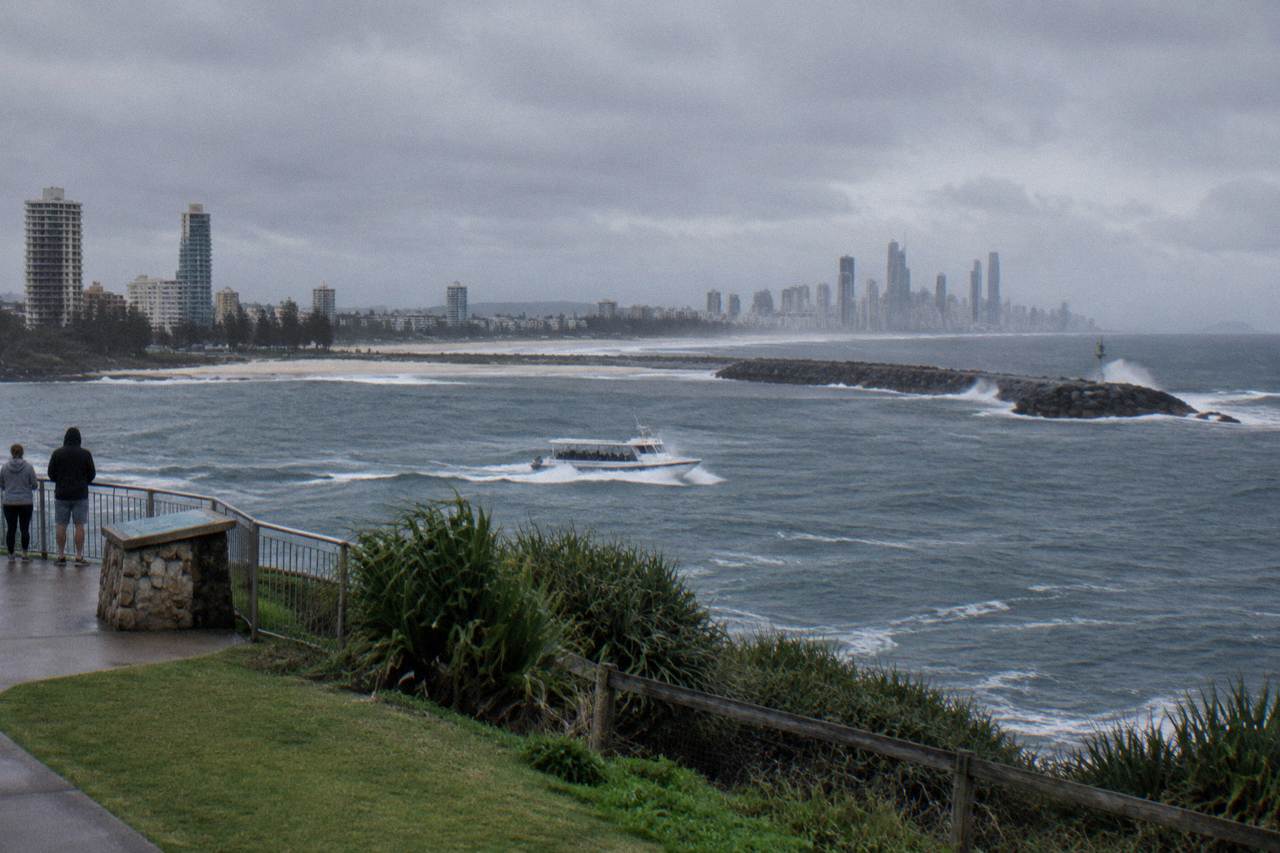
The short answer is that most days, yes, the boats go out. Every whale watching cruise on the Gold Coast runs through winter, June to November, and winter mornings on this coast are often calmer than people expect. But the operators do not sail into unsafe water, and each company sets its own bar for when a trip is cancelled, rescheduled or refunded. The Sea World Cruises premium cruise, the Spirit of Gold Coast catamaran and the Kokomo boat all monitor conditions on the morning of departure and make the call before anyone boards. If conditions look good and you're weighing up your options, the guide to Sea World whale watching cruises covers what the trip is actually like on the water.
Do Whale Cruises On The Gold Coast Run In Rough Weather?
Yes, Gold Coast whale watching cruises run in rough weather more often than most travellers expect, because the season sits inside winter and operators plan around it. Rough seas are common enough that every major operator publishes a weather policy, and the standard outcome of an operator cancellation is a reschedule or a full refund. Boats only stay tied to the wharf when conditions cross from uncomfortable into unsafe. Once you know your trip will still go ahead, our whale watching price guide shows what each type of cruise costs.
The Gold Coast whale season runs from late May or early June to early November, which means the entire peak of the migration, July and August, lands in the middle of Queensland winter. The Bureau of Meteorology's winter outlook issued on 28 May 2026 pointed to below-average rainfall and above-average temperatures for the season, with El Nino developing. In practice, that pattern tends to deliver the clear, settled mornings the coast is known for, punctuated by windy spells that stir up the inshore water.
The honest framing is this: rough days happen, and the industry is built around them. A cruise is a two to three hour commitment in open water, and the operators who run daily departures through a five-month season have seen every kind of sea the coast produces. When the swell or wind makes a trip unsafe, they cancel it. When it is merely lumpy, the boat usually still goes, and passengers who prepared for it have a better morning than the ones who did not.
Whales themselves do not disappear in rougher water. Humpbacks migrate through all conditions, and the east coast population is now estimated at more than 50,000 animals, up from about 8,000 in 2006. The Sea World Cruises cruise, the Spirit of Gold Coast marine biologist trip, the Kokomo boat, the Boattime superyacht and the two Tweed-side small boats all report sightings across the season regardless of the surface state. What changes on a choppy day is the ride, not the whales.
If you are weighing up which cruise to book for a winter trip, these three cover the range most travellers want: a large purpose-built vessel, a small capped boat, and a marine biologist trip. None include hotel pickup, so plan your own way to the departure wharf.
For a fuller side-by-side of the seven bookable trips, prices from $52 to $310.26 per person and what each departure point means for your day, the Gold Coast whale watching tours compared guide breaks down the whole roster. The short version for weather purposes: bigger boats handle chop better, and the two smallest vessels, the Cooly Eco safari boat seating 12 and the Blue Seafaris small boat of around 21, trade smoothness for eye-level views.
What Happens When The Forecast Turns Bad On The Day?
When conditions look unsafe, the operator cancels before departure and offers a reschedule or a full refund, and the notice window is set by each company's own terms. Sea World Cruises states that operator cancellations are notified by SMS at least two hours ahead. Spirit of Gold Coast states that weather cancellations mean a reschedule, or a full refund if no new date can be arranged, requested within 14 days.
The mechanics matter more than the promise. On the Gold Coast, the decision is made on the morning of the trip, because the inshore sea state can change overnight and the operators want to sail if they safely can. You will not usually know days in advance whether your cruise will run. What you can rely on is the published policy on what happens if it does not.
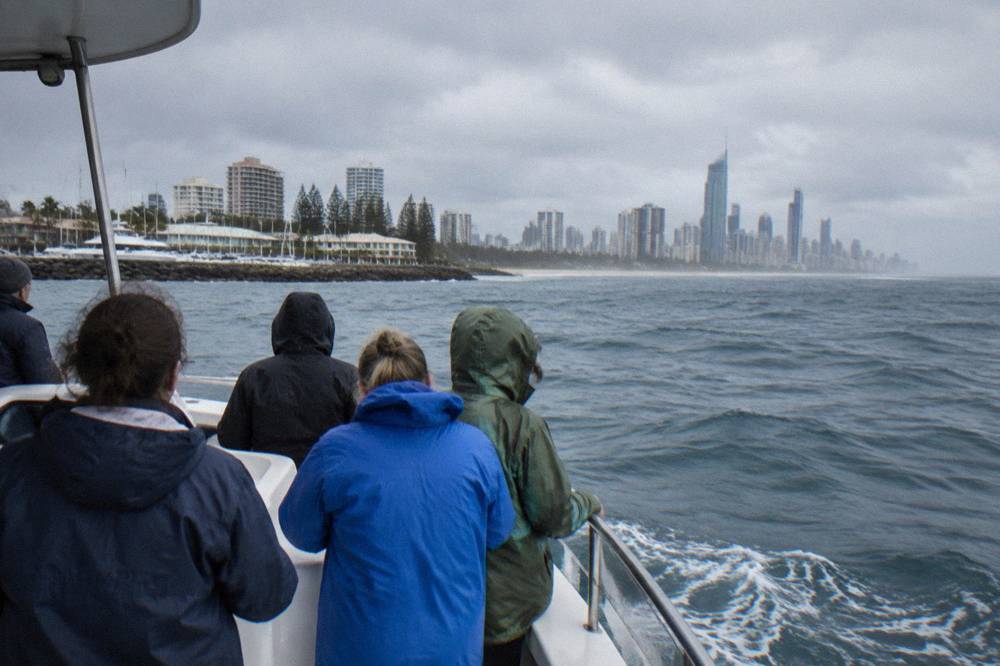
Sea World Cruises' own terms spell out the passenger's options in an unusually direct way. If rough seas are expected, you notify the crew at check-in, and then you choose: proceed with the cruise, reschedule to another day, or take a full refund if conditions are unsafe. The company states that operator-initiated cancellations are sent by SMS at least two hours before departure, with a reschedule or a full refund offered. That two-hour window is worth knowing when you are planning a morning around the trip.
Spirit of Gold Coast, which runs a 24 m power catamaran from Aqua Adventures at Southport, handles weather cancellations through its stated terms as well: the operator reschedules you to another available date, and if it cannot reschedule, you request a full refund within 14 days. The listing for the Spirit of Gold Coast whale watch, rated 4.6 from 920 reviews, from $52.30 per person, also carries free cancellation, so a change of mind before the trip is covered separately from a weather call.
Beyond the operator cancellations, every listing on this roster states free cancellation on the live listing. That is the quiet advantage of booking whale watching here rather than committing to a fixed-date event: if the forecast turns two days out and you would rather not gamble, you can usually cancel yourself before the operator ever has to.
| Operator | Vessel and departure | Stated weather policy | Free cancellation |
|---|---|---|---|
| Sea World Cruises | Purpose-built vessel, Sea World Cruises Terminal, Main Beach | Notify at check-in if rough seas expected; proceed, reschedule or full refund; operator cancellations by SMS at least 2 hours ahead | Yes, on the listing |
| Spirit of Gold Coast | 24 m power catamaran, Aqua Adventures, Southport | Reschedule for weather cancellations, or full refund if no new date works, requested within 14 days | Yes, on the listing |
| Kokomo Cruises | Smaller purpose-built boat capped at 47, Marina Mirage, Main Beach | Operator monitors conditions and cancels or reschedules when unsafe | Yes, up to 24 hours ahead on the listing |
| Boattime Yacht Charters | Luxury superyacht, Marine Stadium Jetty, Main Beach | Operator monitors conditions and cancels or reschedules when unsafe | Yes, on the listing |
| Blue Seafaris | Small boat of around 21, Tweed Heads South, NSW | Operator monitors conditions and cancels or reschedules when unsafe | Yes, on the listing |
| Cooly Eco Adventures | Safari-style vessel seating 12, Chinderah, NSW | Operator monitors conditions and cancels or reschedules when unsafe | Yes, on the listing |
One distinction to hold onto: an operator cancelling for weather and you cancelling for convenience are two different events with two different outcomes. Weather cancellations end in a reschedule or a full refund under the terms above. A change of mind is covered by the free cancellation window on the listing, which on the Kokomo cruise runs to 24 hours before departure. Miss that window and the operator's own terms, not the listing's, take over.
Still deciding whether to lock in a date? The featured Sea World Cruises cruise is the one most travellers book for a first trip, and its free cancellation plus the check-in flexibility for rough seas make it a low-commitment way to secure a seat in peak season.
Why The Gold Coast Seaway Bar Matters For Your Cruise?
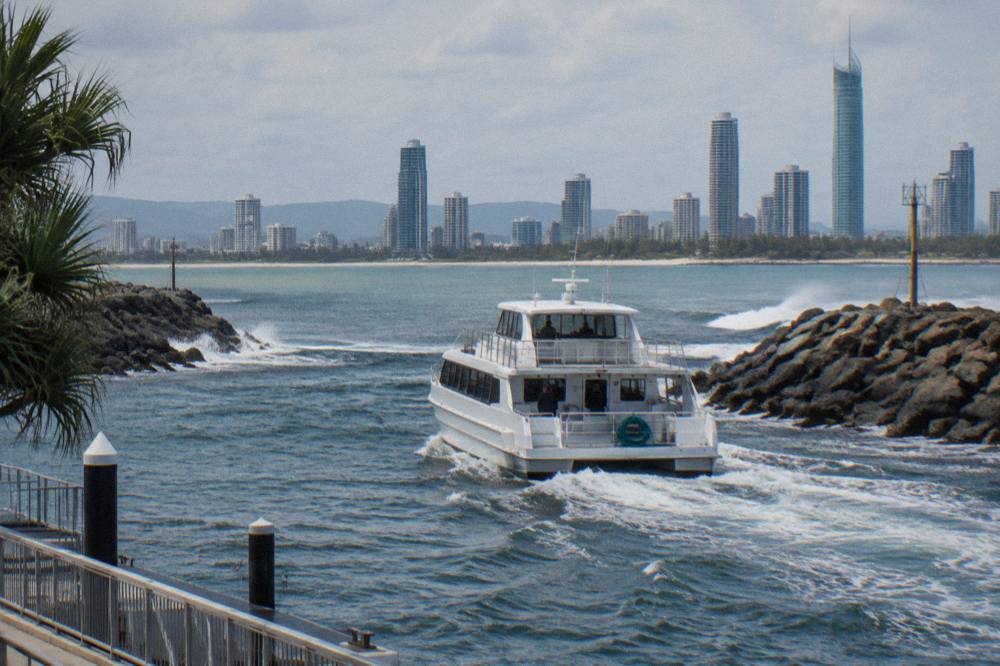
Every Gold Coast-side whale cruise crosses the Gold Coast Seaway, a designated coastal bar where Maritime Safety Queensland warns conditions can change quickly and without warning. The bar is at its most hazardous on an ebb tide combined with large swell or strong wind, which is why operators treat the crossing, not the open ocean, as the first weather decision of the day.
The Seaway is the narrow channel between the Broadwater and the open sea at Main Beach, and it is the front door for the four cruises that depart the Gold Coast side: the Sea World Cruises trip from Seaworld Drive, the Kokomo boat from Marina Mirage, the Spirit of Gold Coast catamaran from Southport and the Boattime superyacht from the Marine Stadium Jetty. All four are within minutes of the crossing, which is convenient on a calm morning and the reason crews watch the tide and swell so closely on a rough one.
Maritime Safety Queensland's guidance on crossing coastal bars is blunt about the risk profile: conditions can change quickly, and an ebb tide running against large swell or strong wind produces the worst water on the bar. For whale watchers this has a practical meaning. The most likely rough-water moment of your whole trip is the first ten minutes, leaving the sheltered Broadwater for the open sea, not the two hours of whale watching that follow.
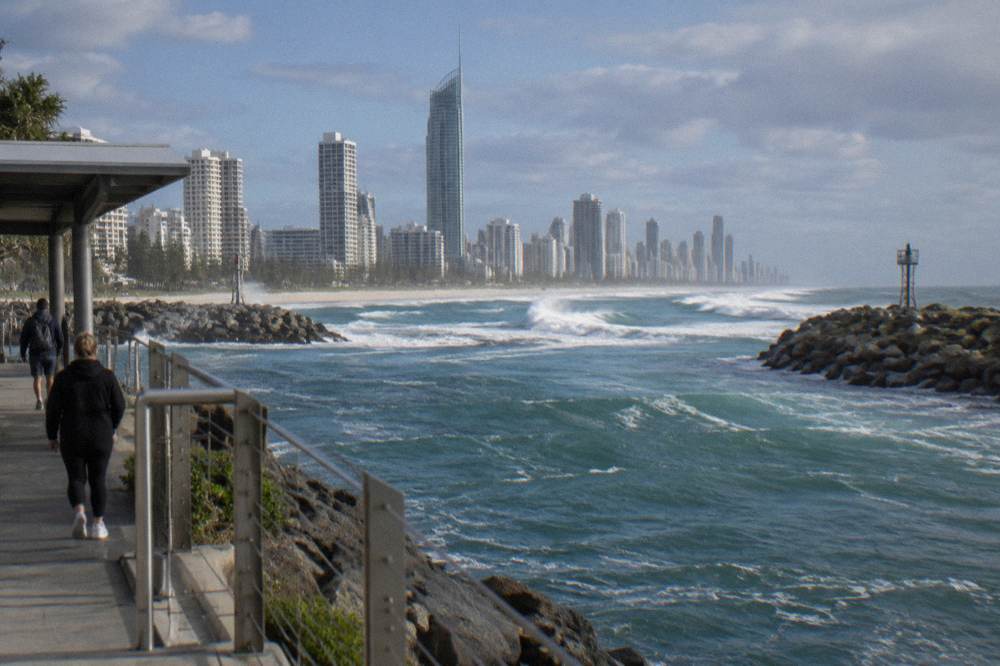
The operators' response is procedural, not heroic. Crews check the bar state and the forecast on the morning of departure, and the decision to run, delay or cancel is made against that reading. This is also why the two Tweed-side small boats, the Blue Seafaris trip from Tweed Heads South and the Cooly Eco safari boat from Chinderah on the Tweed River, have a different exposure: they exit through the Tweed River mouth rather than the Seaway, and their operators make the same safety call against their own bar.
If you want the full picture of what the water does on this coast through the season, the Gold Coast whale watching sea conditions guide covers the bar, the swell and the seasonal patterns in detail. The short version: calm mornings are the norm in winter, the wind builds through the day, and the bar is the pinch point everyone watches.
Is Morning Better Than Afternoon For Calmer Water?
Yes, morning is generally the calmer window, and the Queensland Government's own whale watching advice says the best spotting conditions are calm mornings before the wind picks up. On the Gold Coast the typical winter pattern is a light morning breeze that strengthens through the day, so an early departure usually means a flatter sea and an easier bar crossing.
This is one of the few weather questions with an official answer rather than folklore. The state's whale watching guidance notes that calm mornings, before wind builds, are the most likely time to spot whales from the shore, and the same logic applies on the water: less wind means less chop, a smoother ride and clearer surface viewing. Every operator on the roster runs morning departures for exactly this reason.
The practical booking advice follows directly. If you are sensitive to motion or travelling with a nervous first-timer, take the earliest sailing of the day. The Sea World Cruises premium cruise, about 2.25 to 2.5 hours from $55 per person, and the Spirit of Gold Coast trip, about 2 hours 50 minutes from $52.30 per person, both sail from the Main Beach and Southport side, minutes from open water, so an early start maximises your time in the calmest sea available.
Afternoon trips are not a bad option, and on many winter days the difference is minor. But when a windy change is forecast, it usually arrives in the afternoon, and an afternoon departure is the one more likely to feel the freshening breeze. If your schedule allows only a midday or afternoon slot, the larger purpose-built vessels are the better pick on a marginal day; the Kokomo cruise from Marina Mirage, from $62.19 per person and capped at 47 travellers, sits in the middle of the fleet for size, while the two NSW-side small boats trade comfort for proximity.
| Departure window | Typical winter condition | Best suited to |
|---|---|---|
| Early morning | Calmest sea, lightest wind, easiest bar crossing | Motion-sensitive travellers, families, photographers |
| Midday | Often still fine, wind beginning to build | Most travellers, flexible plans |
| Afternoon | Freshest breeze and chop of the day | Larger vessels, confident sailors, second-choice slots |
Will Rough Weather Make You Seasick On A Whale Cruise?
Rough weather raises the odds of seasickness, but the effect depends far more on the vessel, your position on board and your own susceptibility than on the forecast alone. Sitting mid-boat, keeping a steady horizon in view and eating lightly before departure are the standard general measures, and they work in the conditions Gold Coast cruises actually sail in.
No sea-state statistics exist for Gold Coast whale cruises, and none are needed to give honest advice. The trips that run are, by the operators' own safety standards, conditions the crews judge acceptable, which in practice means lumpy rather than extreme. What separates the passengers who enjoy those days from the ones who do not is mostly preparation.
The general measures are well established. Sit mid-boat, where the motion is least, rather than at the bow or stern. Keep your eyes on the steady horizon rather than down at a screen. Eat lightly beforehand, and if you know you are prone to motion sickness, take whatever remedy you normally use, in time for it to work before the boat leaves the wharf. Age policies and medication advice for any specific listing are check-the-listing questions, since nothing beyond the general is printed on the roster.
Vessel choice matters too. The Spirit of Gold Coast catamaran with its lower and upper decks, the Sea World Cruises purpose-built whale watching vessel and the Boattime superyacht from $52 per person all offer more stable platforms and interior space than the open small boats. The Cooly Eco safari-style vessel seating 12 and the Blue Seafaris small boat of around 21 give eye-level, close-to-the-water viewing that many travellers love, but on a fresh day that same low profile means more spray and more motion. For a deeper treatment of the topic, including what the ride on each style of boat feels like, see will you get seasick on a whale watching tour.
One rough-day advantage worth remembering: whales are often more active in weather with a bit of energy in it. Humpbacks breach, tail-slap and display surface activity through the whole season, and a breezy day with whitecaps is frequently a day with plenty of surface action to watch. The trade is comfort, not sightings.
Should You Book Anyway If The Forecast Looks Mixed?
Yes, in almost every case. Booking ahead is the only way to secure a seat in the July and August peak, the free cancellation on every listing means a mixed forecast costs you nothing if you change your mind inside the window, and an operator weather cancellation ends in a reschedule or a full refund rather than a lost payment. The risk of booking early is close to zero on this roster.
The two listings carrying a real "Likely to sell out" badge, the Sea World Cruises cruise and the Blue Seafaris small boat, make the case on their own: in peak weeks, waiting for a perfect forecast is how you end up with no cruise at all. A 4.6 rating from 655 reviews and a 4.9 from 48 reviews respectively reflect seasons of full boats, and the Sea World trip's stated 100% sighting guarantee with a free return cruise, a listing policy, adds a second layer of comfort for the whale-focused traveller. If the price of a guaranteed seat gives you pause, our guide to watching whales on the Gold Coast for less lays out the cheaper options and the trade-offs that come with them.
The decision tree is simple. If the forecast is clearly dangerous, the operator will cancel and you are covered. If it is merely rough, the boat sails and you decide whether that is your kind of morning. If you would rather not find out, cancel inside the free window on the listing and rebook for another day. The only genuinely bad move is booking a non-refundable-style plan around a cruise you have not reserved, then finding the date sold out.
For the small-boat experience specifically, the Kokomo cruise is the one to look at: 4.9 from 381 reviews, from $62.19 per person, about 2.5 hours from Marina Mirage, free cancellation up to 24 hours ahead, and a 47-traveller cap that keeps the deck uncluttered even on a busy morning.
And for the trip with the deepest review pool on the roster, the Spirit of Gold Coast whale watch, 4.6 from 920 reviews, from $52.30 per person, pairs a marine biologist guide with a listing-stated humpback sighting guarantee from June to November or a complimentary second cruise, with morning tea included and food and drinks to buy on board.
Whichever way you lean, the comparison on Whale Watching On The Gold Coast puts all seven listings side by side, and the trip picker and homepage comparison make short work of matching a cruise to your weather tolerance, your budget and your departure point.
Common Questions About Rough Weather On Gold Coast Whale Cruises
Do Gold Coast Whale Watching Cruises Run In Rough Weather?
Yes, most of the time. Operators distinguish between uncomfortable and unsafe conditions, and only the latter stops a departure. When a cruise is cancelled for weather, the standard outcome is a reschedule or a full refund, with Sea World Cruises stating SMS notice at least two hours ahead.
What Happens If My Whale Cruise Is Cancelled For Weather?
You are offered a reschedule or a full refund under the operator's terms. Sea World Cruises states operator cancellations are notified by SMS at least two hours before departure, and Spirit of Gold Coast states weather cancellations mean a reschedule, or a full refund if no new date can be arranged, requested within 14 days.
Can I Cancel Myself If The Forecast Looks Bad?
Yes. Every listing on the roster states free cancellation, and the Kokomo cruise states free cancellation up to 24 hours ahead. Cancel inside the window on the listing and you pay nothing, which is why booking early in peak season carries little risk.
Is The Gold Coast Seaway Dangerous For Whale Cruises?
The Seaway is a designated coastal bar where conditions can change quickly, and Maritime Safety Queensland warns it is most hazardous on an ebb tide with large swell or strong wind. Licensed commercial crews cross it daily through the season and make the go or no-go call each morning against the tide and swell.
Which Boat Is Best On A Choppy Day?
Larger purpose-built vessels handle chop best, so the Sea World Cruises cruise, the Spirit of Gold Coast catamaran and the Boattime superyacht are the comfortable picks. The Cooly Eco safari boat seating 12 and the Blue Seafaris small boat of around 21 give closer, eye-level viewing but move more in a fresh sea.
Does Rough Weather Reduce Whale Sightings?
Not in any way the evidence supports. Humpbacks migrate through all conditions, and with the east coast population estimated at more than 50,000 animals, the whales keep moving whether the surface is glassy or choppy. Wind can make spotting harder for the crew, but surface activity is often strong in weather with energy in it.