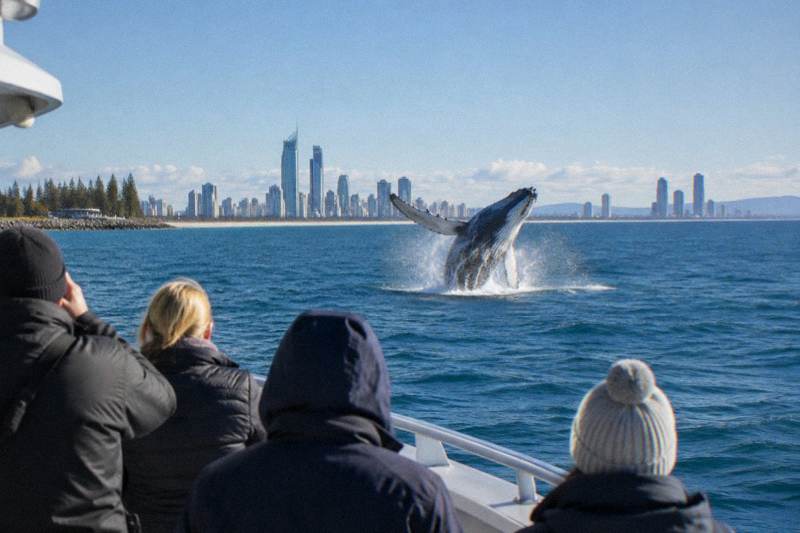
Whale Cruise Sea Conditions On The Gold Coast: What Swell, Wind And The Seaway Bar Do To Your Day
The Gold Coast sits behind a shifting coastal bar, and every whale cruise has to cross it. Here is what swell, wind and tide actually do to your day on the water, what the operators' own terms say when the sea turns rough, and why a 24 metre catamaran and a 12-guest safari boat are very different rides.
Short answer
Sea conditions on the Gold Coast are driven by three things: wind, swell and the state of the Seaway bar. Calm mornings before the wind picks up are the most reliable window, operators cancel or reschedule when conditions are unsafe, and every cruise on the roster carries free cancellation. Boat-based whale watching runs from $52 to $105.31 per person across the seven listings compared here.
The Gold Coast is one of the few whale watching ports in Australia where the ocean is reached through a designated coastal bar, a shifting sandbank crossing at the Gold Coast Seaway that every cruise from Main Beach and Southport has to negotiate before the open sea begins. That single geographic fact explains most of what people ask about sea conditions here: why some mornings are glass and some afternoons are chop, why operators watch the forecast so closely, and why the Sea World Cruises premium whale watching cruise, the Spirit of Gold Coast catamaran, the Kokomo boat, the Boattime superyacht, the Blue Seafaris small boat and the Cooly Eco safari vessel can all head out on the same day and have very different rides. This guide sets out what is actually known about swell, wind, tide and the bar, what the operators' own terms say about rough-day cancellations, and how to choose a departure that matches your stomach. One honest caveat up front: no verified sea-state statistics, swell averages or cancellation-rate figures exist for Gold Coast whale watching, so none appear here. What follows is qualitative, sourced from official marine guidance and the operators' published policies.
What Do Sea Conditions Actually Mean For A Gold Coast Whale Cruise?
Sea conditions are the combination of wind strength, swell height and direction, and tide state over the Seaway bar, and together they decide whether your cruise runs and how comfortable the ride feels. The whales are largely indifferent: humpbacks migrate through this corridor from late May or early June to early November regardless of the weather. What changes with conditions is the boat, not the whales.
Three variables do most of the work. Wind is the first: a fresh south-easterly that builds through the day turns a flat morning into a lumpy afternoon, which is why the Queensland Government's own whale watching guidance notes that calm mornings, before any wind picks up, are the best time to spot whales. Swell is the second: long-period ground swell arriving from storms far offshore can make the open water outside the bar roll even when the local wind is light. Tide is the third, and it matters mostly at the bar itself.
The whales do not read the forecast. The east Australian humpback population is now estimated at more than 50,000 animals, up from about 8,000 in 2006, and they pass the Gold Coast in both directions for roughly half the year. A rough day is a boat problem, not a whale problem, and the honest framing for any planning reader is this: you are not choosing whether the whales will be there, you are choosing how comfortable you will be while they are.
| Variable | What it changes | Typical pattern in season | Who it hits hardest |
|---|---|---|---|
| Wind | Surface chop, spray, comfort on open decks | Often light at dawn, building from mid-morning | Small open boats, upper decks |
| Swell | Rolling motion outside the bar, bar crossing state | Arrives in long-period sets from distant storms | Everyone crossing the Seaway |
| Tide | Water depth over the bar, ebb-current strength | Worst on an ebb tide with large swell or strong wind | Boats departing Main Beach and Southport |
| Sea state overall | Whether the operator proceeds, reschedules or refunds | Monitored continuously, decided on the day | All seven listings on the roster |
Why The Gold Coast Seaway Bar Matters More Than The Forecast
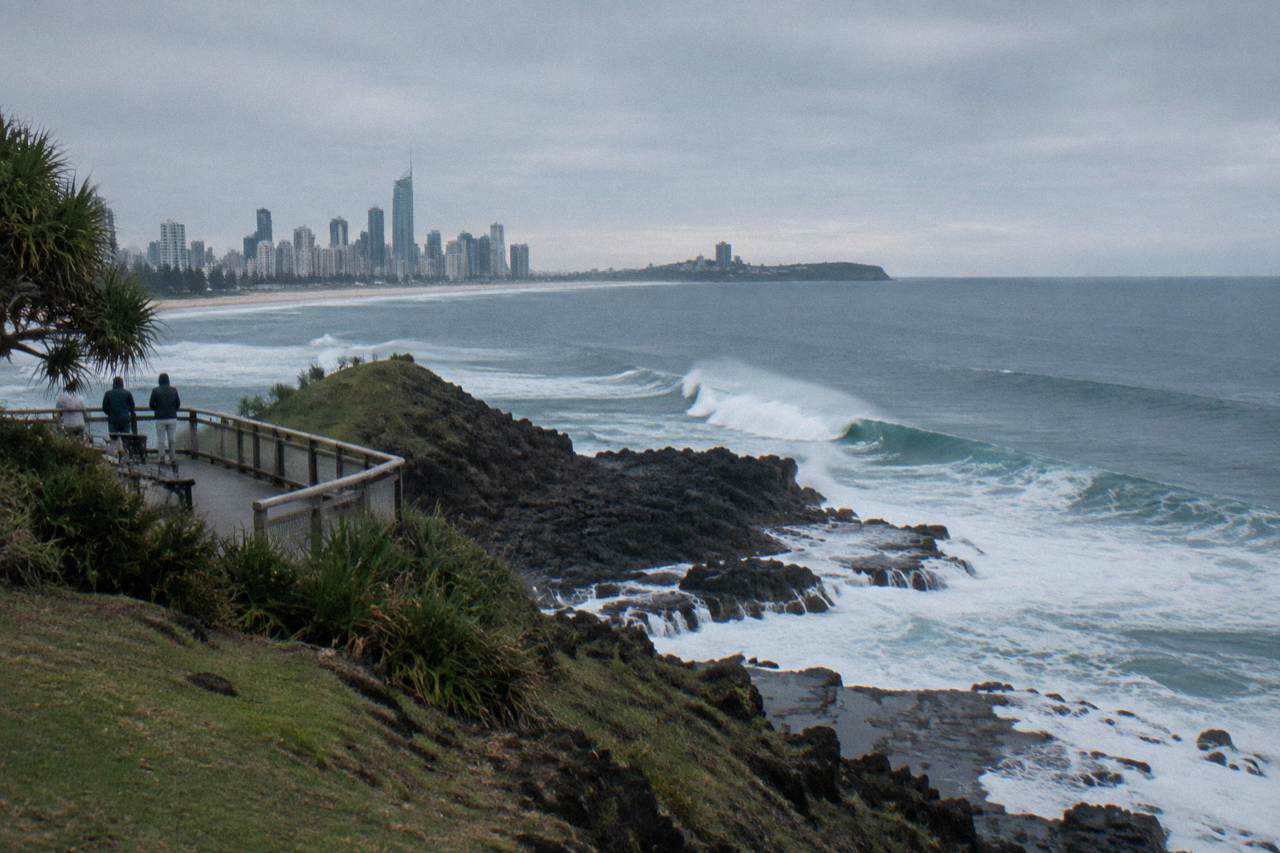
The Gold Coast Seaway is a designated coastal bar, a shallow sandbank crossing between the Broadwater and the open ocean, and Maritime Safety Queensland warns conditions there can change quickly without warning, worst on an ebb tide with large swell or strong wind. Every whale cruise departing Main Beach or Southport crosses this bar, and it is the most consequential piece of geography on any whale watching day here.
A bar is not a channel in the ordinary sense. It is a mobile bank of sand that shifts with storms and seasons, and the water depth over it drops as the tide falls. When an outgoing ebb current meets incoming swell, the water stacks up into short, steep, confused seas that are far worse than anything a few hundred metres further out. This is why experienced crews time bar crossings to the tide, and why a day that looks merely breezy on the beach forecast can still produce an unpleasant crossing if the swell and the ebb line up. The official guidance for crossing coastal bars in Queensland, published by Maritime Safety Queensland, sets out exactly these hazards for skippers, and commercial whale watching crews work to the same reality.
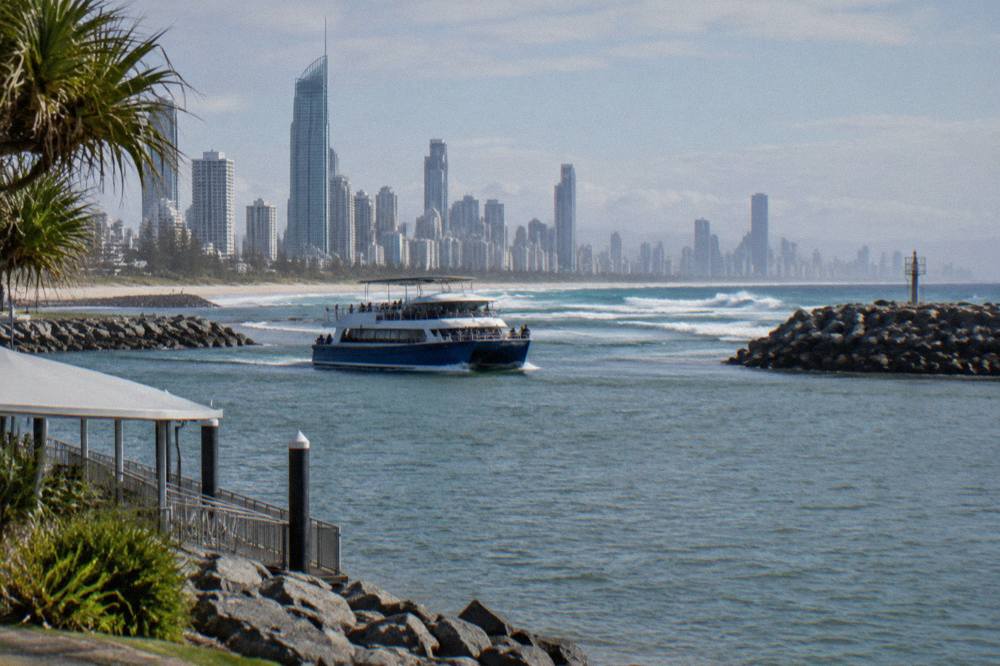
The practical takeaway for a visitor is simple: the bar is the crew's problem, not yours, and it is a good reason to prefer an operator with a purpose-built vessel and a professional crew. The Sea World Cruises whale watching cruise runs a purpose-built whale watching vessel from the Sea World Cruises Terminal at Main Beach, price on the live listing, rated 4.6 from 655 reviews, with free cancellation and no hotel pickup, so guests make their own way to the terminal. The Spirit of Gold Coast trip runs about 2 hours 50 minutes, with a whale guarantee across the June to November season, rated 4.6 from 920 reviews, the deepest review pool on this roster. Both cross the same bar, and both carry crews who make the tide-and-swell call professionally, every day of the season.
If you would rather read a fuller comparison of these boats before deciding, the compared Gold Coast whale watching tours guide breaks down all seven listings side by side, and the cruise departure points guide maps every wharf and marina on the route.
Why Mornings Are Usually The Calmest Time On The Water
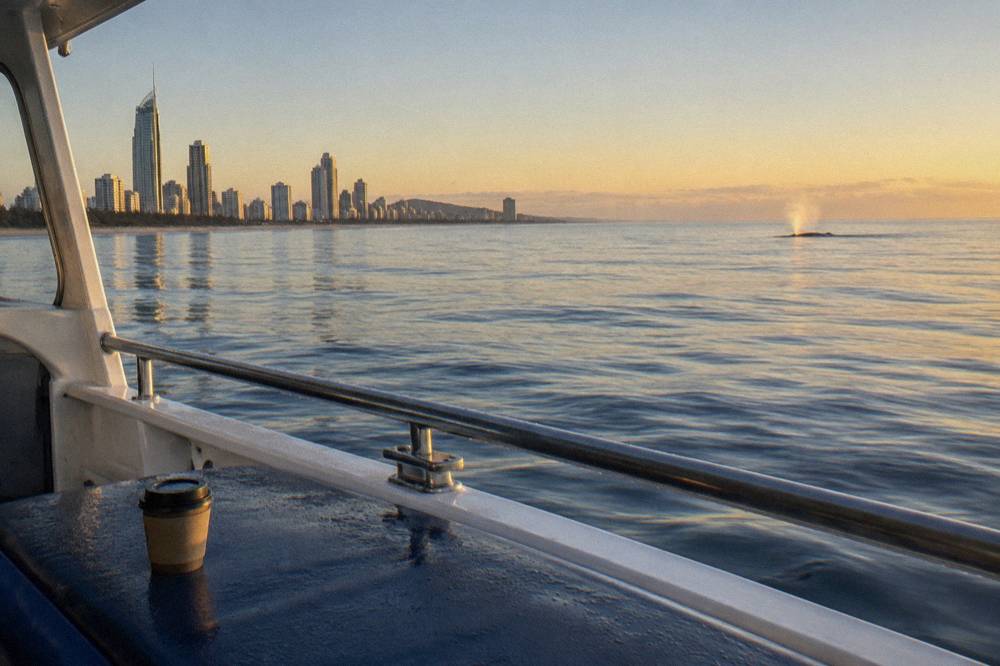
Mornings are calmer for a mechanical reason: overnight and at dawn the sea breeze has not yet developed, the wind is lightest and the surface is at its flattest, which is why the Queensland Government's whale watching guidance names the morning, before any wind picks up, as the best spotting window. The typical winter pattern here is a calm early start with the south-easterly building through late morning and afternoon.
This matters for two decisions at once. The first is comfort: if anyone in your group is prone to motion sickness, a morning departure stacks the odds in your favour, and the same logic applies to photography, because flat water makes both spotting and shooting easier. The second is sighting behaviour, which is a softer point: calm surface conditions make blows, breaches and tail slaps easier to see from further away, so a glassy morning can genuinely feel more productive than a windy afternoon even when the same number of whales are passing. The rest of the planning pages sit on Whale Watching On The Gold Coast.
The full argument for morning departures, including what operators say about timing, is laid out in the site's morning versus afternoon whale watching comparison, and the seasonal context is in the July and August whale season weather guide. Neither changes the core fact: book the earliest sailing your chosen operator offers and you have done the single easiest thing available to improve your day on the water.
What Happens If The Operator Cancels For Rough Weather
If rough weather forces the operator to cancel, you keep your money: Sea World Cruises lets you proceed, reschedule, or take a full refund when conditions are unsafe, notifying you by SMS at least two hours ahead, while Spirit of Gold Coast offers a reschedule or a full refund if rescheduling is not possible, requested within 14 days. Since rough patches tend to pass quickly, our guide to Gold Coast weather during the peak whale watching months can help you pick a calmer day before you book.
These are the operators' own terms, quoted from their published policies, and they describe a mature system. The crew watches the forecast and the bar, makes a safety call, and you are not left holding a lost fare. The Sea World Cruises terms are unusually generous in one respect worth noting: the decision point is at check-in, which means you get a genuine choice on the morning rather than a cancellation decided the night before. You can read the operator's full policy on the Sea World Cruises FAQ page, and Spirit of Gold Coast's equivalent terms sit on the Spirit of Gold Coast terms page.
One distinction matters and is often missed. An operator cancellation for weather is not the same as a no-sighting day. Several listings on this roster, including Sea World Cruises, Spirit of Gold Coast, Boattime and Blue Seafaris, state their own sighting guarantee or free return policy on the listing, but those policies are about whales, not weather, and they are the operators' promises to attribute to them, not ours. Kokomo and the Cooly Eco boat trip state no sighting guarantee at all. The what-happens-if-you-miss-them question is covered in full in the guide on what happens if you do not see a whale on a Gold Coast cruise.
| Operator | What its published terms say about rough weather | What you get if it cancels |
|---|---|---|
| Sea World Cruises | Notify at check-in if rough seas expected, then choose to proceed, reschedule, or full refund if unsafe | SMS at least two hours ahead, reschedule or full refund |
| Spirit of Gold Coast | Operator weather cancellations lead to reschedule subject to availability | Full refund if it cannot reschedule, request within 14 days |
| All seven roster listings | Free cancellation offered on the live listing | Cancel yourself before the cutoff, no fare lost |
The deeper question of whether rough days happen often, and how to think about booking around them, is treated honestly in the site's piece on whether Gold Coast whale watching cruises run in rough weather, which, like this guide, refuses to invent cancellation statistics that do not exist.
Will You Get Seasick On A Whale Watching Cruise?
Motion sickness is a real possibility on any small vessel in open water, and susceptibility varies enormously from person to person. The general advice holds everywhere: eat lightly beforehand, stay on deck with a steady horizon rather than below, sit near the middle of the boat where the motion is least, face forward, and take any remedy before boarding rather than after symptoms start. No medication advice specific to any Gold Coast listing exists, so none is given here.
The reason this section stays general is deliberate. No verified data exists on seasickness rates on Gold Coast whale cruises, and inventing a figure would be exactly the kind of fake precision this site refuses. What can be said with confidence is structural: the bigger and wider the vessel, the gentler the motion, and the smaller and lower the boat, the more you feel every swell. That is a trade-off, because the small boats also deliver the closest, most eye-level encounters with the water.
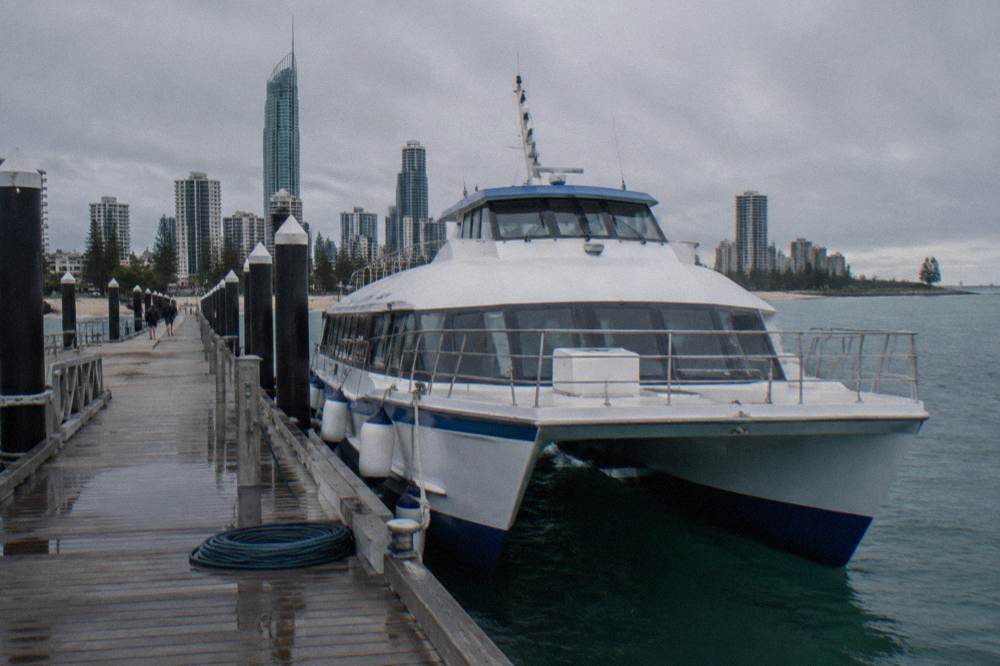
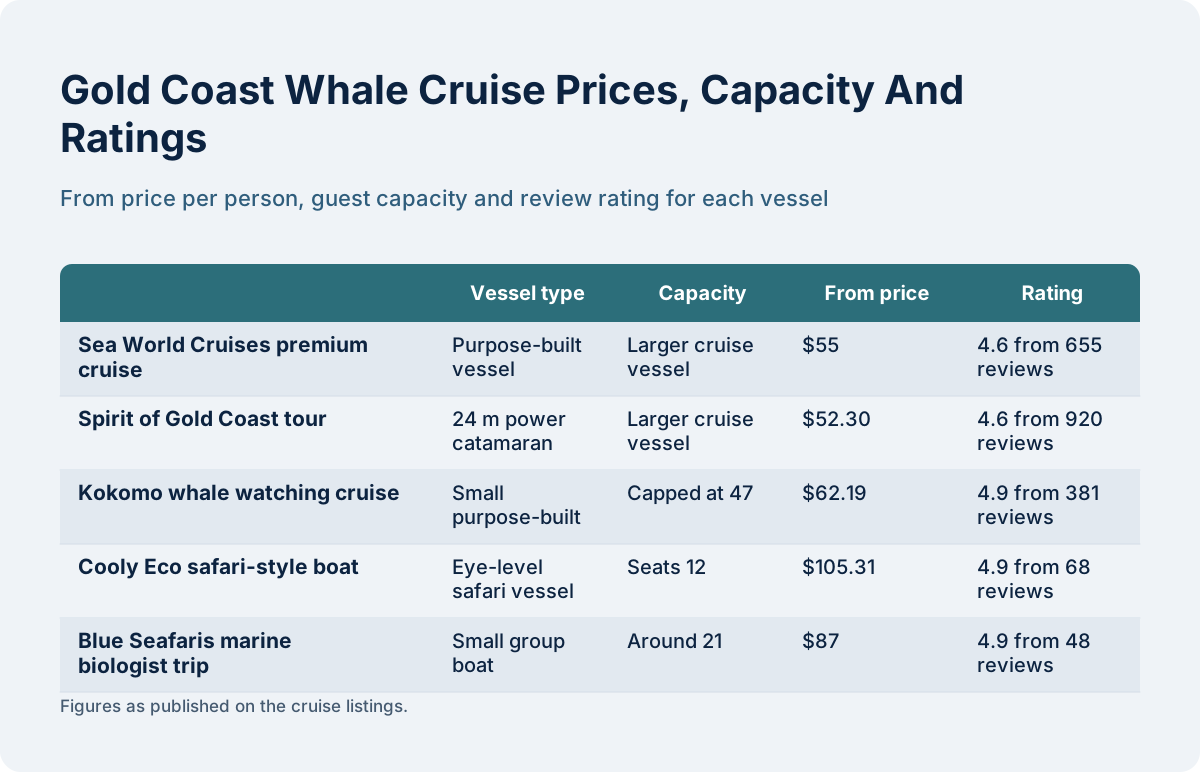
So the practical decision framework is honest about both sides. If you know you are susceptible, or you are booking for parents or kids who are, the Sea World Cruises purpose-built catamaran and the Spirit of Gold Coast power catamaran are the reassuring choices, both large, stable platforms with multiple decks. If you want intimacy and you have a strong stomach, the Kokomo boat capped at 47 travellers from Marina Mirage, from $62.19 per person and rated 4.9 from 381 reviews, or the Cooly Eco safari-style vessel seating 12, from $105.31 per person and rated 4.9 from 68 reviews, sit you at water level where the sea is felt most and the whales feel closest. The full anatomy of that feeling, including how close whales legally come to boats, is in the guide on whether whales come close to the boat on the Gold Coast.
| Vessel or listing | Type of ride | Guest capacity | From price per person | Rating and reviews |
|---|---|---|---|---|
| Sea World Cruises premium cruise | Purpose-built whale watching vessel | Larger cruise vessel | $55 | 4.6 from 655 reviews |
| Spirit of Gold Coast tour | 24 m power catamaran, 360 degree views | Larger cruise vessel | $52.30 | 4.6 from 920 reviews |
| Kokomo whale watching cruise | Smaller purpose-built boat | Capped at 47 | $62.19 | 4.9 from 381 reviews |
| Cooly Eco safari-style boat | Eye-level safari vessel | Seats 12 | $105.31 | 4.9 from 68 reviews |
| Blue Seafaris marine biologist trip | Small group boat | Around 21 | $87 | 4.9 from 48 reviews |
Why A Big Catamaran And A 12-Guest Safari Boat Feel Very Different
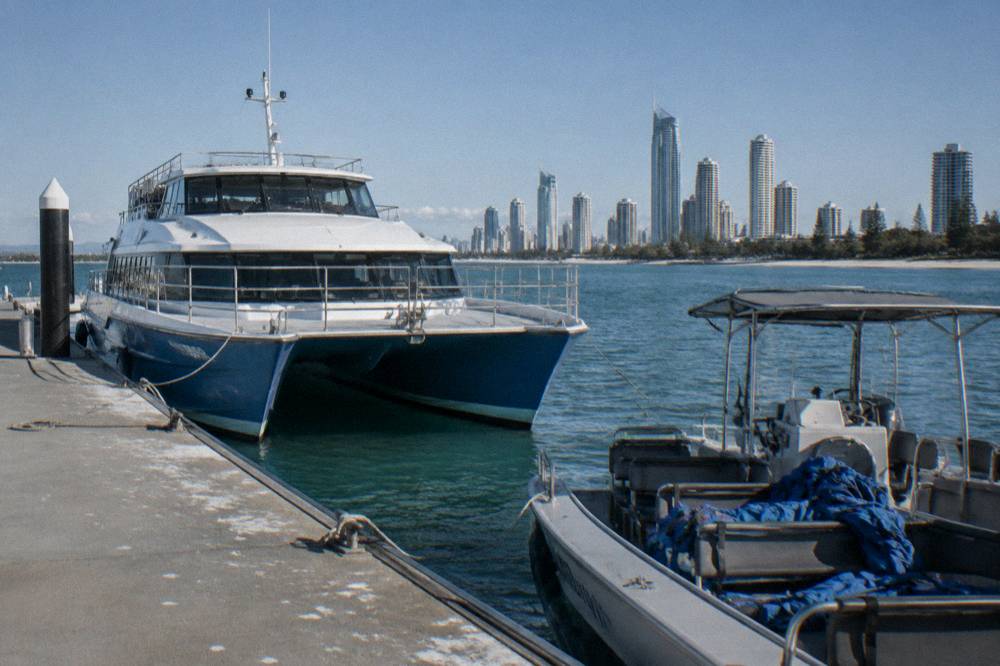
A large catamaran spreads two hulls across the swell and damps the roll, giving a stable platform with decks, shelter and room to move, while a small safari-style boat sits low, moves with every wave and delivers a raw, spray-on-the-rails experience many travellers find far more thrilling and some find too much. Neither is better; they are different products, and the day's sea conditions amplify the difference between them.
The roster makes this comparison concrete. The Spirit of Gold Coast trip runs about 2 hours 50 minutes on the water, backs the full June to November season with a whale sighting guarantee, and comes with free cancellation. The Sea World Cruises cruise runs a purpose-built whale watching vessel, with food and drinks on board; guests make their own way to the departure point. At the other end of the scale, the Cooly Eco Adventures safari-style vessel seats 12 with spray jackets and a marine naturalist, departing Chinderah on the Tweed River in New South Wales, from where the trip covers the Coolangatta and Gold Coast waters. The Blue Seafaris small boat runs 2.5-hour trips from Tweed Heads South, NSW, rated 4.9 across 48 reviews. Food and drinks are not included, so bring your own water and snacks. The listing carries a "Likely to sell out" badge. The Boattime superyacht, from $52 per person and rated 3.7 from 138 reviews, the lowest rating on this roster, takes a different angle again: a luxury yacht with a marine biologist, light refreshments on arrival, and a 100 per cent whale sightings guarantee stated on the listing.
On a flat morning these differences are mostly about atmosphere. On a day with swell running, they become physical. A catamaran shrugs off a two metre swell that a 12-guest open boat rides up and over, and the spray jackets the Cooly Eco crew hand out are not a costume, they are working gear. If you are undecided, the site's best whale watching cruise comparison ranks the options by trip style, and the what to expect on a Gold Coast whale watching cruise guide walks through the day from check-in to docking.
There is also a legal layer to closeness that conditions do not change. Under Queensland's approach rules, updated 5 March 2026 and published on the Queensland Government's marine mammal watching page, boats keep 100 metres from a whale and 300 metres in front of or behind it, slow to 6 knots inside 300 metres, and no more than three boats may share one whale's caution zone. Drones stay 100 metres away and helicopters 500 metres. When whales approach a vessel on their own, the rules follow the whale, not the boat, which is how close encounters happen legally.
How To Pick Your Departure When The Swell Is Up
When the forecast shows swell arriving, pick the earliest morning departure available, prefer the largest or most stable vessel on the roster, confirm the operator's reschedule terms before you book, and treat the free cancellation every listing carries as your safety net rather than your plan. If conditions look genuinely marginal, book the trip you can cancel and rebook, rather than gambling on a single afternoon sailing.
A short planning sequence does most of the work. Check the Bureau of Meteorology's coastal waters forecast for the Gold Coast waters the evening before and again at dawn, remembering that the bureau's seasonal outlooks, like the 28 May 2026 winter outlook that pointed to below-average rainfall and above-average temperatures with El Nino developing, describe climate patterns rather than any single day's bar state. Choose a morning sailing. Match the vessel to your group: large catamaran for the susceptible, small safari boat for the committed. Read the operator's cancellation terms so a rough-day call does not surprise you. Then book with free cancellation and stop worrying, because the system exists precisely so that you do not have to.
| Situation | Best pick on the roster | Why |
|---|---|---|
| Prone to motion sickness | Sea World Cruises cruise or Spirit of Gold Coast catamaran | Large stable platforms, multiple decks, shelter |
| Want the closest water-level ride | Cooly Eco safari boat (12 guests) or Blue Seafaris (about 21) | Low, open, eye-level with spray jackets supplied |
| Travelling without a car | Sea World Cruises or Spirit of Gold Coast | No tour includes pickup, so make your own way to the departure point |
| Booking late in season, September to October | Any listing, but expect mothers and calves closer to shore | Southbound leg runs slower and nearer the coast |
| Budget-first planning | Boattime superyacht, from $52 | Cheapest listed price on the roster |
One more planning note worth carrying: the swim-with-whales option on this roster, the Cooly Eco trip from $310.26 per person, rated 4.9 from 50 reviews, departs Chinderah in New South Wales, not the Gold Coast, because no authorised swim-with-whales tour departs the Gold Coast itself. Its listing guarantees a sighting but not a swim, and in NSW waters swimmers enter the water at least 100 metres from a whale and then keep 30 metres clear. If a rough-sea day pushes you toward calmer in-water ambitions, that is the honest state of the rules. The full picture is in the swim with whales guide.
The last word on conditions belongs to the people who read them professionally. Crews on the Sea World Cruises vessel, the Spirit of Gold Coast catamaran, the Kokomo boat, the Boattime yacht, the Blue Seafaris small boat and the Cooly Eco safari vessel make the bar-and-swell call every working day of a season that stretches from late May or early June to early November, and their collective judgement, expressed in the reschedule-or-refund terms quoted above, is the most reliable sea-conditions instrument on the Gold Coast. Trust it, book the morning, and let the calendar do the rest.
Common Questions About Whale Watching Sea Conditions On The Gold Coast
Do Gold Coast Whale Watching Cruises Run In Rough Weather?
Operators monitor conditions and cancel or reschedule when the sea is unsafe. Sea World Cruises states that you can choose to proceed, reschedule or take a full refund if it is unsafe, with operator cancellations notified by SMS at least two hours ahead, and Spirit of Gold Coast states its weather cancellations mean a reschedule or a full refund if it cannot reschedule. Every listing on the roster also carries free cancellation on the booking page. No cancellation-rate statistics exist, so none are given.
Is The Morning Really Calmer Than The Afternoon For Whale Watching?
Yes, usually, and for a mechanical reason: the sea breeze builds through the day, so dawn and early morning carry the lightest wind and flattest surface. The Queensland Government's whale watching guidance names the morning, before any wind picks up, as the best spotting window, and the same logic applies to comfort on board.
What Is The Gold Coast Seaway Bar And Why Does It Matter?
The Seaway is a designated coastal bar, a shifting shallow sandbank crossing between the Broadwater and the open ocean, and every whale cruise departing Main Beach or Southport crosses it. Maritime Safety Queensland warns conditions can change quickly without warning, and the crossing is at its worst on an ebb tide combined with large swell or strong wind. Commercial crews time their crossings to the tide.
Will I Get Seasick On A Gold Coast Whale Cruise?
It is possible on any vessel, and susceptibility varies person to person. General advice: eat lightly beforehand, stay on deck with a steady horizon, sit near the middle of the boat, face forward, and take any remedy before boarding rather than after symptoms start. A large catamaran like the Spirit of Gold Coast 24 metre vessel moves far less than a 12-guest safari boat. No listing-specific medication advice exists, so check the listing for age and medical policies.
Which Boat Is Best If The Swell Is Up?
The larger, purpose-built platforms on the roster include the Sea World Cruises vessel and the Spirit of Gold Coast power catamaran, both running daily trips through the June to November season. Both handle swell far more gently than the small open boats. If you specifically want the low, eye-level safari experience, the Cooly Eco 12-guest vessel supplies spray jackets, but expect to feel the sea more.
What Happens If The Operator Cancels My Cruise For Weather?
You are rescheduled or refunded, per the operators' published terms. Sea World Cruises notifies cancellations by SMS at least two hours ahead with reschedule or full refund options, and Spirit of Gold Coast offers a reschedule or a full refund if it cannot reschedule, requested within 14 days. These are operator policies, quoted from their own terms, and every listing on the roster also carries free cancellation on the booking page.