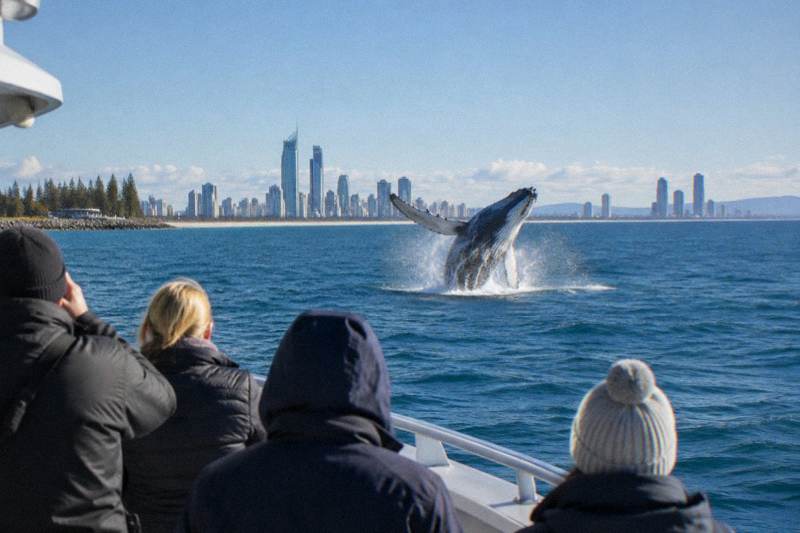
What Months Can You See Whales In Australia? A Month By Month Gold Coast Guide
Australia's east coast whale calendar runs April to November. This guide breaks down each month of the migration, the longer Gold Coast window, and which cruise to book when.
What Months Can You See Whales In Australia? A Month By Month Gold Coast Guide
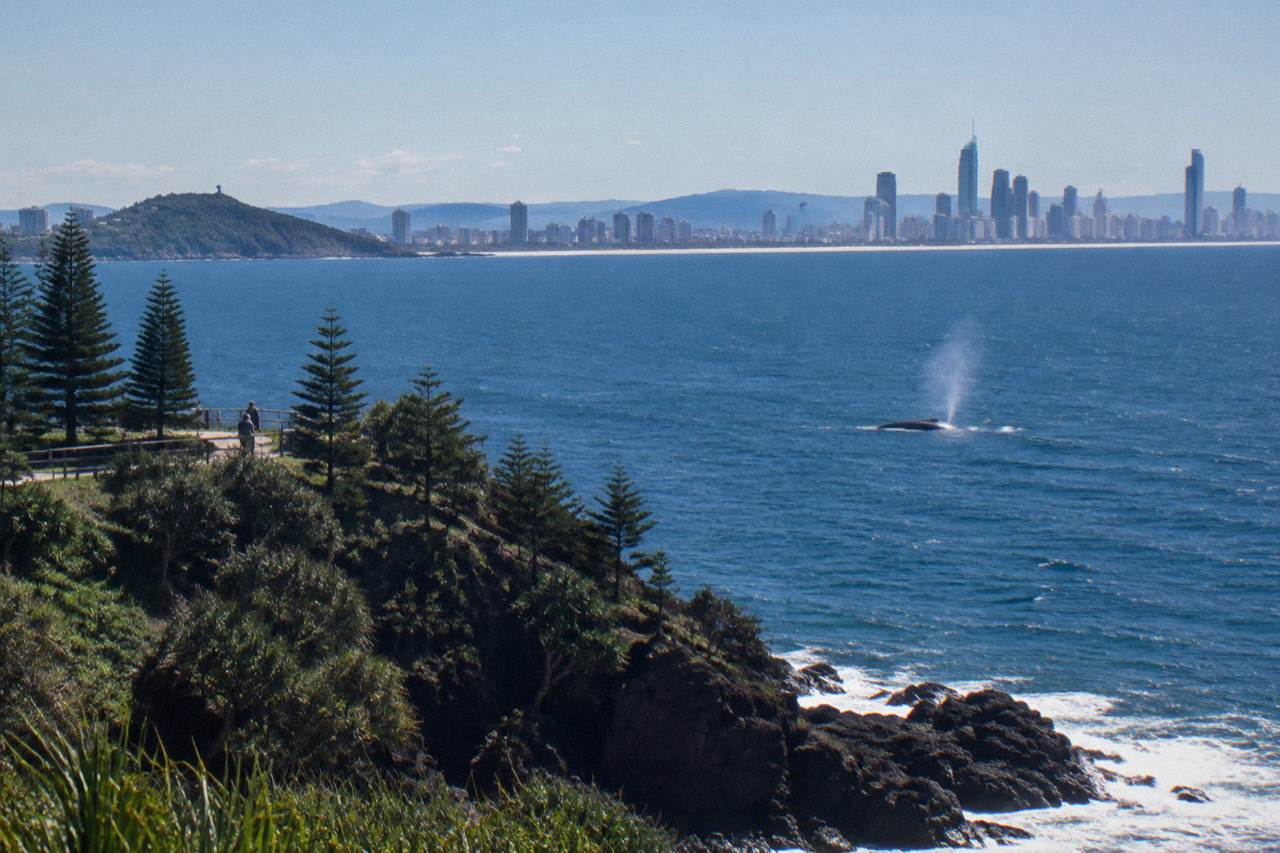
The honest national answer is April to November on the east coast. The federal environment department puts it plainly: each year between April and November, Australia's eastern coastline comes alive with humpback whales, with the majority travelling north from June to August and back south from September to November. The Gold Coast's own window runs June to November, with peak numbers in July and August, and it is one of the longest continuous viewing seasons in Queensland. With a season that long, the natural next question is how likely you are to actually spot one, and our guide to how common humpback sightings really are on the Gold Coast answers it plainly.
That calendar is not a tourism invention. It is the shape of a single migration. The same animals that pass Sydney in winter push past the Gold Coast a few days later, swim into tropical breeding grounds, then turn around and do the whole trip in reverse with newborn calves alongside. When people ask what months whales appear in Australia, they are really asking when the migration front passes wherever they happen to be standing, and the front moves.
The east coast population that drives all of this has recovered from a little over 100 animals when whaling ended in 1963 to more than 50,000 by 2024, a preliminary estimate reported to the federal environment department and not yet peer-reviewed. In 2006 the same population was estimated at around 8,000. Growth of roughly 10 to 11 percent a year for two decades is why a whale trip off the Gold Coast is now a reasonable expectation rather than a lucky gamble, though wild animals make no promises and no honest page will make one for them.
The practical version of this calendar, month by month, is what this article lays out. The Gold Coast sits in the middle of the corridor, and the boats that work it, the Sea World Cruises catamaran, the Spirit of Gold Coast whale watching trip, the Kokomo boat, the Boattime superyacht and the small vessels out of the Tweed, all run inside the same national timetable.
The East Coast Calendar: April To November Explained
April is when the earliest movers leave Antarctic feeding grounds, though sightings that far south are sparse and unverified in this site's research. May brings the leading edge up the Queensland coast, June and July the main northbound push, and August the peak overlap when late northbound animals and early southbound ones share the water. September to November is the southbound return, led by pregnant cows and cow-calf pairs travelling slower and closer to shore.
The federal breakdown of who travels when is worth knowing because it explains the character of each month. Groups of young males typically lead the migration, while pregnant cows and cow-calf pairs bring up the rear. That is why the early season tends to deliver fast, showy juveniles and the late season tends to deliver mothers with calves hanging close to the coastline, a difference that changes what a cruise actually looks like on the water.
The Queensland Government's own whale watching guidance adds the state-level timing: humpbacks generally migrate northwards along the Queensland coast between May and July, then turn south in July and August after time in tropical breeding grounds. The round trip between Antarctic feeding grounds and tropical breeding waters repeats every single year of their adult lives, a commute measured in weeks of constant swimming rather than days.
| Month | What is happening on the east coast | What it means on the water |
|---|---|---|
| April | Earliest departures from southern feeding grounds | Very few tours running; nothing dependable this early |
| May | Leading edge reaches southern Queensland | First Gold Coast operators open, late May or early June |
| June | Main northbound migration begins | Season proper starts; juveniles and young adults first |
| July | Peak northbound traffic | Highest numbers, most activity, most competitive pods |
| August | Peak overlap of legs | Widely cited as the strongest month for encounters |
| September | Southbound mothers and calves appear | Slower whales, closer to shore, longer encounters |
| October | Cow-calf pairs dominate | Best month for watching mothers with newborns |
| November | Stragglers heading south | Early November closes the Gold Coast season |
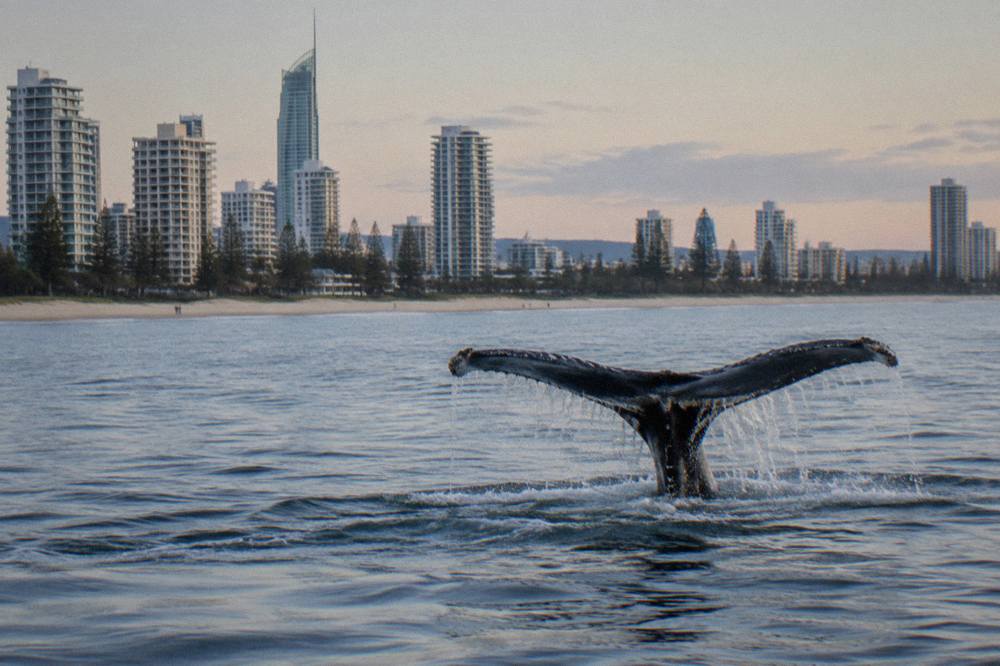
No operator sighting counts for 2026 were found in this site's research, so none are printed here. What can be said is structural: with more than 50,000 animals in the east coast population and a migration corridor that passes within sight of the Gold Coast's headlands, the odds in the peak months are about as good as whale watching gets anywhere in Australia.
Why The Gold Coast Window Runs Longer Than Most
The Gold Coast season runs June to November, with July and August bringing peak numbers, according to the state tourism body, and tours departing daily from Main Beach, Southport, Surfers Paradise and Coolangatta. Typical tour length is 2 to 3 hours. In practice, operators open the books from late May or early June and run through to early November, one of the longer continuous seasons on the Queensland coast.
The reason the window is wide here is geography. The east coast migration funnels past the southern Queensland corner, and the Gold Coast's departure points sit directly on the corridor rather than off to the side of it. The same logic explains why the Tweed-side operators at Tweed Heads South and Chinderah work these waters too: their small boats cover Coolangatta and Gold Coast waters from the New South Wales side of the border, per their listings.
The roster that sails out of this corridor is small and easy to hold in your head. The Sea World Cruises premium cruise departs the Sea World Cruises Terminal at Main Beach, about 2.25 to 2.5 hours, with a 100% whale sighting guarantee stated on the listing as a free return cruise policy. Hotel pickup is not included, so you make your own way to the terminal. The Spirit of Gold Coast trip departs Aqua Adventures at Southport with a marine biologist on board, about 2 hours 50 minutes, from $52.30. Both carry free cancellation on their listings.
For the full picture of who sails from where, the Gold Coast cruise departures guide breaks down every wharf, and the tour comparison guide ranks the boats against each other on price, rating and style.
Which Month Gives You The Best Chance Of Whales?
July and August are the peak months on the Gold Coast, the state tourism body's own verdict, and August is the month most frequently cited for both highest numbers and longest encounters. September and October are the best months for mothers with calves, which matters if close, slow, sustained viewing matters more to you than raw volume of whales passing the boat.
Those are different experiences, and choosing between them is the real decision. A July trip buys you the busiest corridor of the year, with juvenile whales in a hurry and competitive pods chasing each other north. A late September or October trip buys you the southbound leg, when mothers with newborns travel slower and closer to shore, and surface activity like breaching and tail-slapping runs through the whole season.
The boats suit these months differently. The Kokomo whale watching cruise, a smaller vessel capped at 47 travellers out of Marina Mirage at Main Beach, rates 4.9 from 381 reviews and runs about 2.5 hours from $62.19 per person. Its listing states no sighting guarantee, so none is claimed here, but a smaller deck with fewer people around you is a genuinely different product in a busy month. It carries free cancellation up to 24 hours ahead.
The Spirit of Gold Coast trip, meanwhile, carries the deepest review pool on this site's roster at 4.6 from 920 reviews, runs about 2 hours 50 minutes with a marine biologist guide, and includes morning tea with food and drinks available to buy. Its listing guarantees a humpback sighting from June to November or a complimentary second cruise, stated as the operator's policy and not a promise of your own.
What Changes Between The Northbound And Southbound Legs?
Northbound, from roughly late May through July, the whales passing the Gold Coast are mostly juveniles and young adults moving fast, followed by adult competitive groups. Southbound, from August through October and into November, the traffic is mothers with newborn calves travelling slower, closer to shore, and with far more lingering behaviour around the boats. Same animals, different trip.
The 2026 season gave the clearest possible illustration of how early the front can arrive. The first humpbacks of 2026 were reported off the Gold Coast Seaway on 2 June 2026: a mother and newborn calf in roughly 8 metres of water, just outside the Seaway, and noted as very early, with the previous earliest arrival on record around June 15. A newborn that far south that early is unusual, and it made the local news for exactly that reason.
Late season has its own news value. Around 14 September 2026, Sea World Foundation teams freed a roughly 10 metre humpback entangled in shark nets off Currumbin, the rope wrapped around its head and blowhole. It is a reminder that the mothers and calves passing closest to shore in spring are the same animals that share the water with net lines and boat traffic, and that the rescue infrastructure on this coast is real and busy.
If the southbound leg appeals, the value end of the roster handles it well. The Boattime superyacht trip, a luxury yacht with a marine biologist departing the Marine Stadium Jetty at Main Beach, runs about 2.5 hours from $52 per person, the cheapest listed price on this site's roster, with light morning or afternoon tea on arrival and a 100% whale sightings guarantee stated on the listing. Its rating of 3.7 from 138 reviews is the lowest on the roster, and this site says so plainly whenever boats are ranked.
What About Western And Southern Australia?
Western and southern Australia have their own whale seasons, driven by different populations, but this site's verified research covers the east coast humpback calendar only, so no month by month dates are printed here for those coasts. What can be said is that the east coast is Australia's largest and best documented humpback migration, the one the federal environment department tracks at more than 50,000 animals, and the one this site's entire tour roster sails on.
That restraint is deliberate. Inventing a Perth or Albany calendar from plausible memory is exactly the kind of thing this site refuses to do. If you are planning a trip in Western Australia or along the southern coast, use the local tourism authority for that state, the same way the Queensland Government's whale watching pages anchor everything on this coast.
For most readers asking this question, the practical answer is that the east coast delivers the longest, most accessible season in the country, and the Gold Coast is one of the easiest places on that coast to get on the water. The month by month season guide goes deeper on picking between July, August and September for a Gold Coast departure specifically.
How Queensland's Rules Shape Every Watching Month
Queensland applies the same rules to every watching month: boats keep 100 metres from a whale and 300 metres in front of and behind it, slow to 6 knots inside the caution zone, and no more than three boats may share one whale's caution zone, while drones stay 100 metres away, helicopters 500 metres, jet skis 300 metres, and swimmers 100 metres, with white whales like Migaloo protected by a 500 metre boat exclusion.
These distances explain a lot about what you actually see from a deck. When a whale approaches the boat, which happens, it is the whale's choice; the vessel has already stopped and let it come. The three-boat rule is why a good sighting does not turn into a circus, and why the licensed commercial operators, who operate under these rules and hold the permits, deliver a different experience from a random charter.
The rules are published on the Queensland Government's rules for watching marine mammals page. The NSW-side departures at Tweed Heads South and Chinderah work under New South Wales approach distances instead, where a swimmer enters the water at least 100 metres from a whale and then keeps 30 metres clear, per the NSW Environment approach distances page.
One consequence of the rules worth knowing: swimming with whales is not offered from the Gold Coast itself. No authorised swim-with-whales tour departs the Gold Coast; licensed Queensland swim operations run at Hervey Bay and the Sunshine Coast. The one swim trip on this roster departs Chinderah on the Tweed River in New South Wales, and the swim with whales guide covers exactly where that line sits.
Picking Your Month Around Weather And Crowds
The Bureau of Meteorology's winter 2026 outlook, issued 28 May 2026, pointed to below-average winter rainfall and above-average temperatures for southern Queensland, with El Niño likely developing. On the water, the Queensland Government's advice is that calm mornings, before any wind picks up, are the best time to spot whales, and the Gold Coast Seaway is a designated coastal bar where conditions can change quickly, worst on an ebb tide with large swell or strong wind.
Weather does not just affect comfort, it affects whether the boat sails at all. Operators monitor conditions and cancel or reschedule when the sea is unsafe. Sea World Cruises' own terms say that if rough seas are expected you notify staff at check-in and choose to proceed, reschedule, or take a full refund if conditions are unsafe, with operator cancellations notified by SMS at least two hours ahead. Spirit of Gold Coast's terms offer a reschedule or a full refund when it cancels for weather and cannot rebook you, with the request made within 14 days.
Every listing on this roster carries free cancellation on the platform listing, which is the detail that makes booking ahead for a peak month low-risk. Two listings, the Sea World Cruises premium cruise and the Blue Seafaris small-boat trip, also carry a real "Likely to sell out" urgency badge, and July and August are exactly when that badge earns its keep. The deals and discounts guide covers how the pricing works across the season.
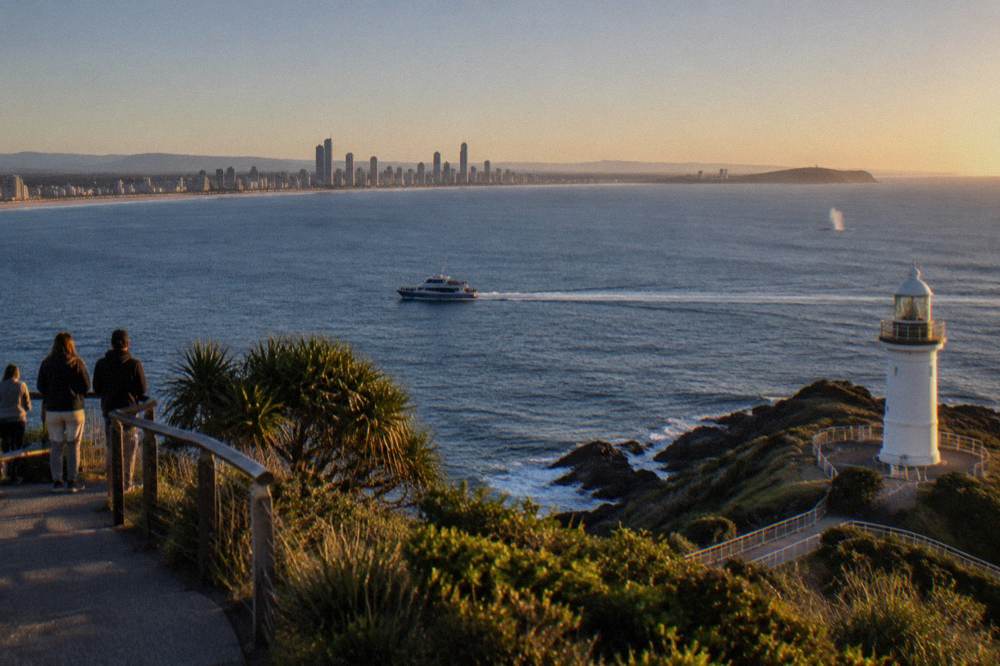
The full roster picture, for planning: boat-based whale watching on this site runs from $52 to $105.31 per person, and including the swim trip the range is $52 to $310.26. The official Gold Coast whale watching page from the state tourism body is the reference for the June to November window and the free shore lookouts, and the federal environment department's eastern humpback page is the reference for the national migration itself.
The Short Version: Book Any Month From June To October
For the Gold Coast, June to October is the safe booking window, July and August are the peak, and September and October are the calf months. Nationally, the east coast runs April to November with the majority of whales northbound June to August and southbound September to November. Any month inside those bounds puts humpbacks in the water off this coast; the choice is really about which kind of whale experience you want.
The whole roster, side by side, so the month choice and the boat choice can be made together:
| Trip | Style | Departure point | Duration | From per person | Rating |
|---|---|---|---|---|---|
| Sea World Cruises premium cruise | Purpose-built vessel, free cancellation | Sea World Cruises Terminal, Main Beach | About 2.25 to 2.5 hours | Price on the live booking page | 4.6 from 655 reviews |
| Spirit of Gold Coast | Marine biologist, upper and lower decks | Aqua Adventures, Southport | About 2 hours 50 minutes | $52.30 | 4.6 from 920 reviews |
| Kokomo cruise | Smaller boat capped at 47 | Marina Mirage, Main Beach | About 2.5 hours | $62.19 | 4.9 from 381 reviews |
| Boattime whale escape | Luxury yacht with marine biologist | Marine Stadium Jetty, Main Beach | About 2.5 hours | $52 | 3.7 from 138 reviews |
| Blue Seafaris | Small-group boat, food and drinks not included | Tweed Heads South, NSW | About 2.5 hours | Price on the live listing | 4.9 from 48 reviews |
| Cooly Eco safari boat | Seats 12, marine naturalist | Chinderah, NSW | About 2.5 hours | $105.31 | 4.9 from 68 reviews |
| Cooly Eco swim trip | Max 9, gear included | Chinderah, NSW | About 4 hours | $310.26 | 4.9 from 50 reviews |
If raw numbers drive the decision, book July or August and take whichever departure fits. If you want the slow, close-to-shore mothers and calves, book late September or October and consider a smaller vessel, where the Tweed-side small boats come into their own. The Blue Seafaris marine biologist trip, a small boat of around 21 guests departing Tweed Heads South in New South Wales, rates 4.9 from 48 reviews, excludes food and drinks, and states a free tour on the next available slot if no whales are sighted; the listing carries the "free cancellation" tag."Likely to sell out" badge. The Cooly Eco safari-style boat, seating 12 with a marine naturalist, runs from $105.31 per person from Chinderah.
And if you simply want the standard, dependable version of the experience, the featured cruise on this site is the Sea World Cruises premium whale watching trip: about 2.25 to 2.5 hours from Main Beach, free cancellation, and a sighting guarantee with a free return cruise commonly advertised by Gold Coast operators. Hotel pickup is not included, so you make your own way to the departure point. Check the live listing for the current price. It rates 4.6 from 655 reviews, and the tour page has the full breakdown. That is the trip this site, Whale Watching On The Gold Coast, points most first-time visitors toward, in any month from June to October.
Common Questions About Whale Watching Months In Australia
What Months Can You See Whales In Australia?
On the east coast, humpbacks pass from April to November, with the majority travelling north from June to August and south from September to November. The Gold Coast's own season runs June to November, peaking in July and August, with mothers and calves most often seen in September and October.
Are Whales Visible In Every Australian State?
Every state has a whale season, but this site's verified research covers the east coast humpback migration only, so no month by month dates are printed for the west and south coasts. The east coast is Australia's largest documented migration, more than 50,000 animals in a 2024 preliminary estimate, and the one all seven tours on this roster operate on.
What Is The Peak Month For Whales On The Gold Coast?
August is the month most frequently cited for both the highest numbers and the longest encounters, with July close behind it as the peak of the northbound run. The state tourism body names July and August together as the peak months for the Gold Coast.
When Can You See Mother Whales With Calves?
September and October are the best months for mothers with calves on the Gold Coast, the months when the southbound leg brings newborns travelling slower and closer to shore. The first reported pair of 2026, a mother and newborn off the Gold Coast Seaway, appeared unusually early on 2 June.
Do Gold Coast Whale Cruises Run All Season?
Yes. Operators run daily from late May or early June through to early November, with typical tour lengths of 2 to 3 hours from Main Beach, Southport and the surrounding departure points. The Boattime superyacht trip, the Spirit of Gold Coast trip, the Kokomo boat and the Sea World Cruises catamaran all work inside this same window.
What Happens If No Whales Appear On The Day?
Whales are wild and a quiet day is possible. Several listings state their own sighting policies: the Sea World Cruises listing states a 100% sighting guarantee with a free return cruise, the Spirit of Gold Coast listing guarantees a humpback from June to November or a complimentary second cruise, and the Blue Seafaris listing offers a free tour on the next available slot. The Kokomo and Cooly boat listings state no guarantee, so none is claimed for them.