Which Month Is Best For Whale Watching Off The Gold Coast?
A month-by-month verdict on the best time to watch whales off the Gold Coast: June for quiet starts, July and August for peak numbers, September and October for mothers and calves, November for the tail end.
Which Month Is Best For Whale Watching Off The Gold Coast?
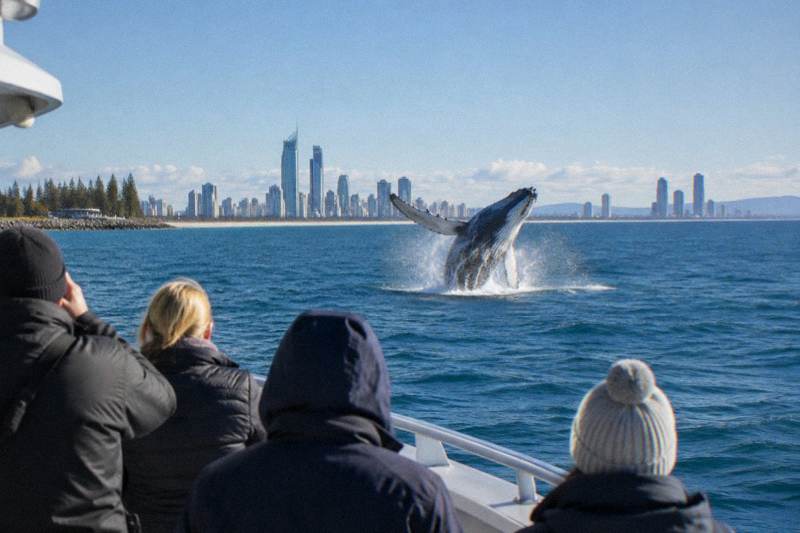
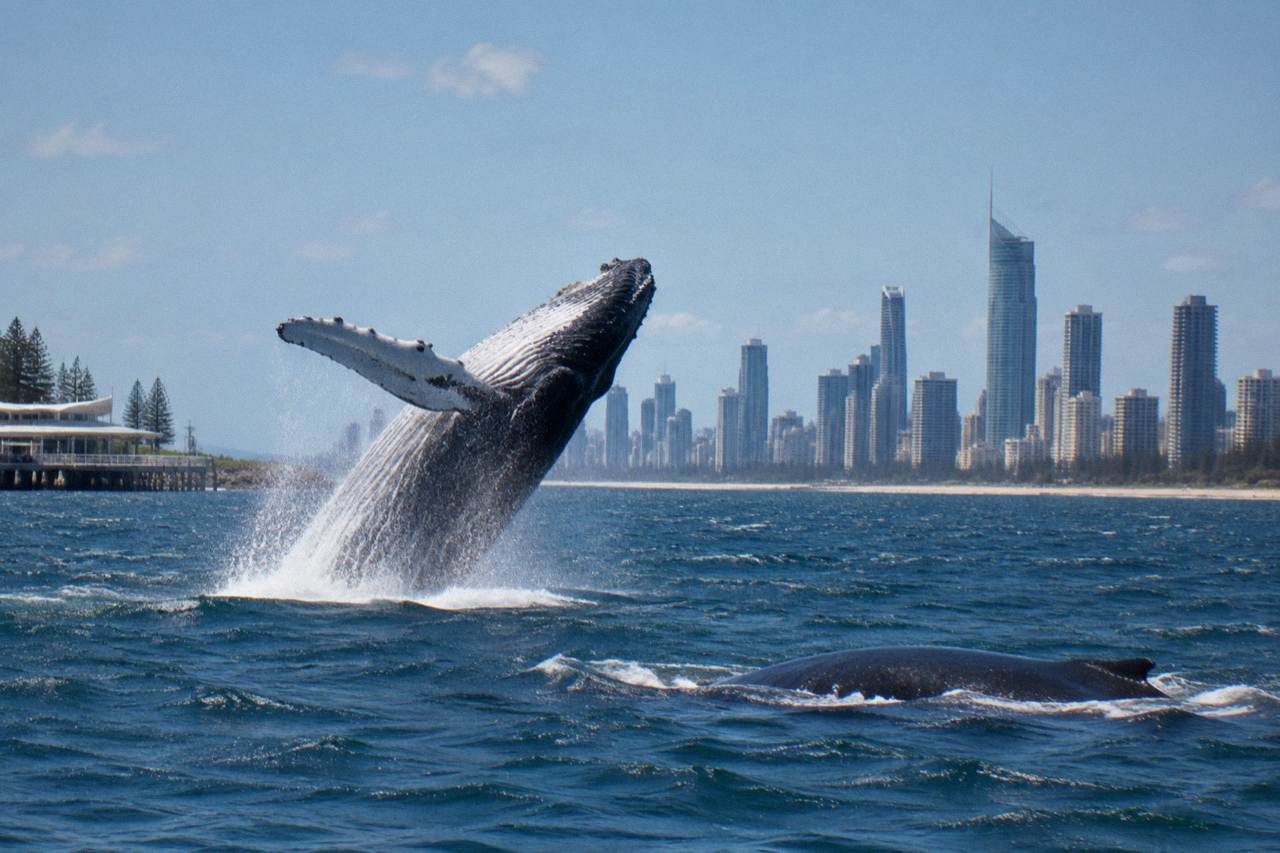
August is the best month for most travellers: peak northbound numbers put the most humpbacks off the Gold Coast, and every cruise in the city's lineup runs daily by then. September and October edge it for mothers with newborn calves travelling slowly near the coast, June wins for an early start with fewer boats on the water, and November only suits the flexible. The right month depends entirely on what you came to see.
The honest answer is that there is no single best month, there is a best month per goal. The east Australian humpback population was estimated at more than 50,000 animals in a preliminary count, up from about 8,000 in 2006, and a share of that population passes the Gold Coast twice a year: northbound toward the breeding grounds, then southbound with calves. That double passage is why the season stretches from late May or early June to early November, and why two people can sail the same route in different months and describe completely different trips. That steady traffic means sightings are far from a lucky fluke, and if you want to know how likely a close encounter really is, the real odds of spotting a humpback here are worth a read.
This article gives one verdict per traveller goal rather than another week-by-week calendar. The full season breakdown, including the migration mechanics behind these dates, sits in the Gold Coast whale season guide; this page is purely about which month to book.
The first humpbacks of 2026 were reported off the Gold Coast Seaway on 2 June, a mother and newborn calf noted as remarkably early, which tells you something useful: the season does not switch on like a tap. It builds, peaks, and fades. Where you stand in that arc changes the whales you meet, the crowd on the boat, and the price you pay.
If you already know your dates, the fastest route is the trio below: the Sea World Cruises premium cruise for the big-boat peak-season experience, the Blue Seafaris small-boat trip from Tweed Heads South for a quieter, closer-to-the-water style, and the Spirit of Gold Coast marine biologist trip from Southport for the deepest review pool on the roster.
What Each Month Delivers On The Water
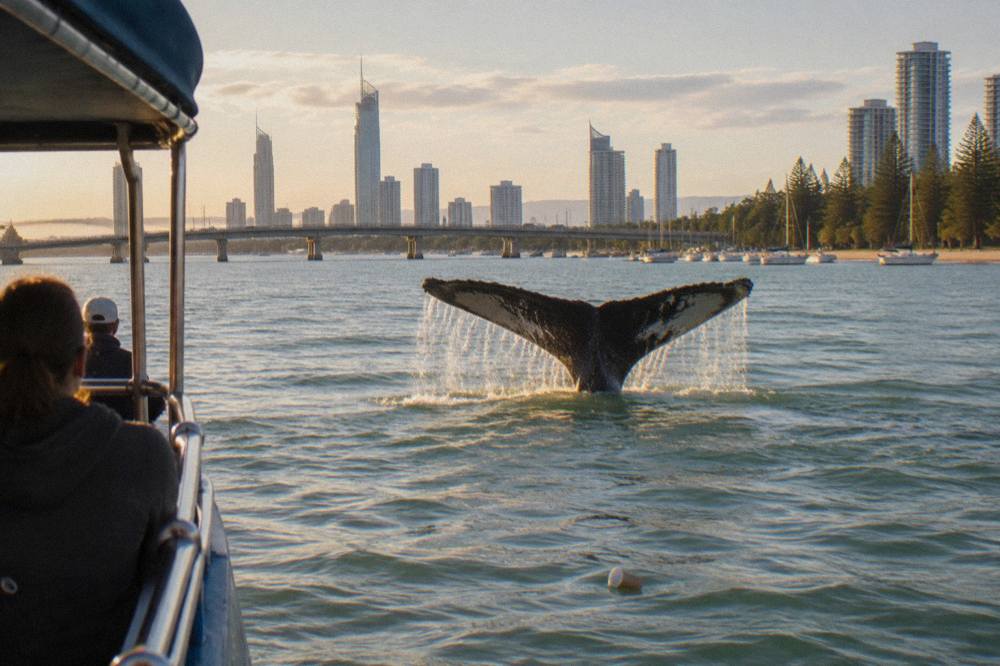
Every month from June to October is a genuinely different trip. June brings the first wave, juveniles and young adults moving fast. July and August carry the peak northbound traffic, adults and competitive pods. September and October deliver the southbound mothers and calves, slower and nearer to shore, and November is the fading tail of the migration, with fewer whales, fewer boats, and cheaper shoulder-season fares.
The tourism board's own summary puts the season at June to November, with July and August bringing peak numbers and September and October the best months for mothers and calves, per Tourism and Events Queensland's Gold Coast whale watching page. Typical tour length sits at two to three hours, and cruises depart daily from Main Beach, Southport, Surfers Paradise and Coolangatta through the heart of the season.
Here is the month-by-month shape of it:
| Month | Who is passing | Character of the month | Crowd level |
|---|---|---|---|
| June | Juveniles and young adults first | Early arrivals, variable weather, quiet boats | Low |
| July | Adults, building northbound flow | Strong numbers, peak season underway | Medium to high |
| August | Peak northbound traffic, competitive pods | Most whales in transit, most activity | High |
| September | Mothers with newborns heading south | Slow, close-to-shore encounters | Medium |
| October | Late cow-calf pairs, stragglers | Calm conditions, calf play near shore | Low to medium |
| November | Last southbound stragglers | Thin traffic, cheap fares, some sailings end | Very low |
One nuance worth carrying: the southbound leg does not start after the northbound ends. The two overlap from August onward, which is why late August can feel like the busiest water of the whole year, with northbound adults still streaming past and the first southbound mothers already appearing.
If your month is fixed by school holidays or a wedding, skip to your section below. If you can pick any month, keep reading: the differences are bigger than most booking pages admit.
June For An Early Start And Fewer Crowds
June is the month for travellers who want the season to themselves. The first wave passing the Gold Coast is dominated by juveniles and young adults, the vanguard of the northbound migration, and boat traffic is a fraction of what August carries. The trade-off is variability: the earliest arrivals are thin, the weather is at its winter changeable, and some operators only find their rhythm as the month closes.
The 2 June 2026 report of a mother and calf off the Seaway was flagged as exceptional precisely because it was early; the previous earliest on local record was mid-June. Plan for June expecting the front-runners, not the herd. What you get in exchange is space: the Sea World Cruises terminal at Main Beach is quieter, the Spirit of Gold Coast departure from Aqua Adventures at Southport has open decks to choose from, and the smaller boats, the Kokomo cruise from Marina Mirage and the Boattime superyacht from the Marine Stadium jetty, sail with lighter loads.
June also suits the budget-flexible. Every listing on this roster offers free cancellation, and shoulder-edge dates at the start of the season are where fare dips are most likely, though the only figures worth trusting are the live ones on each operator's listing. For the full cheap-seats playbook, see the cheapest ways to watch whales on the Gold Coast.
Who should skip June? Anyone whose trip is a once-only event. If seeing whales is the whole point of the week, the odds stack better in August.
July And August For Peak Northbound Numbers
July and August are the peak-number months, and August is the single best month for raw whale traffic off the Gold Coast. The northbound migration is at its thickest, adults and competitive pods stream past the coast, and every operator in the region is running daily. Expect the most whales in transit, the most surface activity, and also the most fellow passengers: this is high season and it behaves like it. If you'd rather trade peak traffic for thinner crowds, the month by month guide to when you can see whales in Australia shows what the quieter weeks on either side of the rush actually deliver.
The biology is straightforward. Young males typically lead the migration north while pregnant cows and cow-calf pairs bring up the rear, so the mid-season water off the Gold Coast carries a mix of restless adults, competing suitors, and the odd early escort. Breaching, tail-slapping and surface displays run through the whole season, but the volume of animals in August means more of everything: more blows on the horizon, more pods for the skipper to choose between, more chances a curious animal will pass near the boat. The wider set of guides lives on Whale Watching On The Gold Coast.
This is the window where the big-boat experience earns its keep. The Sea World Cruises premium cruise, from $55 per person with a 4.6 rating from 655 reviews, runs about 2.25 to 2.5 hours and carries a "Likely to sell out" badge, which in August is not marketing, it is arithmetic. Hotel pickup is not included, so guests make their own way to the departure point, though food and drinks are on board. The listing states a 100% whale sighting guarantee with a free return cruise if none appear, the operator's own policy, not a promise any honest page should make on a wild animal's behalf.
The Spirit of Gold Coast trip is the other peak-season workhorse: about 2 hours 50 minutes from Southport, from $52.30 per person, 4.6 from 920 reviews, the deepest review pool on the roster. A marine biologist guides the trip, morning tea is included, and the listing guarantees a humpback sighting from June to November or a complimentary second cruise. Both decks, lower and upper, matter in August because the boat is fuller and deck position is the difference between a clear view and a shoulder.
July is the softer version of August: strong numbers, slightly fewer boats, and the first competitive pods beginning to form. If your dates straddle late July into early August, you have picked the sweet spot.
If the peak-month window is the one that fits your calendar, the featured pick below is the cruise this site would put most first-time visitors on: food and drinks on board, a purpose-built vessel, and a free-cancellation listing, with guests making their own way to the departure point and the sighting guarantee stated as the operator's own policy rather than a promise of its own.
September And October For Mothers And Calves
September and October are the months for mothers and newborn calves, and for many locals they are the best months of all. The southbound migration brings cow-calf pairs past the Gold Coast travelling slowly and closer to shore, which means longer encounters, calmer water around the boat, and the chance of watching a calf learn its own body. The trade-off is thinner overall traffic: the herd has moved on.
This is the window the tourism board names for mothers and calves, and it is also when the Gold Coast's shore-based watching comes into its own. The board's named free lookouts are Point Danger at Coolangatta, its pick for the best free spot, plus Burleigh Heads, Miami and Greenmount Point. A mother and calf hugging the coast in October can sometimes be followed from a headland with binoculars for an hour, something the fast July traffic rarely allows.
On the water, the small-boat listings shine in this window. The Blue Seafaris marine biologist trip, a roughly 21-guest small boat departing Tweed Heads South in New South Wales, runs about 2.5 hours with food and drinks not included, and scores 4.9 from 48 reviews, a small pool reported honestly. The listing says a free tour on the next available slot if no whales are sighted, and it carries a real "Likely to sell out" badge. The Cooly Eco safari-style boat, 12 guests maximum, departing Chinderah on the Tweed River and covering Coolangatta and Gold Coast waters, is from $105.31 per person at 4.9 from 68 reviews; its listing states no sighting guarantee, so book it for the eye-level format, not a promise.
Two protections shape these encounters. Queensland rules keep boats at least 100 m from a whale and 300 m in front of or behind it, slowing to 6 knots inside 300 m, with no more than three boats in one caution zone, per the state's rules for watching marine mammals. A mother with a calf gets that buffer exactly, which is why a good September skipper lets the pair come to the boat rather than chasing them.
September 2026 also delivered a reminder that this coast carries risks for whales: a roughly 10 metre humpback entangled in shark nets off Currumbin was freed by Sea World Foundation teams in mid-September. The migration is a conservation story with edges, and the calves you meet in October are the survivors of it.
November For The Tail End
November is the tail end, and it should be booked with open eyes. A few late southbound whales, mostly cows with older calves, still pass the Gold Coast in the first weeks, but traffic thins fast, some operators wrap their season in late October, and the ones still sailing run quieter and cheaper. If you want a boat almost to yourself and can absorb the risk of a quiet day, November delivers. Otherwise, treat it as a bonus month.
Whale watching tours on the Gold Coast run from June to November, so November departures sit right at the end of the season. Peak numbers arrive in July and August, while September and October bring mothers and calves. For an operator's final sailings, check the live booking page. Check the live listing for the specific cruise before you plan around it. What you get in exchange is genuine quiet: the August crowds are gone, the water is warming toward summer, and the free headlands, Point Danger, Burleigh, Greenmount, are near empty at sunrise.
The honest framing for November is that the guaranteed-encounter months have passed. Listings that state a sighting guarantee with a free return cruise, such as the Sea World Cruises trip, still state it, but a free return cruise is only useful if you are still in town. November suits long-stay travellers and locals, not a one-week visitor flying in for whales.
Matching Your Month To A Cruise
The decision is a three-way match: your goal, your month, and the listing that does that month best. Big-boat families and first-timers are best served by Sea World Cruises or Spirit of Gold Coast in July and August. Small-boat watchers and photographers should target September and October with Blue Seafaris or the Cooly Eco safari boat. Budget and quiet hunters take June or early November.
Here is the goal-to-month-to-listing table in full:
| Your goal | Best month | Listing that fits | From price per person |
|---|---|---|---|
| Most whales in transit | August | Sea World Cruises premium cruise | $55 |
| Deepest review pool, biologist guide | July or August | Spirit of Gold Coast tour | $52.30 |
| Mothers and calves, small boat | September or October | Blue Seafaris marine biologist trip | $87 |
| Eye-level safari format, 12 guests | September or October | Cooly Eco safari-style boat | $105.31 |
| Cheapest listed big-boat fare | Any peak month | Boattime superyacht cruise | $52 |
| Small boat, 47-guest cap | July or August | Kokomo whale watching cruise | $62.19 |
| Swimming near whales (NSW departure) | Peak season | Cooly Eco swim trip, Chinderah | $310.26 |
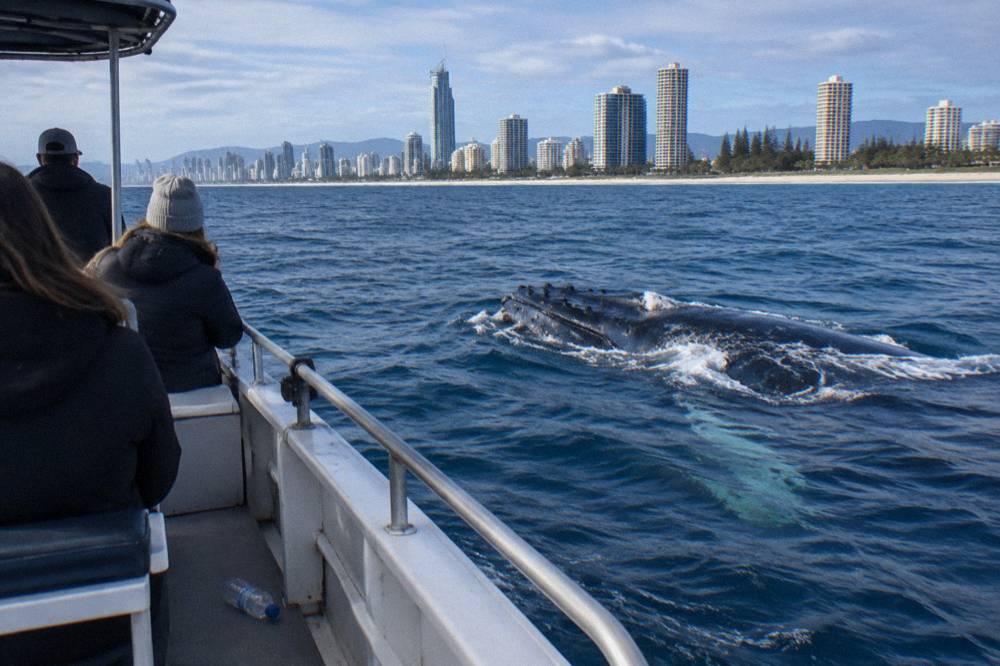
A few of those rows need a caveat. The Boattime superyacht trip carries the lowest rating on the roster at 3.7 from 138 reviews, and this site says so plainly rather than hiding it; it is also the cheapest listed fare at $52, with light morning or afternoon tea on arrival and a marine biologist aboard, and the listing states a 100% whale sightings guarantee. The Kokomo cruise, 4.9 from 381 reviews, states no sighting guarantee at all, so its row is about format: a smaller purpose-built vessel with an underwater camera, capped at 47 travellers, about 2.5 hours from Marina Mirage. And the swim trip's listing says a whale sighting is guaranteed but a swim is not, a distinction worth repeating before anyone books a 4-hour trip expecting a fixed outcome. That trip departs Chinderah on the Tweed River in New South Wales, just south of the Queensland border, not from the Gold Coast itself.
If you want the deeper side-by-side of all seven listings, prices, ratings and formats in one place, that comparison lives in the Gold Coast whale watching tours compared guide. The month you pick narrows that field faster than any price filter.
For the peak-month choice specifically, the Sea World Cruises premium whale watching cruise is the one this site points most visitors toward: food on board, a purpose-built vessel, and a free-cancellation listing, with the sighting guarantee stated as the operator's own policy. Check availability on the live listing once your month is fixed, because August dates with that badge do not sit around.
Common Questions About Whale Watching Months Off The Gold Coast
Which Month Is Best For Whale Watching On The Gold Coast?
August for most travellers, because peak northbound numbers put the most whales off the coast and every cruise runs daily. September and October are better if mothers and calves are the goal, June suits an early, quiet start, and November only suits flexible travellers catching the tail of the migration.
Is August The Peak Month For Whales Off The Gold Coast?
Yes. July and August carry the peak northbound traffic, with August most often cited for the highest numbers and the most surface activity. It is also the busiest month on the water, so book early and expect fuller decks.
When Can You See Mothers And Calves Off The Gold Coast?
September and October. The southbound migration brings cow-calf pairs past the coast travelling slowly and closer to shore, which makes for longer, calmer encounters. The first southbound mothers can appear from late August.
Is June Too Early For Whale Watching Off The Gold Coast?
It is early but not too early. The first wave of juveniles and young adults passes in June, and the first humpbacks of 2026 were reported off the Gold Coast Seaway on 2 June. Numbers are thinner than August and the trade-off is a much quieter boat.
Can You Still See Whales Off The Gold Coast In November?
Sometimes, in the first weeks. A few late southbound whales, mostly cows with older calves, still pass the coast, but traffic thins fast and some operators finish their season in late October. November suits locals and long-stay travellers rather than a one-week visit.
Do Gold Coast Whale Cruises Run Every Day In Season?
Through the heart of the season, yes, the tourism board notes daily departures from Main Beach, Southport, Surfers Paradise and Coolangatta. At the June edges and the November tail, schedules thin, so check the specific cruise's live listing for your dates before locking plans.