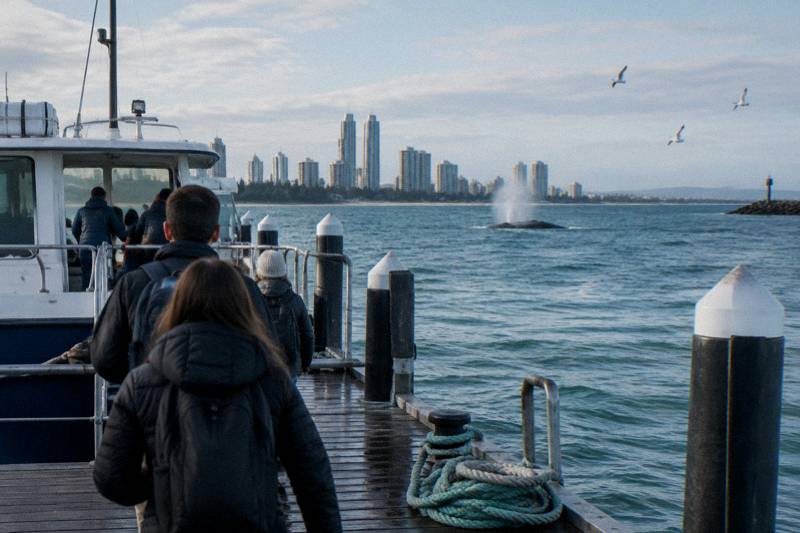
Is It Rare To See A Humpback Whale On The Gold Coast?
No, seeing a humpback on the Gold Coast is not rare in season: the east coast population is around 50,000 and the season runs June to November. Here is what the numbers, the rules and the listings actually say.
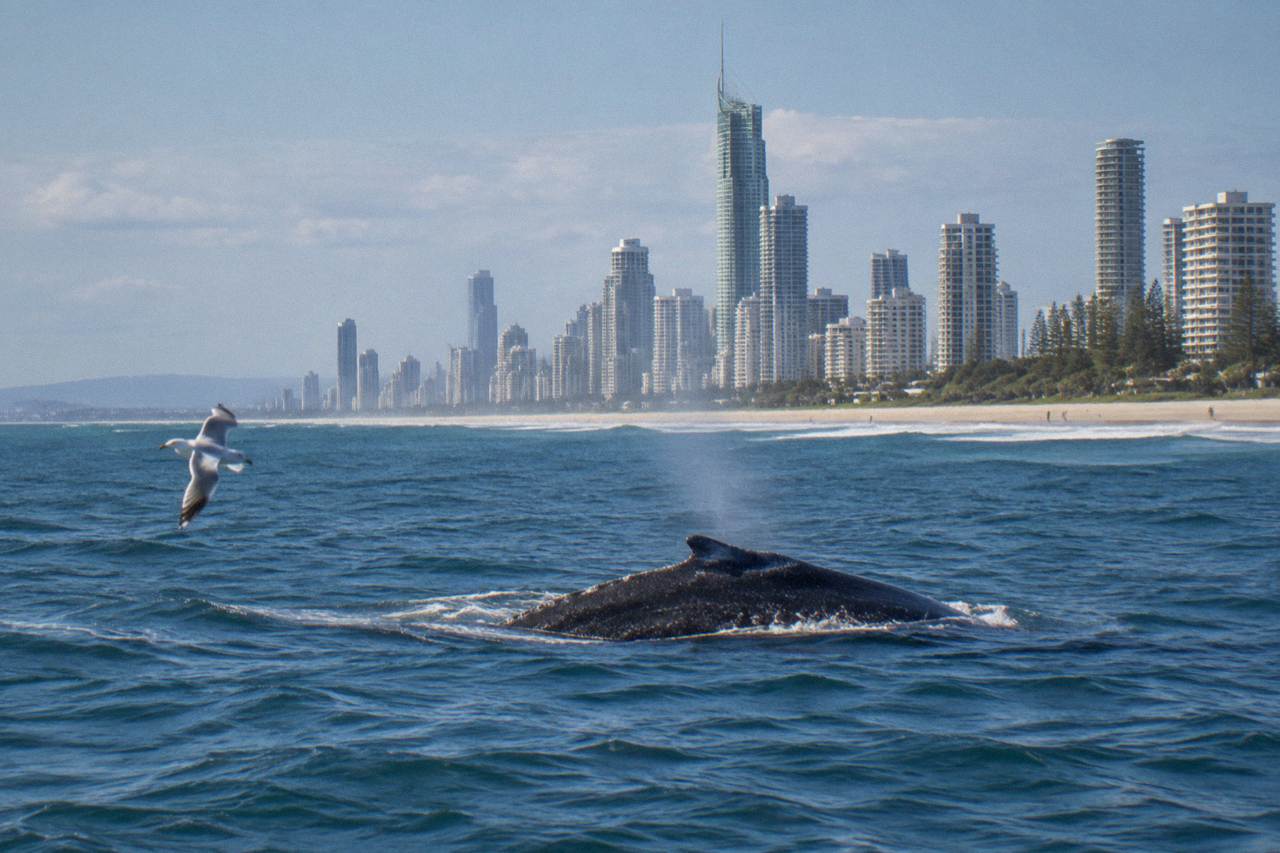
Seeing a humpback whale from the Gold Coast is not rare during the migration season, and it has not been for years. The east coast population is estimated at more than 50,000 animals, up from roughly 8,000 in 2006, and the season window runs from late May or early June to early November. Outside that window, a sighting from a boat is genuinely uncommon, and no operator runs whale cruises at all. In between lies the honest answer, and it depends on the month, the boat and what the listings themselves promise. If you're working out which part of the season suits your trip best, our month by month guide to whale watching in Australia explains what each stretch of the migration actually delivers.
Is It Rare To See A Humpback Whale On The Gold Coast?
In season, no: a humpback sighting on a Gold Coast cruise is an ordinary outcome, not a fluke. The east coast population has recovered to an estimated 50,000-plus animals, and the migration passes the coast from June to November with peak numbers in July and August. What no source can tell you is a sighting rate per trip, because no operator publishes one, so the honest framing is a long season, a large population and no guaranteed day. If you're timing a trip around those peak weeks, our winter season guide for the Gold Coast covers what else the cooler months deliver.
The story behind that answer is one of the strongest conservation recoveries in Australia. When whaling ended on the east coast in 1963, the population was down to a little over 100 individuals. It then grew at roughly 10 to 11 percent a year, passing about 8,000 in 2006, and a preliminary 2025 estimate put it at more than 50,000, which is around 20,000 more than the estimated pre-whaling population of the early 1900s. That recovery is why a Gold Coast winter is now a whale corridor rather than a whale lottery.
The migration itself runs on a predictable schedule. Most east coast humpbacks move north from June to August and turn back toward the Southern Ocean from September to November, a round trip the federal environment department describes as one of the longest migrations of any mammal. Young males typically lead the migration, pregnant cows and mother-calf pairs bring up the rear, and the southbound leg through Gold Coast waters in September and October is when mothers with newborns travel slower and closer to shore. The first humpbacks of 2026 were reported off the Gold Coast Seaway on 2 June, a mother and newborn calf noted as unusually early. Those slow mother and calf pairs travelling close to shore are also the whales predators target most, and this look at the natural enemies of humpback whales explains how orcas hunt newborn calves and how fiercely mothers fight to protect them.
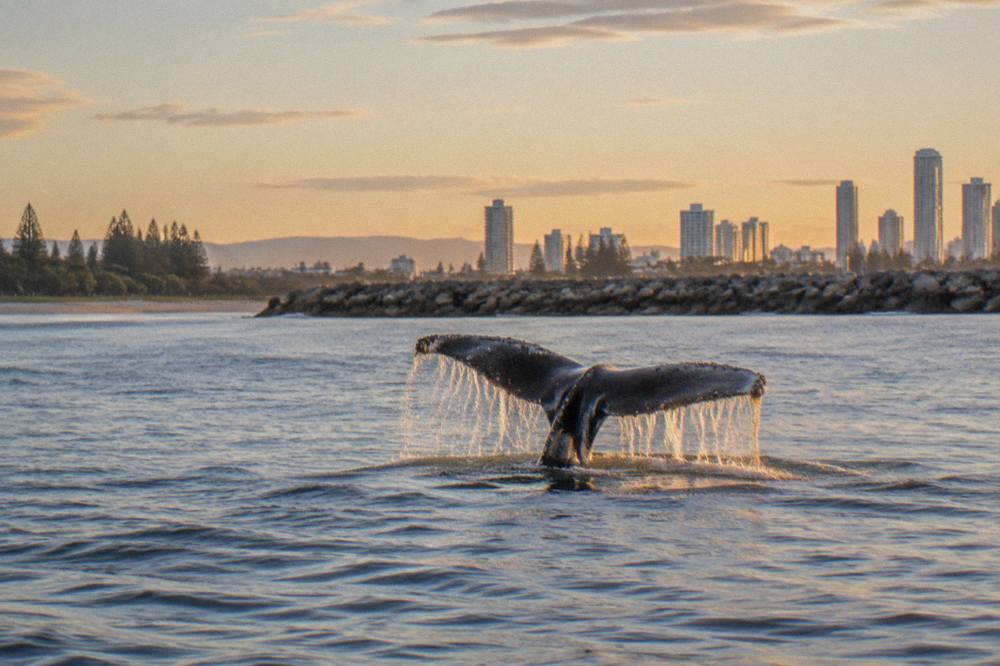
What this means practically: a cruise in July or August crosses a busy corridor, while a cruise in early June or late October bets on the edges of the window. The full month-by-month picture is laid out in the Gold Coast whale watching season guide, and the species background is in the humpback whales of the Gold Coast. If you want the boat to do the finding for you, these are the three cruises this site compares most often:
How Many Humpbacks Pass The Gold Coast Each Year?
The best available figure is more than 50,000 eastern Australian humpbacks in 2024, from a preliminary, not yet peer-reviewed estimate reported in October 2025. That is up from about 8,000 in 2006 and a little over 100 when whaling ended in 1963. No source breaks that total down into a Gold Coast-specific number, and no operator publishes sighting counts, so per-trip odds cannot be stated honestly.
The 50,000 figure comes from marine scientists reporting to the federal environment department, and it matters because it converts "rare" into a question of timing rather than luck. A population of that size funnelling past the Gold Coast for five months of the year produces a steady stream of animals, not a scattering. The tourism board's own framing reflects this: it describes July and August as peak numbers rather than peak chances, and points to September and October as the best months for mothers and calves.
| Period | What is migrating | Likelihood of a sighting |
|---|---|---|
| Late May to early June | First northbound animals, often juveniles and young adults | Possible but early; the first 2026 report came on 2 June |
| July and August | Peak northbound numbers, adults and competitive pods | The busiest weeks of the season |
| September and October | Southbound mothers with newborns, slower and closer to shore | Strong, with more surface activity reported |
| Early November | The tail of the southbound migration | Thinning out; most operators end their season here |
Two caveats keep this honest. First, the estimate is preliminary and has not been peer-reviewed, so it is a working number, not a census. Second, a large population does not put a whale beside your boat on command: whales surface where they choose, weather moves them, and a quiet two hours is possible even in August. The difference between rare and reliable is the season window, and the window is wide.
What Do The Cruise Listings Promise If No Whale Appears?
Five of the seven listings state a sighting policy: Sea World Cruises, Spirit of Gold Coast, Boattime and Blue Seafaris all offer a free return cruise or free repeat tour if no whale is sighted, and the Cooly Eco swim trip guarantees a sighting rather than a swim. Kokomo and Cooly Eco's safari-style cruise state none. Kokomo and the Cooly Eco boat trip state no guarantee at all. No listing promises whales, and no honest page should either, because whales are wild animals. For a realistic sense of what any single day holds, our guide to today's Gold Coast whale sightings explains how the season window and the shore lookouts shape what you might actually spot.
The distinction matters when you are comparing prices. The Sea World Cruises premium cruise, from $55 per person for about 2.25 to 2.5 hours, carries a "Likely to sell out" badge on its listing and states a 100% whale sighting guarantee with a free return cruise if nothing appears. The Spirit of Gold Coast trip, from $52.30 with a marine biologist on board, guarantees a humpback sighting from June to November or a complimentary second cruise, again per the listing. The Boattime superyacht cruise, from $52, states the same 100% guarantee, and Blue Seafaris, the 21-guest small boat out of Tweed Heads South, offers a free tour on the next available slot if no whales are sighted.
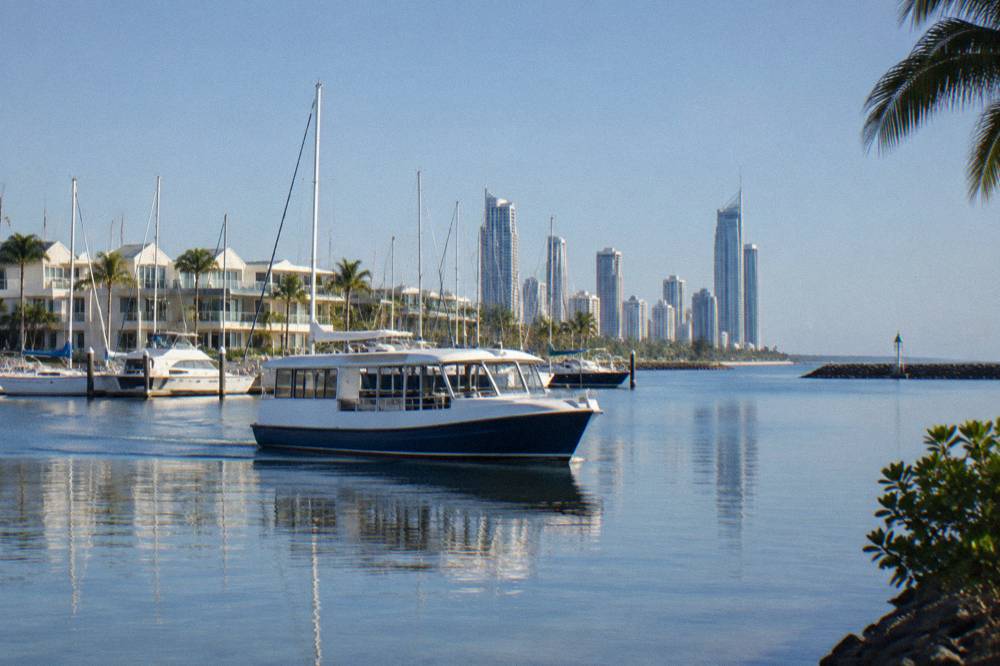
Then there are the operators that promise nothing. The Kokomo boat, capped at 47 guests out of Marina Mirage, states no sighting guarantee, and neither does the Cooly Eco safari-style boat out of Chinderah. That is not a mark against them: a 4.9 rating across 381 reviews for Kokomo and 4.9 from 68 reviews for Cooly suggest the boats find whales often, and a guarantee is a refund policy, not a whale. What a guarantee actually buys you is a second ticket, not a first sighting.
| Listing | Price from | Rating and reviews | Sighting policy stated on the listing |
|---|---|---|---|
| Sea World Cruises premium cruise | $55 pp | 4.6 from 655 reviews | 100% sighting guarantee, free return cruise |
| Spirit of Gold Coast | $52.30 pp | 4.6 from 920 reviews | Humpback sighting guaranteed June to November, or a complimentary second cruise |
| Boattime superyacht cruise | $52 pp | 3.7 from 138 reviews | 100% sighting guarantee stated |
| Blue Seafaris small boat | $87 pp | 4.9 from 48 reviews | Free tour on the next available slot if no whales |
| Kokomo cruise | $62.19 pp | 4.9 from 381 reviews | No guarantee stated |
| Cooly Eco safari boat | $105.31 pp | 4.9 from 68 reviews | No guarantee stated |
If a no-show would ruin the day for you, the guarantee listings are the safer buy, and the what happens if you do not see a whale walkthrough covers the mechanics of claiming a return trip. If you would rather have a smaller boat and a marine biologist, the Spirit of Gold Coast trip combines both, and its 920-review pool is the deepest on the roster:
What Does A Quiet Day On The Water Look Like?
A quiet day is two hours of ocean, dolphins, turtles and seabirds, and no whale, and it happens even in peak season because no operator can schedule a wild animal. On a guarantee listing you leave with a free return ticket; on Kokomo or the Cooly Eco boats you leave with the trip you paid for. Rough weather is the other honest risk, and operators cancel or reschedule when it is unsafe.
The sea itself sets part of the odds. The Gold Coast Seaway is a designated coastal bar where conditions can change quickly, worst on an ebb tide with large swell or strong wind, and every whale cruise leaving the Broadwater has to cross it. Operators do not run unsafe departures: Sea World Cruises' own terms let you flag rough seas at check-in and choose to proceed, reschedule or take a full refund, and operator cancellations come by SMS at least two hours ahead. Spirit of Gold Coast's terms offer a reschedule or a full refund when it cancels for weather and cannot rebook you. The practical version of all this is in the Gold Coast whale watching sea conditions guide.
Weather also shapes the whales you do see. Calm mornings, before the wind picks up, are the Queensland Government's own advice for spotting whales, and humpbacks breach, tail-slap and display surface activity through the season, but a choppy afternoon can flatten the show even when animals are close. The Bureau of Meteorology's winter 2026 outlook pointed to below-average rainfall and above-average temperatures for the season, which tends to mean more workable mornings rather than fewer. More of these guides are collected on Whale Watching On The Gold Coast.
How Close Do The Rules Let Boats Get To A Humpback?
In Queensland waters boats stay at least 100 metres from a whale and 300 metres in front of or behind it, slow to 6 knots inside the 300-metre caution zone, and no more than three boats may share one whale's caution zone. A person in the water must stay 100 metres from a whale. NSW waters, where the Tweed and Chinderah boats operate, use the same 100-metre boat distance.
Those distances, from the Queensland Government's rules for watching marine mammals, updated 5 March 2026, explain a lot about what a sighting actually looks like. You will rarely be beside a whale; you will be watching it from a regulated stand-off distance, which is why the smaller boats market themselves on eye-level viewing and why binoculars help even on the water. The rules exist because the population shares its corridor with a busy coast: around 14 September 2026, Sea World Foundation teams freed a roughly 10-metre humpback entangled in shark nets off Currumbin, and in mid-July 2026 a tailless humpback, likely scarred by an earlier entanglement, was reported off Cabarita Beach on the Tweed coast.
The regulations also settle the swim question. No authorised swim-with-whales tour departs the Gold Coast itself; licensed operations run from Hervey Bay and the Sunshine Coast, and the one swim trip on this roster departs Chinderah on the Tweed River in New South Wales. Its listing guarantees a sighting but not a swim, a distinction worth repeating. In NSW waters, swimmers enter the water at least 100 metres from a whale and then keep 30 metres clear. The full rules and distances are unpacked in the swim with whales guide, and the federal background on the migration is on the environment department's humpback page, with the state distances on the Queensland rules for watching marine mammals page.
Can You See Humpbacks From The Gold Coast Shore For Free?
Yes, and the tourism board names four free lookouts outright: Point Danger at Coolangatta, its pick for the best free spot, Burleigh Heads including Tumgun Lookout, Miami and Greenmount Point. Local guides add Currumbin's Elephant Rock, Main Beach and The Spit, Kirra Hill and Snapper Rocks. None of these guarantee anything, but with 50,000 animals passing a narrow coast, a calm morning with binoculars is a genuinely good free bet.
Shore watching is the purest test of the "rare" question, because there is no crew, no guarantee and no refund, just you and the migration. The Queensland Government notes that humpbacks can be seen from headlands and open beaches along the coast, aided by binoculars or spotting scopes, and that calm mornings before the wind picks up are the best conditions. The southbound leg improves the odds further: mothers and calves travel slower and closer to shore in September and October, which is exactly when a headland vantage point earns its keep.
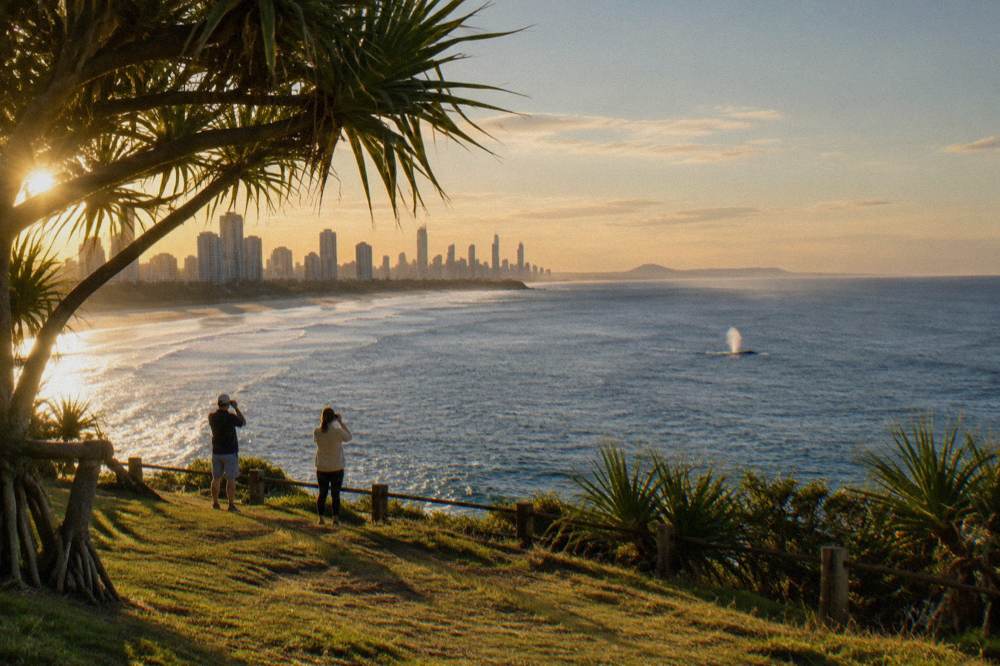
There is a community side to this too. Humpbacks and Highrises, which runs Queensland's largest volunteer marine mammal monitoring program, held a free Whale and Ocean Festival at Justins Park, Burleigh Heads, on 4 July 2026 with a guided land-based whale survey from Burleigh Hill, and the annual whale census in late June saw record volunteers count more than 500 humpbacks in two hours. A land-based survey counting 500 whales in a morning is about as clear a refutation of "rare" as the coast can offer. The full list of lookouts and how to work them is in the free whale watching spots guide, and the tourism board's own season summary sits at Queensland.com's Gold Coast whale watching page.
Which Boat Gives You The Best Chance?
**No boat on the roster can honestly claim better odds, because none publishes sighting counts, so the honest comparison runs on season timing, guarantee policy and review depth. Spirit of Gold Coast has the deepest review pool at 920 reviews rated 4.6; Kokomo and the two Cooly Eco trips hold 4.9 ratings on smaller pools; Sea World Cruises pairs a 4.6 from 655 reviews with the most complete guarantee; hotel pickup is not included on any of these tours.
The choice is really about format. The Sea World Cruises premium cruise is the big-boat option: a purpose-built whale watching vessel from the Sea World Cruises Terminal at Main Beach, food and drinks on board, about 2.25 to 2.5 hours, and the listing's 100% sighting guarantee with a free return cruise. Hotel pickup is not included, so make your own way to the terminal. The Spirit of Gold Coast trip adds a marine biologist and lower and upper decks from Southport. Kokomo caps the boat at 47 travellers out of Marina Mirage for a closer-to-the-water feel, from $62.19. This comparison is drawn out properly in the Gold Coast whale watching tours compared guide and the best cruise for the Gold Coast rundown.
Price is the least interesting variable here, because the whole boat-watching range runs only from $52 to $105.31 per person. The Boattime superyacht cruise is the cheapest at $52 and also carries the roster's lowest rating at 3.7 from 138 reviews, a trade-off worth knowing about. The Cooly Eco safari-style boat, seating 12 with spray jackets and a marine naturalist, is the priciest boat trip at $105.31 and departs Chinderah on the Tweed River in NSW, covering the Coolangatta and Gold Coast waters. If a small, quiet deck matters more to you than a guarantee, the Kokomo cruise is the mid-price pick on this site:
Whatever the boat, the honest odds are set by the calendar. Book July or August for the busiest corridor, September or October for mothers and calves close to shore, and treat any guarantee as what it is: a refund policy written by an operator who cannot schedule a whale, on a coast where the whales now turn up in the tens of thousands.
Common Questions About Seeing Humpbacks On The Gold Coast
Is It Rare To See A Humpback Whale On The Gold Coast?
No, not during the June to November season. The east coast population is estimated at more than 50,000 animals and the migration passes the Gold Coast continuously, with peak numbers in July and August and mother-calf pairs close to shore in September and October. Outside the season window, sightings are genuinely uncommon and no operator runs whale cruises.
Are Whale Sightings Guaranteed On Gold Coast Cruises?
Four listings on this site's roster state a sighting guarantee or free return policy: Sea World Cruises, Spirit of Gold Coast, Boattime and Blue Seafaris. Kokomo and the Cooly Eco boat trip state no guarantee. Every guarantee is the listing's own refund policy, not a promise of whales, and no operator can promise a wild animal.
What Happens If No Whale Appears On My Cruise?
On a guarantee listing you are entitled to a free return cruise or repeat tour under that listing's policy. On the Kokomo and Cooly Eco boat trips, which state no guarantee, the trip you took is what you paid for. Weather cancellations by the operator are separate: Sea World Cruises notifies by SMS at least two hours ahead and offers a reschedule or full refund.
What Is The Best Month To See Humpbacks On The Gold Coast?
July and August bring the peak northbound numbers. September and October are the southbound leg, when mothers with newborn calves travel slower and closer to shore and surface activity is often at its best. The season runs from late May or early June to early November.
Can I See Whales From The Shore Without Paying For A Cruise?
Yes. The tourism board names Point Danger at Coolangatta, Burleigh Heads, Miami and Greenmount Point as free whale watching spots, and local guides add Currumbin, Main Beach and The Spit, Kirra Hill and Snapper Rocks. Calm early mornings with binoculars give the best odds.