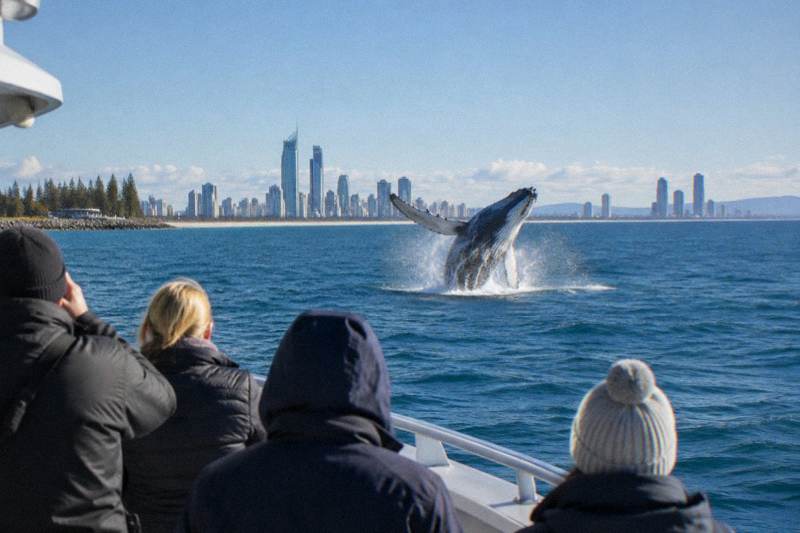
Is It Better To Go Whale Watching In The Morning Or Afternoon?
A research-backed comparison of morning and afternoon Gold Coast whale watching cruises, covering sea conditions, light, whale behaviour and what each operator offers.
Is It Better To Go Whale Watching In The Morning Or Afternoon?
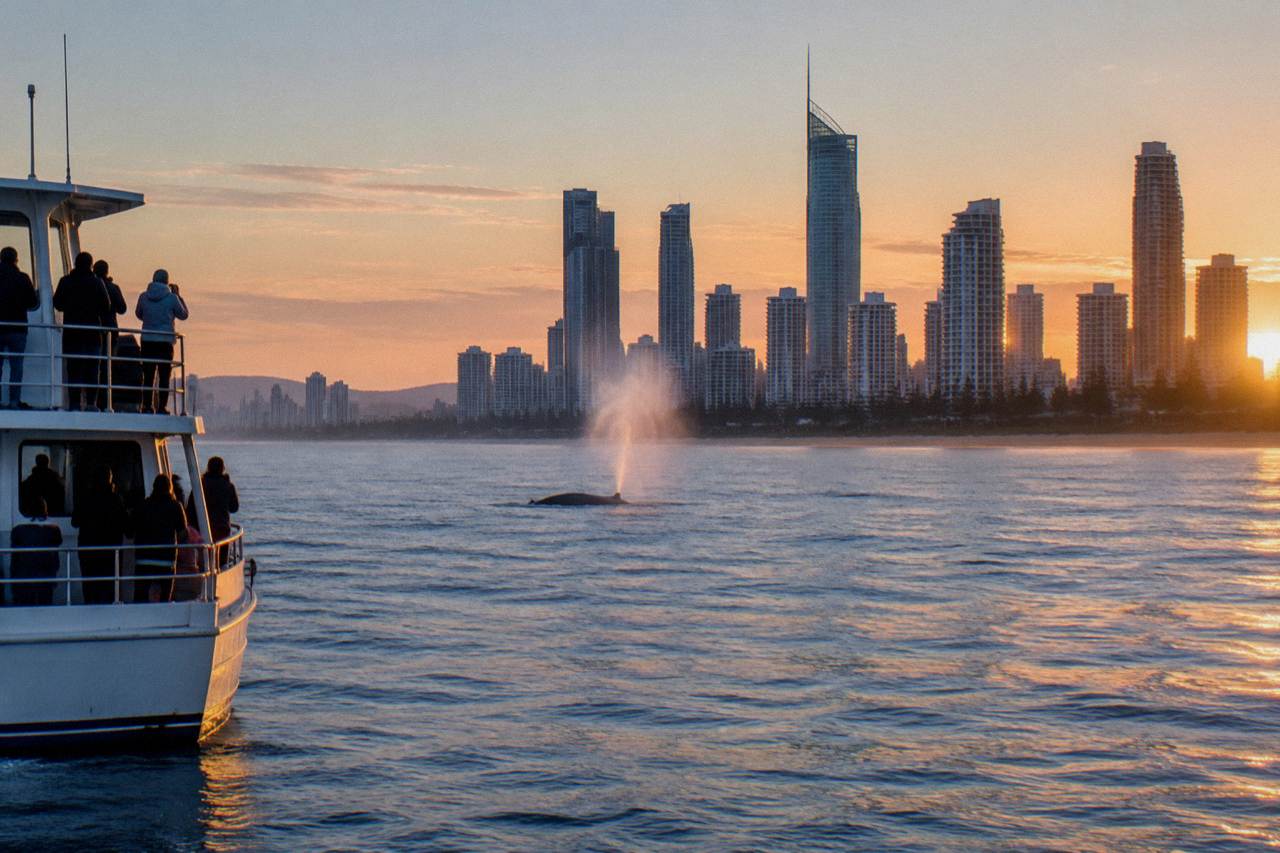
The morning has the edge for most travellers, and the reason is weather rather than whales. The Queensland Government notes that calm mornings, before the wind picks up, are the best time to spot whales, because flatter water makes blows and bodies easier to pick up on the horizon. Departure times themselves vary by operator and are shown on each listing, so the real choice is which conditions suit you, not which slot hides a magic sighting rate. No credible source publishes sightings by time of day, and this page will not invent one.
Every whale watching operator on the Gold Coast runs roughly the same shape of day: a morning departure, sometimes a second morning sailing, and an afternoon trip through the middle of the season. The boats from the Sea World Cruises terminal at Main Beach, the Kokomo vessel at Marina Mirage, the Spirit of Gold Coast catamaran from Southport, the Boattime superyacht and the two Tweed-side small boats at Tweed Heads South and Chinderah all fill their calendars around these windows. What differs between the slots is not the whales. It is the sea, the light, the crowd energy and the shape of your own holiday day.
This article works through each of those factors in turn: what the Queensland Government actually says about calm mornings, what the operators' own schedules and terms tell you, how light behaves over a 2.5 hour trip on the water, and what whale behaviour research suggests about time of day. It also flags what nobody knows, because a page that promises "the afternoon trip sees more breaches" is guessing, and guessing is how travel advice goes wrong.
Before the detail, here are the three cruises this site compares most often when the question is really "which boat, and which slot": the Kokomo small-boat cruise from Main Beach, the Sea World Cruises premium trip, and the Spirit of Gold Coast marine biologist tour from Southport.
Why Calm Mornings Favour Whale Spotting
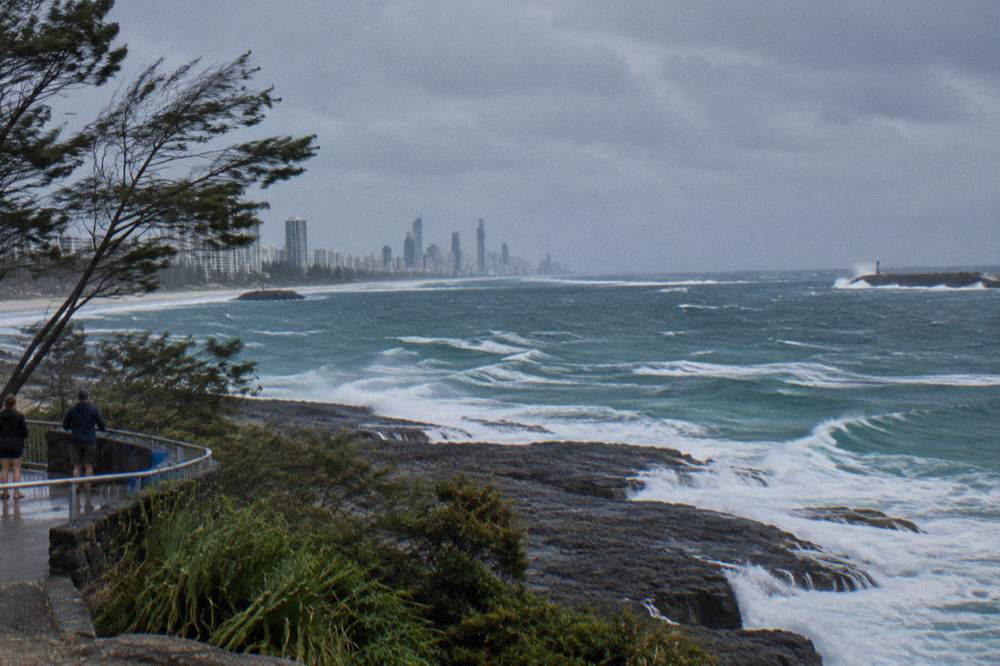
Wind is the single biggest variable in whale spotting from a boat, and on the Gold Coast it is usually gentlest in the morning. The Queensland Government's whale watching guidance says the best viewing conditions are calm mornings, before any wind picks up, and that advice holds whether you are on a headland or on a deck. Flat water shows a blow or a fluke against a smooth surface where choppy water hides the same animal.
A choppy afternoon sea hides a breaching body behind moving white water that would stand out clearly at dawn. The effect is about visibility, not whale abundance.
Southeast Queensland's winter and spring weather follows a familiar daily rhythm. Overnight and dawn winds stay light, then the onshore breeze builds through late morning and into the afternoon, then eases again toward evening. It is not a law of physics, and plenty of afternoons stay glassy while some mornings blow hard, but the pattern favours the early sailings more often than not. The Bureau of Meteorology's winter 2026 outlook pointed the same way for the season overall: below-average rainfall and above-average temperatures were the likely setting for the peak whale months.
Calm water also changes what you can hear. On a quiet morning the sound of a humpback breaching carries a long way across the water, and crews use exactly that cue to find active animals. On a windier afternoon the same breach is a splash among splashes. Operators that carry hydrophones, the underwater microphones that let you listen to whales, get cleaner recordings in flatter conditions too, and the Sea World Cruises vessel and the Kokomo boat both carry that gear.
The wind factor matters slightly less on the small enclosed bays and broadwater approaches than it does once the boat clears the Gold Coast Seaway and turns into open ocean. Every whale watching cruise on this roster ends up outside the Seaway or, on the Tweed side, off the open coast, because that is where the humpback highway runs. Once you are in open water, wind is wind, and the morning advantage applies in full.
What The Operators Actually Offer By Departure Time
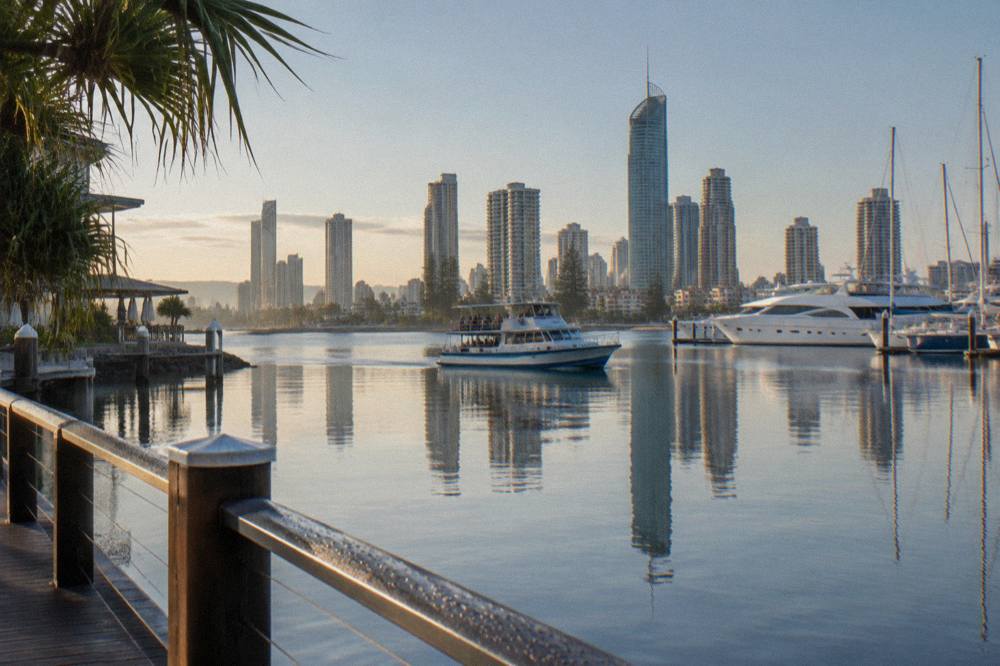
There is no single timetable for the Gold Coast: each operator sets its own sailing times, and the only reliable source for them is the operator's live listing. What can be compared from the verified listings is the shape of the product: where each boat leaves from, how long it runs, how many people it carries, what it costs and what its cancellation terms are. The table below carries those firm figures.
| Operator and trip | Departs from | Duration | Capacity and style | Rating and reviews | From price |
|---|---|---|---|---|---|
| Sea World Cruises premium cruise | Sea World Cruises Terminal, Main Beach | about 2.25 to 2.5 hours | purpose-built whale watching vessel, no hotel pickup included | 4.6 from 655 reviews | price on the live listing |
| Kokomo Cruises | Marina Mirage, Main Beach | about 2.5 hours | smaller boat capped at 47 travellers | 4.9 from 381 reviews | $62.19 per person |
| Spirit of Gold Coast | Aqua Adventures, Southport | about 2 hours 50 minutes | power catamaran with marine biologist guide, hotel pickup not included, make your own way to the wharf | 4.6 from 920 reviews | price on the live listing |
| Boattime superyacht cruise | Marine Stadium Jetty and Pontoon, Main Beach | about 2.5 hours | luxury yacht with marine biologist | 3.7 from 138 reviews | $52 per person |
| Blue Seafaris small boat | Tweed Heads South, NSW | about 2.5 hours | small group, food and drinks not included | 4.9 from 48 reviews | price on the live booking page |
| Cooly Eco safari boat | Chinderah on the Tweed River, NSW | about 2.5 hours | custom safari-style vessel seating 12 | 4.9 from 68 reviews | $105.31 per person |
| Cooly Eco swim trip | Chinderah on the Tweed River, NSW | about 4 hours | maximum 9 travellers, snorkel gear included | 4.9 from 50 reviews | $310.26 per person |
The table covers the seven bookable trips this site tracks. Two things follow from it. First, every trip is short: between two and three hours for the watching cruises, which means a morning departure still leaves you the whole afternoon for the beach, and an afternoon departure costs you almost nothing from the day. Second, the swim-with-whales trip from Chinderah in New South Wales is the one product where the time budget is real, at about four hours, and it is not a Gold Coast departure at all. Licensed swim-with-whales operations in Queensland run from Hervey Bay and the Sunshine Coast, not from the Gold Coast, and the Chinderah trip departs from NSW waters just south of the border. If that has you wondering which departure point suits you best, the Queensland whale watching region comparison weighs up season length, swim tours and travel time from Brisbane.
Because sailing times are set by each operator and shift with the season, the practical move is to pick your boat first and then take whichever of its departures fits your day. The Sea World Cruises premium cruise, the Spirit of Gold Coast trip and the Kokomo cruise all run daily through the season, which stretches from late May or early June to early November, and each listing shows the day's actual departure slots before you commit. The two "Likely to sell out" listings on this roster, Sea World Cruises and Blue Seafaris, are the ones where waiting to choose a time can cost you the date entirely.
Morning Light, Afternoon Light, And Photography
Morning light is softer and lower, afternoon light is stronger and warmer, and both are usable, but they flatter different subjects. The sun climbs out of the Pacific to the east, so a morning trip gives you front-lit whales against a bright sky and a skyline still catching its first colour.
By mid afternoon the sun sits behind the Gold Coast's towers, which can put the boat's shadow across the water and push contrast hard on white bellies and dark backs.
Photographers on the morning sailings get two specific wins. The light is low enough to keep detail in a breaching animal rather than blowing out the splash, and the wind is usually calm enough that the boat itself is steadier, which matters more than any lens. The afternoon wins are colour: a whale's fluke against a gold sky is the classic Gold Coast shot, and the afternoon trips finish inside that window through the winter months, when the sun sets early enough that the last hour of a trip can be spectacular.
The honest caveat is that whales do not schedule breaches around your exposure settings, and most of what you will shoot is backs, blows and distant flukes. A calm morning makes those distant shots sharper simply because the water is still. A windier afternoon makes everything harder, and no camera setting fixes a pitching deck. If photography is the point of the trip, take the calmest sailing you can get, which statistically leans morning, and check the marine forecast the day before rather than trusting the clock.
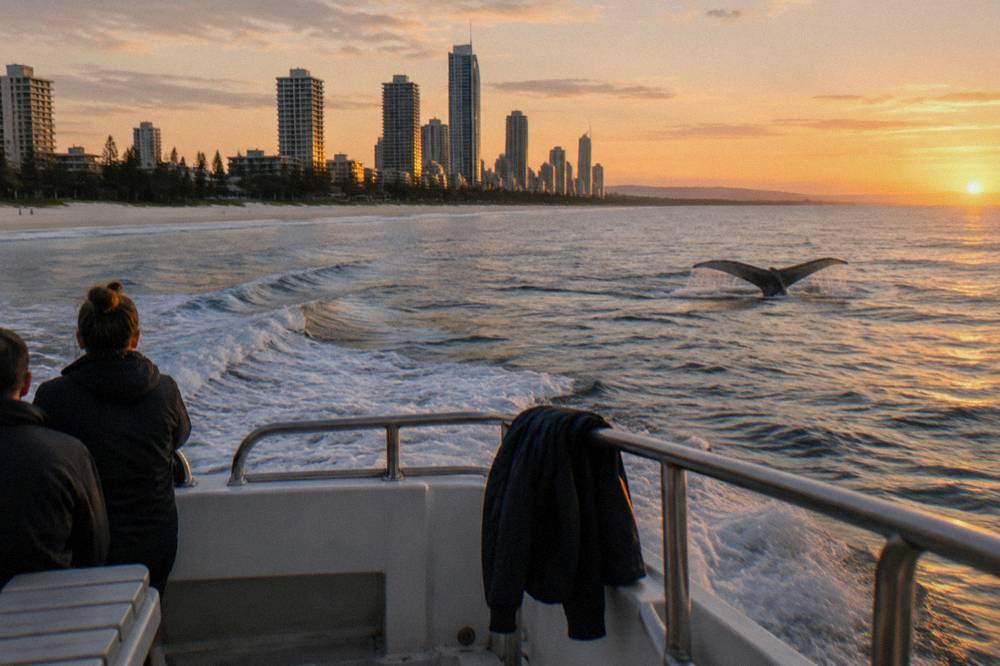
One more practical note on light: glare is a real factor on the water from mid morning onward, and sunglasses are not optional gear in Queensland winter. The listings for the small open boats, the Cooly Eco safari vessel and the Blue Seafaris boat, mention spray jackets, which is the operator's way of saying you can and will get salt spray in the afternoon breeze. On the bigger catamarans, the Sea World Cruises vessel and the Spirit of Gold Coast boat, you can move between decks to chase the better light angle, which is its own argument for those trips if the camera matters.
Does The Time Of Day Change Whale Behaviour?
There is no verified evidence that Gold Coast humpbacks breach, feed or travel more at any particular hour, and any page claiming a best-behaviour time slot is guessing. What is documented is behaviour across the season: the northbound leg through June and July brings juveniles and young adults first, then the adults and competitive pods, while the southbound leg from August to October brings mothers with newborn calves travelling slower and closer to shore.
The time of day you sail is a rounding error next to which month you sail.
That seasonal pattern is worth internalising because it answers most of the "when" questions better than the clock does. The first humpbacks of 2026 were reported off the Gold Coast Seaway on 2 June 2026, a mother and newborn calf, noted as very early, with the previous earliest on record around mid June. Peak numbers run through July and August on the northbound leg. September and October are the mother-and-calf months, when the southbound animals travel slower and hug the coast more. A calm afternoon in October will usually outperform a rough morning in June, and no amount of slot optimisation changes that.
Humpbacks do rest, and mothers with calves in particular have quiet periods, but the research this site could verify says nothing about those periods clustering at a particular time of day. Surface activity, breaching, tail slapping and pec slapping, shows up through the season according to the animals, not the itinerary. The crews who spend every day out there read behaviour in real time, and their judgment on the day will shape your trip far more than your departure slot does.
One genuine difference worth naming: the light and sea conditions feed back into behaviour spotting. A crew on a calm morning can see a blow at a greater distance, so the boat reaches the animal sooner and spends more of your two and a half hours with whales rather than searching. On a choppy afternoon the same crew burns more of the trip locating animals. That is a conditions effect wearing a behaviour costume, and it is the strongest honest argument for the morning.
Weather, Wind, And The Sea State Factor
Rough weather cancels or moves trips, and the operators' own terms spell out what happens: reschedule or refund, with cancellation notice by SMS at least two hours ahead at Sea World Cruises. The Gold Coast Seaway is a designated coastal bar where conditions change quickly, and Maritime Safety Queensland warns it is worst on an ebb tide with large swell or strong wind. For a closer look at how operators handle choppy conditions, our guide on whether Gold Coast whale watching cruises run in rough weather covers reschedules, refunds, and the SMS notice windows in detail.
Operators monitor conditions and cancel or reschedule when a trip would be unsafe, which is why every listing on this roster carries free cancellation and why the weather policy matters as much as the time of day.
The operator terms are worth reading before you book any slot. Sea World Cruises' own terms ask you to notify at check-in if rough seas are expected, then offer the choice to proceed, reschedule or take a full refund if it is unsafe, with operator cancellations notified by SMS at least two hours before departure. Spirit of Gold Coast's terms mean a weather cancellation leads to a reschedule, or a full refund if it cannot reschedule, with the refund request made within 14 days. Both policies are generous, and both mean a morning cancellation can usually be rebooked into the afternoon of the same day if space exists.
The Bureau of Meteorology's winter 2026 outlook, issued 28 May 2026, framed the whole season: winter rainfall likely below average, above-average temperatures likely, and El Nino developing. That is a favourable backdrop for whale watching, but it is a seasonal outlook, not a day forecast, and the day forecast is what decides whether your 8am or 2pm sailing runs. The week you book matters more than the hour, and a flexible date beats a fixed "perfect" slot every time.
If you want to go deeper on this, the site's guide to Gold Coast whale watching sea conditions covers the bar, the cancellation policies and what rough weather actually means for a cruise, and the piece on whether cruises run in rough weather answers the cancellation question directly. The short version for this question: mornings are statistically the calmer slot, but afternoon trips are not unsafe, they are just more likely to be the windier ride.
Practical Tips For Choosing Your Departure
Pick the boat first, the date second and the time slot last, and let the listing's own schedule tell you what is on offer that day. The morning-versus-afternoon question is real, but it is smaller than the boat choice, the month choice and the weather on the day, and stacking those bigger decisions first is what actually protects your trip.
A 47-guest Kokomo boat and a Spirit of Gold Coast catamaran with a marine biologist are different experiences at any hour, and the cheapest listing on the roster, the Boattime superyacht at from $52 per person, is a different product again from the priciest boat trip, the Cooly Eco safari boat at from $105.31 per person.
For the morning case: you get the calmest water and the best visibility for spotting, the softest light for photos, and you finish by lunch with the whole day ahead of you. Against it, an early start on holiday is an early start, winter mornings on the water are genuinely cold, and the 8am crowd tends to be quieter and sleepier. If you are travelling with kids or anyone who needs a slow morning, the cost of the 8am departure is real, and the guide to whale watching with kids on the Gold Coast weighs that trade directly.
For the afternoon case: you sleep in, you get the warmest part of the day, the golden light on the way back in, and a more social vibe on board. Against it, more wind on average, choppier water for both spotting and standing, and a higher chance that the day's fatigue, yours or the crew's, shows up in the trip's energy. The afternoon is also the slot most likely to be cut short or rescheduled when a front moves through late in the day, though every operator handles that with reschedule or refund options.
The tiebreakers that actually decide it:
| Your priority | Better slot | Why |
|---|---|---|
| Best chance of calm water | Morning | The Queensland Government names calm mornings, before the wind picks up, as the best spotting conditions |
| Photography with clean light | Morning | Low, soft light keeps detail in breaches and flukes; steadier deck from flatter water |
| Golden-hour photos on the return | Afternoon | Winter afternoons finish inside the warm-light window as the boat heads home |
| Sleeping in on holiday | Afternoon | No alarm, warmest hours, and the trip still only costs about 2.5 hours of the day |
| Avoiding seasickness | Morning | Calmer average conditions help, though any slot can blow up; sit mid-boat and watch the horizon |
| Travelling with kids | Either, mid morning if offered | The listing's own schedule matters more than the theory; check age notes on the listing |
| Same-day weather rebooking | Morning | A morning cancellation can often rebook into that day's afternoon sailing |
The seasickness row deserves an honest note: nothing on any verified listing promises a calm morning, and no source this site could find publishes sea-state statistics by hour. General advice stands: eat lightly beforehand, sit near the middle of the boat where the motion is smallest, keep your eyes on a steady horizon, and take the operator's advice on the day. If you know you are prone to motion sickness, the calmest-likely slot, the morning, plus a bigger, steadier boat is the combination that stacks the odds in your favour.
Which Trip Fits Which Traveller
Match the trip to the traveller and the slot to the conditions, in that order. The seven listings on this roster split cleanly by what they are for, and the time of day is the last refinement on top of an already-made choice. The table below groups them by who they suit, using only the firm figures from the verified listings.
| If you want... | Best fit | Key facts |
|---|---|---|
| A big-boat cruise, no hotel pickup | Sea World Cruises premium cruise | 4.6 from 655 reviews, price on the live listing, guests make their own way to the departure point, operator states a 100% whale sighting guarantee with a free return cruise |
| A small boat with a high rating | Kokomo whale watching cruise | 4.9 from 381 reviews, from $62.19 per person, capped at 47 travellers, no sighting guarantee stated |
| A guide who studies them | Spirit of Gold Coast tour | 4.6 from 920 reviews, from $52.30 per person, marine biologist on board, listing guarantees a humpback sighting June to November or a free second cruise |
| Luxury for the same floor price | Boattime superyacht cruise | 3.7 from 138 reviews, from $52 per person, the lowest rating on the roster, marine biologist and refreshments included |
| A small group with a marine biologist | Blue Seafaris small boat | 4.9 from 48 reviews, 2.5 hours, food and drinks not included, free cancellation |
| Eye-level, close-to-water viewing | Cooly Eco safari boat | 4.9 from 68 reviews, from $105.31 per person, 12-guest safari-style vessel, no sighting guarantee stated |
| To get in the water | Cooly Eco swim trip | 4.9 from 50 reviews, from $310.26 per person, about 4 hours, departs Chinderah in NSW, sighting guaranteed but the swim is not, per the listing |
Read that table with the timing question in mind and two patterns emerge. The bigger the boat, the less the slot matters, because a catamaran with multiple decks rides through afternoon chop that would rattle a 12-guest safari boat. And the longer the trip, the more the start time shapes your day, which is why the four-hour swim trip from Chinderah is worth booking around carefully, while a 2.5 hour Main Beach cruise fits any schedule.
The Kokomo cruise, this article's featured trip, is a good worked example of the whole argument. It is a smaller purpose-built vessel capped at 47 travellers, sailing from Marina Mirage at Main Beach for about 2.5 hours, from $62.19 per person, rating 4.9 from 381 reviews, with free cancellation up to 24 hours ahead. On a calm morning that boat is close to the ideal whale watching platform: few enough people to move around, fast enough to reach animals, small enough to feel the water. On a windy afternoon the same boat will bounce harder than the catamarans, which is not a flaw, it is physics, and it is exactly the trade this article is about. The listing states no sighting guarantee, so book it for the boat and the rating, not for a promise.
The Verdict On Morning Versus Afternoon
Take the morning if you can, take the afternoon without guilt if you cannot, and never let a time slot override a better month or a better weather day. The morning is the defensible pick on the evidence: calmer water on average, better visibility for spotting, softer light for photos, and a full day left afterwards.
The afternoon is the defensible pick on preference: sleep, warmth, golden light and a social deck, with the same whales underneath. Neither slot carries a documented sighting advantage, and anyone selling you one is selling air.
The factors that genuinely move your trip, in descending order of power, are these: the month you sail, with July and August for numbers and September and October for mothers and calves; the weather on the day, which no booking choice controls; the boat you choose, from a 9-guest swim trip to a multi-deck catamaran; and only then the time of day. A flexible date with free cancellation, and every listing on this roster carries it, beats a rigid "perfect" slot. Book the boat that suits your traveller, take the calmest departure that day offers, and let the whales do the rest on their own schedule.
If you are still weighing the broader question of whether a cruise is worth it at all, the site's honest take on whether a whale watching cruise is worth it works through the value question, and Whale Watching On The Gold Coast covers the season, the boats and the free shore lookouts in full. The three cruises compared through this article are below once more for a final look.
Common Questions About Whale Watching Times
Is It Better To Go Whale Watching In The Morning Or Afternoon?
The morning, for most travellers. The Queensland Government names calm mornings, before the wind picks up, as the best spotting conditions, and flatter water makes blows and bodies easier to see from a boat. The afternoon is a fair second choice: warmer, social, and better golden light on the return. No source publishes sighting rates by time of day, so neither slot carries a documented whale advantage.
Do Whales Come Closer To The Boat In The Morning?
There is no verified evidence that approach distance changes with the time of day. Humpbacks are wild animals and their behaviour follows their own needs, not the clock. What does change is your ability to see them: calm morning water shows distant blows that choppy afternoon water hides, which can make morning encounters feel closer even when the whale is not.
What Time Do Gold Coast Whale Watching Cruises Actually Depart?
Departure times vary by operator and by season, and the operator's live listing is the only reliable source for the day's sailing times. Every watching cruise on this roster runs between about two and three hours, so a morning departure leaves the afternoon free and an afternoon departure costs little of the day. Book the boat first, then take whichever of its departures suits you.
Is The Afternoon Cruise More Likely To Be Cancelled For Weather?
Afternoon trips are the more exposed slot when wind builds through the day, but no source publishes cancellation rates by time of day, so treat that as a tendency rather than a rule. Every listing on this roster carries free cancellation, and the operators' terms mean a weather cancellation leads to a reschedule or a full refund. Sea World Cruises notifies cancelled guests by SMS at least two hours ahead.
Which Is Better For Photography, Morning Or Afternoon?
Morning, slightly. Low, soft light keeps detail in breaches and flukes, and calmer water gives you a steadier deck. The afternoon's advantage is colour: a fluke against a gold sky is the classic shot, and winter afternoon trips finish inside that warm-light window. If the camera is the point of the trip, take the calmest sailing available and check the day's forecast rather than trusting the clock.
Is Whale Watching On The Gold Coast Good In The Afternoon?
Yes. The same whales swim past at both ends of the day, the season runs from late May or early June to early November, and every cruise on this roster runs about 2.5 hours regardless of slot. The afternoon trade-off is wind and chop on average, not fewer whales. Take the afternoon if it fits your day better, dress for the breeze, and keep your eyes on the horizon.