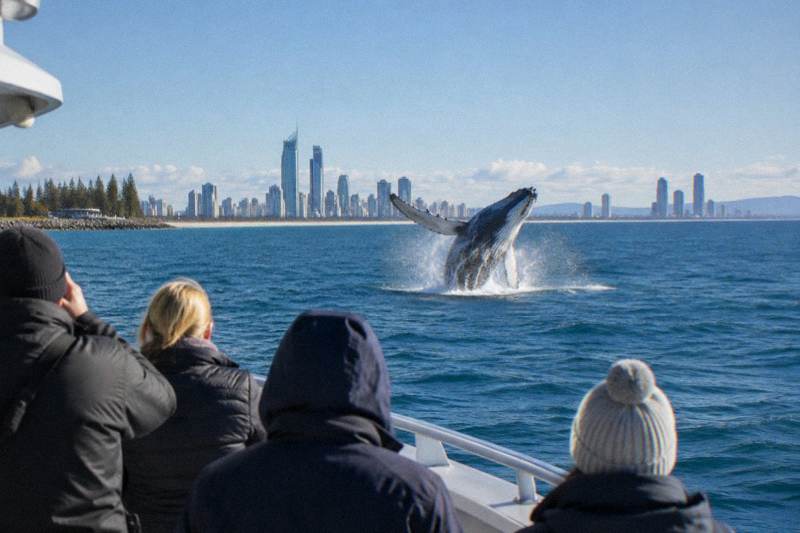
Gold Coast Weather In July And August: What Whale Season Winter Looks Like
Winter is peak whale season on the Gold Coast, and the weather that comes with it shapes every deck decision, from which jacket to pack to which departure to book.
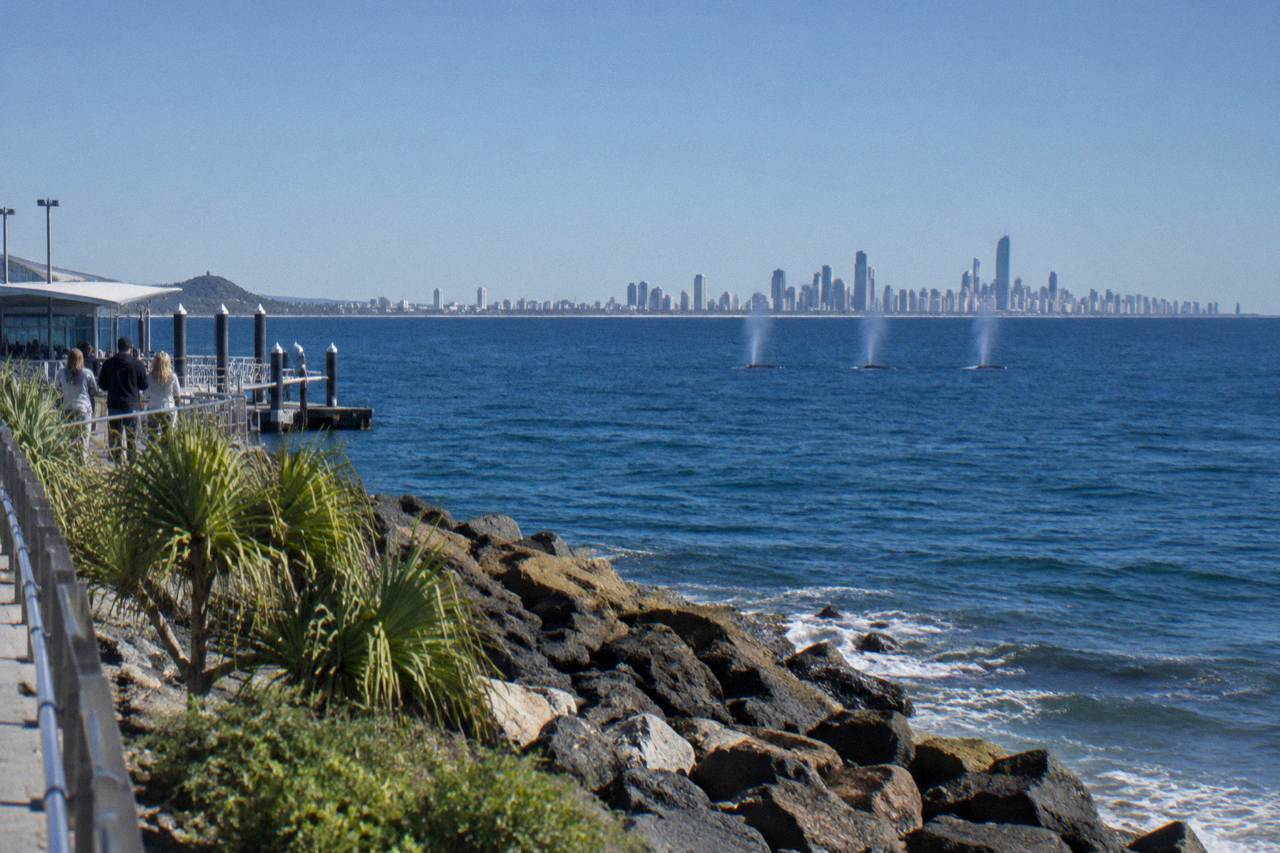
Short answer
July and August bring the Gold Coast's coolest, driest weather and its highest whale numbers, with the 2026 Bureau of Meteorology winter outlook pointing to below-average rainfall and above-average temperatures. Cruises run daily from the Broadwater in roughly 2 to 3 hours, boat-based whale watching is priced from $52 to $105.31 per person, and calm mornings are the most reliable window on the water.
Winter on the Gold Coast is not the winter most southern visitors picture. Days are mild, the air is dry, and the humpback highway passing just offshore is at its busiest, which is exactly why July and August sit at the centre of the local whale season. The trade-off is real, though: mornings on the water are cold in the wind, the Gold Coast Seaway can turn quickly, and the difference between a comfortable cruise and a miserable one is usually a jacket and a smart departure time. The Spirit of Gold Coast catamaran, the Sea World Cruises premium cruise and the smaller Kokomo boat all sail through this window daily, and each one asks slightly different things of your packing list.
What Is Winter Weather Like On The Gold Coast In July And August?
Gold Coast winter days in July and August are typically mild and dry, with cooler mornings, light winds early in the day and the most settled conditions on the water before midday. The Bureau of Meteorology's 2026 winter outlook, issued 28 May 2026, flagged below-average rainfall and above-average temperatures for southern Queensland, with El Nino likely to develop. The trade-off is genuinely cold air on an open deck.
The practical version of a Gold Coast winter is this: clear skies dominate, rain events are fewer and lighter than in summer, and the humidity that defines the region from December to March is gone entirely. What catches visitors out is not the air temperature on land, which reads mild on any weather app, but the wind chill once a boat is moving. A 20 knot south-easterly that feels pleasant on Burleigh Hill feels like a different season at 20 knots on the water, and every operator in the region knows it. The Queensland Government's own whale watching guidance notes that calm mornings, before any wind picks up, are the best conditions for spotting whales, which is advice aimed at shore watchers but applies doubly on a boat.
July sits at the colder end of the window, August a touch milder, and both are inside the peak of the northbound humpback migration. The season overall runs from late May or early June to early November, with the first humpbacks of 2026 reported off the Gold Coast Seaway on 2 June 2026, a mother and newborn calf noted as a very early arrival. July and August bring the highest whale numbers of the year, so the weather question and the wildlife question point at the same two months. If you want the full season picture month by month, the whale watching season guide breaks down the whole calendar, and the Gold Coast in winter guide covers the trip-planning side beyond the water.
| Winter factor | What to expect in July | What to expect in August | What it means on deck |
|---|---|---|---|
| Rainfall | Below-average likely per the 2026 Bureau outlook | Below-average likely per the 2026 Bureau outlook | Fewer washed-out mornings than summer |
| Daytime feel | Mild, dry, sunny | Mild, slightly warmer than July | Pleasant on sheltered decks |
| Morning feel | Cold in the wind | Cool in the wind | Pack a real jacket, not a hoodie |
| Wind pattern | Lightest early, building later | Lightest early, building later | Morning departures are the calm bet |
| Whale numbers | Peak northbound traffic | Peak numbers and surface activity | Both months are prime watching |
How Does The 2026 Winter Outlook Affect Whale Watching?
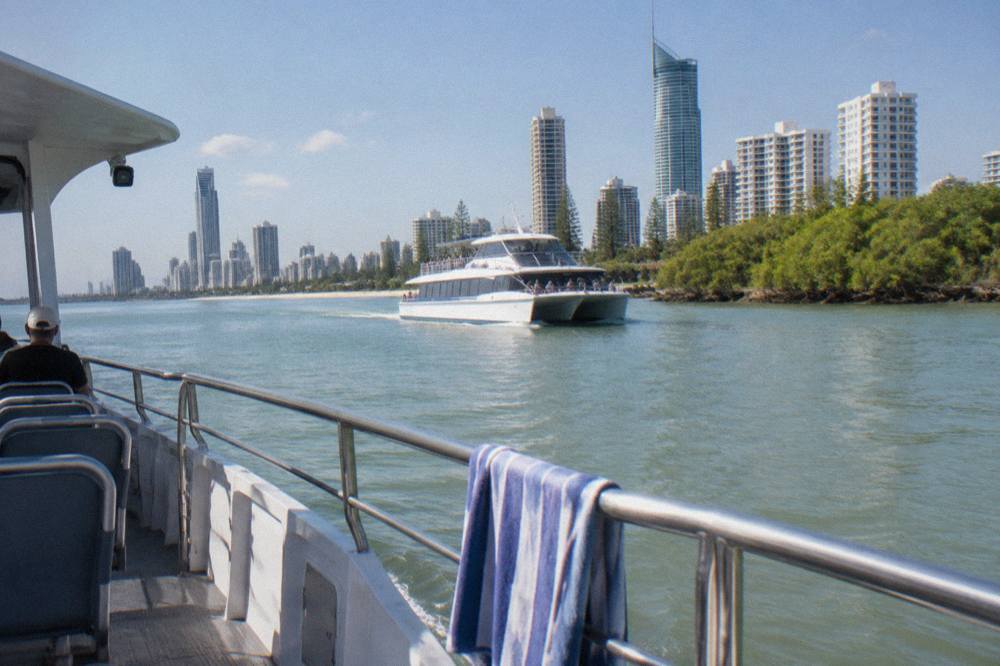
The Bureau of Meteorology's winter 2026 outlook, issued 28 May 2026, predicted below-average winter rainfall and above-average temperatures across most of southern and central Queensland, with El Nino likely to develop. For whale watching that points to more settled, cruise-friendly mornings than a typical winter, though long-range outlooks describe probability shifts rather than guarantees, and the Gold Coast Seaway remains a place where local conditions change faster than any seasonal forecast.
Long-range outlooks are directional, and the honest way to use them is as a planning tilt, not a promise. A below-average rainfall winter does not mean dry mornings every day, and above-average temperatures in a Queensland winter still mean cold air over open water at 8am. What the outlook genuinely changes is the odds: more high-pressure systems tracking across the region typically means more calm, clear mornings, and calm mornings are when whale watching is at its best, both for comfort and for spotting surface activity like breaches and tail slaps. Humpbacks breach, tail-slap and show surface activity through the season, and glassy water makes every one of those easier to see from further away.
The whale side of the 2026 season was already tracking strongly before the outlook mattered. The first arrivals were reported off the Seaway on 2 June 2026, operators expected a record season, and the east coast humpback population is now estimated at more than 50,000 animals, up from roughly 8,000 in 2006. July and August carry the peak of that traffic north, with juveniles and young adults leading the way and competitive adult pods following. More whales in the corridor means more time watching and less time searching, which is the quiet advantage of booking in the two months when the weather is coolest and the ocean is busiest.
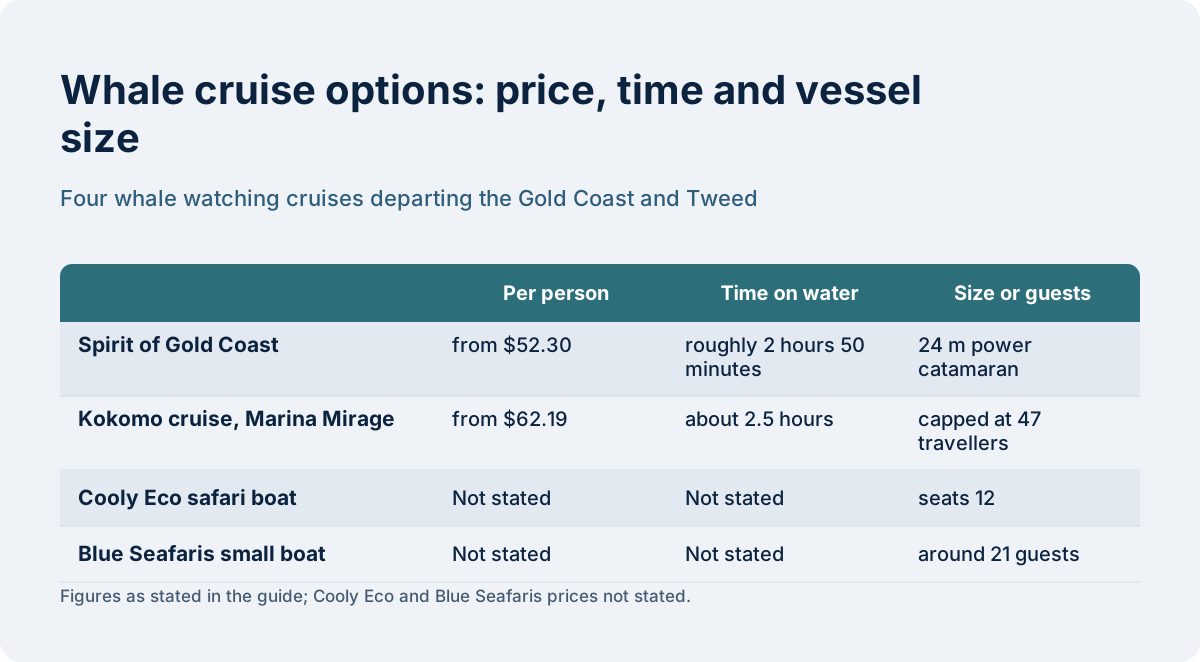
For the on-water experience, the choice between vessels matters as much as the forecast. The Spirit of Gold Coast runs a 24 m power catamaran with 360 degree views from Aqua Adventures at Southport, roughly 2 hours 50 minutes on the water from $52.30 per person, with a marine biologist on board and the listing's guarantee of a humpback sighting from June to November or a complimentary second cruise. Sea World Cruises departs the Seaworld Drive terminal at Main Beach aboard the purpose-built Spirit of Migaloo II, about 2.25 to 2.5 hours, with the listing's stated 100% sighting guarantee and a free return cruise. Hotel pickup is not included, so make your own way to the departure point. The Boattime superyacht runs a luxury yacht with a marine biologist from the Marine Stadium Jetty at Main Beach, about 2.5 hours from $52 per person, the cheapest listed price on the roster, and the listing also states a 100% sightings guarantee.
All three of those departures run daily through the season, and all three listings carry free cancellation, which is worth reading closely in a winter-booking context. A long-range outlook can tilt your odds of a calm morning but cannot fix a specific Tuesday, and free cancellation is the mechanism that lets you reshuffle if the forecast turns. The deeper comparison of all seven listings, including the two NSW-side small boats, lives in the Gold Coast whale watching tours compared guide.
What Should You Pack For A Morning Whale Cruise?
Pack for a cold, windy, spray-soaked morning even when the land forecast looks mild: a windproof outer layer, warm mid-layer, long pants, closed shoes with grip, a beanie or hood, sunglasses and sunscreen. Winter sun on the water is strong, spray is cold, and boats move, so the packing list sits closer to a hiking list than a beach list.
The single most common mistake is dressing for the car ride rather than the deck. A Gold Coast winter morning can read 15 degrees on land and feel far colder at speed on open water, and the boats that get you closest to the whales are often the boats with the least shelter. The Kokomo cruise from Marina Mirage runs a smaller purpose-built vessel capped at 47 travellers, about 2.5 hours from $62.19 per person, and its intimacy and speed are exactly why windproof layers earn their place in your bag. The listing states no sighting guarantee, so treat it as a pure wildlife-watching trip with a high 4.9 rating across 381 reviews rather than a policy-backed one.
Layering beats bulk. A fleece under a windproof shell lets you shed a layer once the sun climbs, and it packs small enough to stow in a day bag. Gloves sound excessive until you are holding a railing for two hours in a south-easterly. If your plans include the shore side as well, the same list works from the headlands, and the free whale watching spots guide covers the lookouts where binoculars matter most.
| Item | Why it earns its place | Winter-specific note |
|---|---|---|
| Windproof jacket | Blocks the wind chill that makes 15 degrees feel like single digits | More important than warmth alone |
| Warm mid-layer | Insulates during the cold first hour | Fleece packs down when the sun rises |
| Long pants | Cold air on the legs is the fastest route to misery | Skip shorts regardless of the land forecast |
| Closed shoes with grip | Decks are wet and boats move | Thongs are a slip on a moving deck |
| Beanie or hood | Wind over open water takes heat from the head first | A hood doubles as spray protection |
| Sunglasses and sunscreen | Winter sun off the water is intense | UV reflects off the sea surface |
| Motion sickness remedy | Personal choice, take it before boarding | General advice: eat lightly, sit mid-boat, watch the horizon |
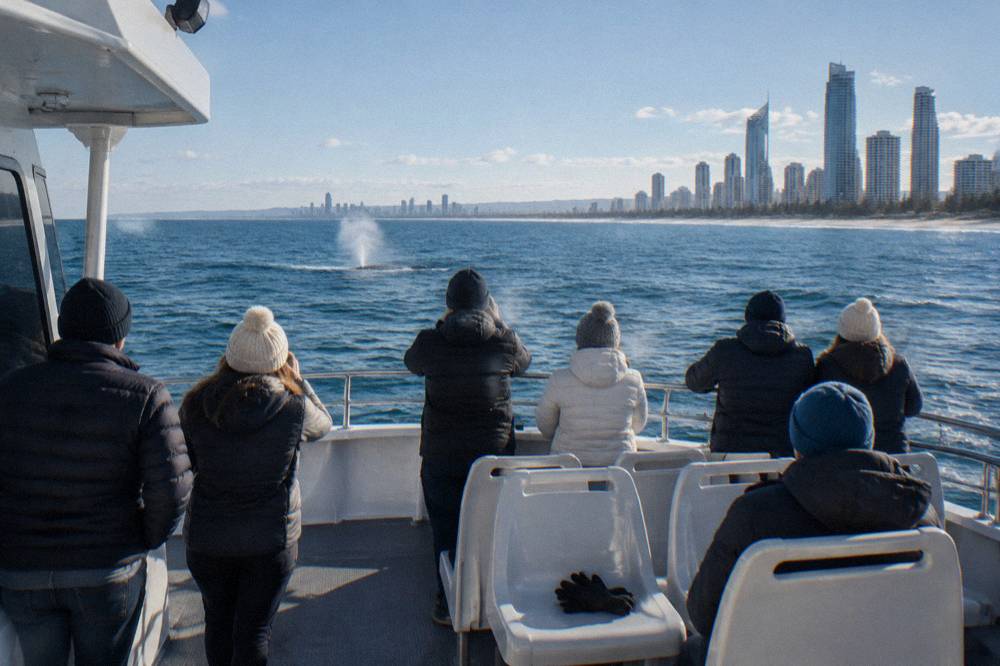
Food is worth a moment of planning too. The Spirit of Gold Coast includes morning tea, with food and drinks available to buy on board. Sea World Cruises sells food and drinks from its on-board bar. The Boattime superyacht includes light morning or afternoon tea and snacks on arrival. None of that replaces a proper breakfast before a cold morning, and eating lightly before departure sits alongside a steady horizon and a mid-boat seat as the standard, general advice for managing motion on the water.
What Do You Wear On An Open-Sided Safari Boat?
**On the open-sided safari boats that run from the Tweed side, wear full water-and-wind protection: spray jacket over warm layers, long pants, enclosed shoes and a hat that will not blow off, because these vessels trade cabin comfort for eye-level proximity to the water. The Cooly Eco safari boat seats 12 and supplies spray jackets, and the Blue Seafaris small boat takes around 21 guests with food and drinks not included, both departing from New South Wales.
These are different machines from the Broadwater catamarans, and they ask different things of your clothing. The Cooly Eco Adventures vessel is a custom-built safari-style boat seating 12, departing 139-151 Chinderah Bay Drive, Chinderah on the Tweed River in NSW, covering the Coolangatta and Gold Coast waters, about 2.5 hours from $105.31 per person with a marine naturalist on board and a 4.9 rating across 68 reviews. Spray jackets are provided, which tells you what the operator expects the conditions to be. The listing states no sighting guarantee, so the value proposition is the format itself: low, fast and close to the waterline.
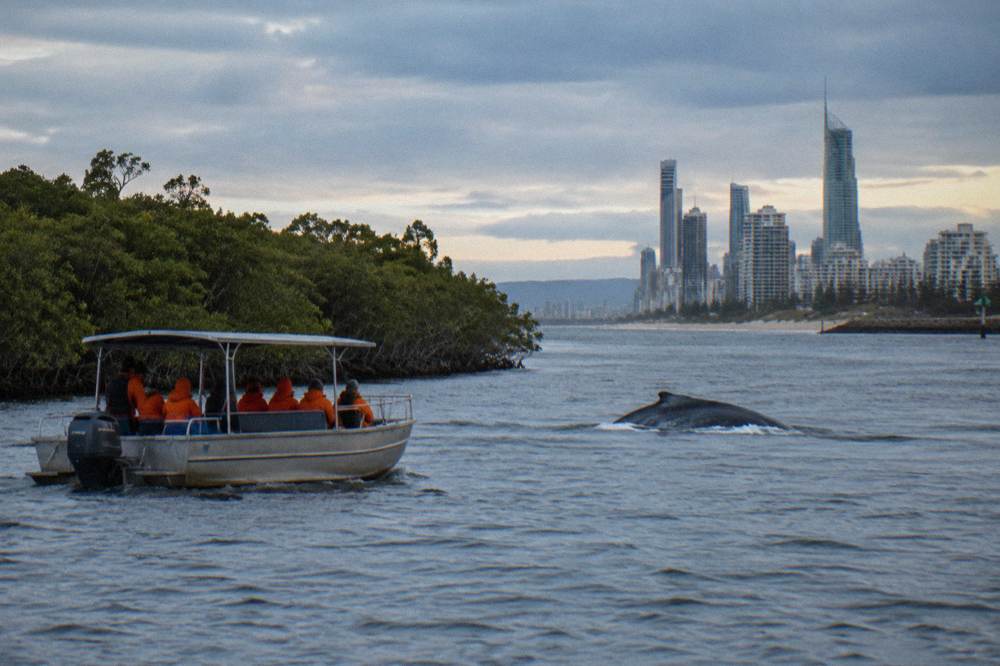
The Blue Seafaris small boat runs from 1A Minjungbal Drive, Tweed Heads South, NSW, for about 2.5 hours with a marine biologist on board. Food and drinks are not included, the price sits on the live listing, and the cruise holds a 4.9 rating from 48 reviews. The listing carries a real "Likely to sell out" badge, and it states a free tour on the next available slot if no whales are sighted. Both NSW departures mean a border crossing from most Gold Coast accommodation, so factor in the drive as well as the weather when you choose them. For the full picture on where every option boards, the where Gold Coast whale watching cruises depart guide maps all seven.
The clothing logic on these boats is simple: if the operator supplies spray jackets, assume you will want them on. Eye-level viewing means you sit close to the waterline, which is the entire appeal, and it also means every gust and every bit of spray arrives without a cabin window in between. A waterproof layer over warmth, shoes that can take a soaking, and nothing loose that the wind can take: that is the whole brief.
Does Rough Weather Cancel Whale Cruises On The Gold Coast?
Yes, rough weather can cancel Gold Coast whale watching cruises. Operators monitor conditions and cancel or reschedule trips when the sea is unsafe, since the Gold Coast Seaway is a designated coastal bar where conditions change quickly, worst on an ebb tide with large swell or strong wind, per Maritime Safety Queensland. If rough seas are expected, Sea World Cruises' terms let you proceed, reschedule, or take a full refund, with cancellations advised by SMS at least two hours ahead.
The Seaway bar is the single most consequential piece of geography in Gold Coast whale watching. Every Broadwater departure crosses it to reach open ocean, and Maritime Safety Queensland's bar-crossing guidance describes exactly the hazard pattern local skippers watch for: fast change without warning, and the roughest combination of an outgoing tide against large swell or strong wind. That is why departure times and routes shift day to day even when the brochure schedule looks fixed. The Bureau of Meteorology's winter outlook shapes the season's odds, but the morning's actual bar conditions shape each individual trip.
Operator policies differ in the details. Sea World Cruises' published terms say that if rough seas are expected you notify at check-in and choose to proceed, reschedule or take a full refund if unsafe, and that operator-initiated cancellations come by SMS at least two hours before departure with a reschedule or a full refund. Spirit of Gold Coast's terms say an operator weather cancellation means a reschedule subject to availability, or a full refund if a reschedule cannot be arranged, requested within 14 days. Every listing on this roster also carries free cancellation on the platform listing, which is the traveller's own escape hatch, separate from the operator's weather policy. The deeper dive on this topic, including the seasickness angle, lives in the Gold Coast whale watching sea conditions guide.
| Departure point | Side of the border | Exposure factor | Weather note |
|---|---|---|---|
| Sea World Cruises Terminal, Seaworld Drive, Main Beach | Queensland | Crosses the Seaway bar | Operator SMS notice at least 2 hours ahead on cancellations |
| Marina Mirage, 74 Seaworld Drive, Main Beach | Queensland | Crosses the Seaway bar | Free cancellation up to 24 hours before, per the listing |
| Aqua Adventures, 95 Marine Parade, Southport | Queensland | Crosses the Seaway bar | Reschedule or full refund on operator weather cancellation |
| Marine Stadium Jetty, Main Beach | Queensland | Crosses the Seaway bar | Free cancellation on the listing |
| Tweed Heads South, NSW | New South Wales | Tweed River entrance | Small-boat format, spray jackets supplied by Cooly Eco |
| Chinderah, Tweed River, NSW | New South Wales | Tweed River entrance | Small-boat format, eye-level viewing |
The honest summary for a July or August visitor is that outright cancellations are the exception rather than the rule, but reschedules and rougher-than-expected mornings happen, and the operators who publish their terms are the ones worth booking with confidence. Whales themselves do not mind the weather much either way: the migration runs on schedule regardless of the sky above it, and a windy day with whales is still a day with whales.
Why Does August Weather Coincide With Peak Whale Numbers?
August is peak whale month on the Gold Coast because the northbound migration is at its densest, with the east coast population now estimated at more than 50,000 humpbacks, and the region's winter weather pattern, dominated by clear, dry, high-pressure days, tends to hold through the month. The settled pattern that makes August comfortable on deck is the same one that puts the most whales within reach of a 2 to 3 hour cruise window.
The two facts reinforce each other. Tourism and Events Queensland's guidance states that July and August bring peak numbers, and the migration structure explains why: young males lead the northbound movement, pregnant cows and mother-calf pairs travel later, and the bulk of the population passes any given stretch of coast inside a fairly narrow window. The federal environment department's humpback profile describes the northward push from June to August and the southern return from September to November, on an annual migration that spans a vast stretch of the eastern seaboard each year. A cruise that leaves the Seaway in August is simply fishing in a fuller river.
Weather-wise, August is often the sweeter of the two peak months. The Bureau's 2026 outlook pointed to above-average temperatures across the state's south, and August sits at the milder end of the winter block, with the windiest stretch of the year typically behind the strongest mid-winter systems. The whale calendar keeps moving after August, too: September and October bring the southbound mothers and newborns travelling slower and closer to shore, which many watchers prefer to the raw numbers of August. The month-by-month trade-offs, including the mother-and-calf window, are laid out in the which month is best for whale watching breakdown.
| Period | Migration phase | Whale character | Weather character |
|---|---|---|---|
| Late May to June | Early northbound | Juveniles and young adults first | Cold mornings, early-season trips beginning |
| July | Peak northbound | Highest traffic, competitive pods | Coldest window, calm early mornings |
| August | Peak northbound | Peak numbers and surface activity | Mild, dry, settled high-pressure days |
| September to October | Southbound | Mothers and newborns, slower, closer to shore | Warming, more variable wind |
| Early November | Season tail | Stragglers, late mothers and calves | Spring conditions, season closing |
Morning Or Afternoon: When Is The Winter Deck Calmest?
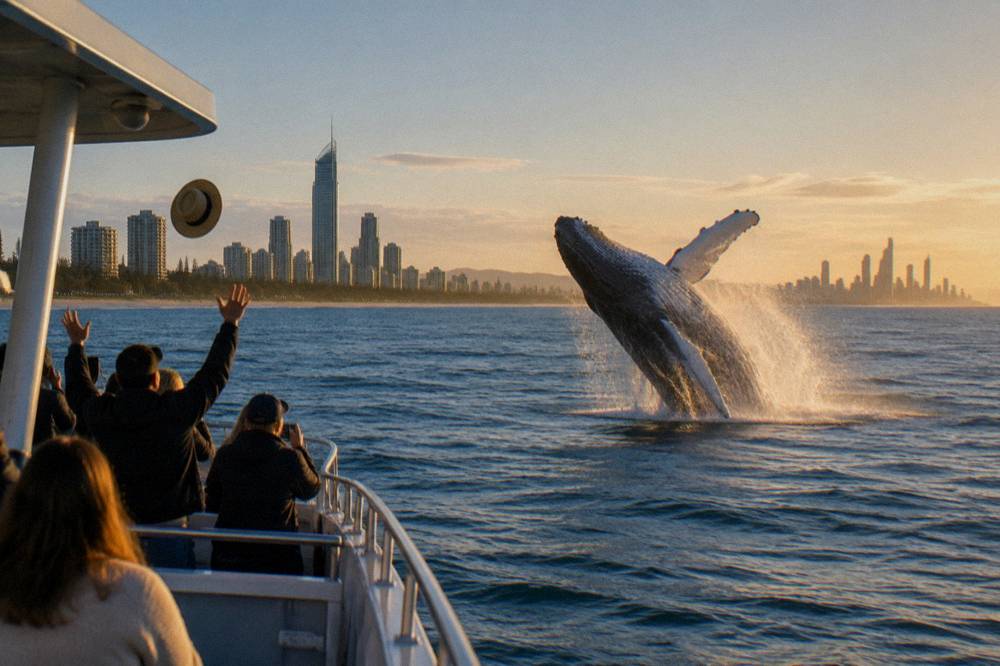
Mornings are the calmer, better-protected window for winter whale watching on the Gold Coast, because wind builds through the day and the Queensland Government's whale watching advice names calm mornings, before any wind picks up, as the best spotting conditions. Afternoon departures run all season and suit late risers, but the trade-off is more wind, choppier water and harder spotting, against warmer air later in the day.
The mechanics are straightforward. Winter high-pressure systems typically deliver light, variable wind at dawn and a building south-easterly by early afternoon. Glassy morning water makes distant blows and breaching whales visible at range; a whitecapped afternoon hides them. The same logic drives the land-based watchers to early sessions on the headlands, and it applies even more strongly at sea level. The full argument, including what it means for specific operators, is in the morning or afternoon whale watching discussion.
For the boats themselves, the morning case is strongest on the smaller vessels. The Kokomo boat's 47-guest cap and the Cooly Eco safari boat's 12 seats both reward calm water, since eye-level viewing is at its best when the surface is quiet. The larger catamarans, the Spirit of Gold Coast 24 m power cat and Sea World Cruises' Spirit of Migaloo II, handle afternoon chop more comfortably and offer sheltered cabin space, so a windy forecast matters less to them. Sea World Cruises does not include hotel pickup, so an early departure means making your own way to Main Beach, possibly in the dark.
One quiet advantage of winter mornings deserves a mention: light. Low winter sun over calm water is the best photography condition a whale deck offers, and the 8am-ish departures put you on the water inside the best of it. Bring the camera, but keep a hand for the railing.
What Does A Wet Or Windy Forecast Mean For Your Booking?
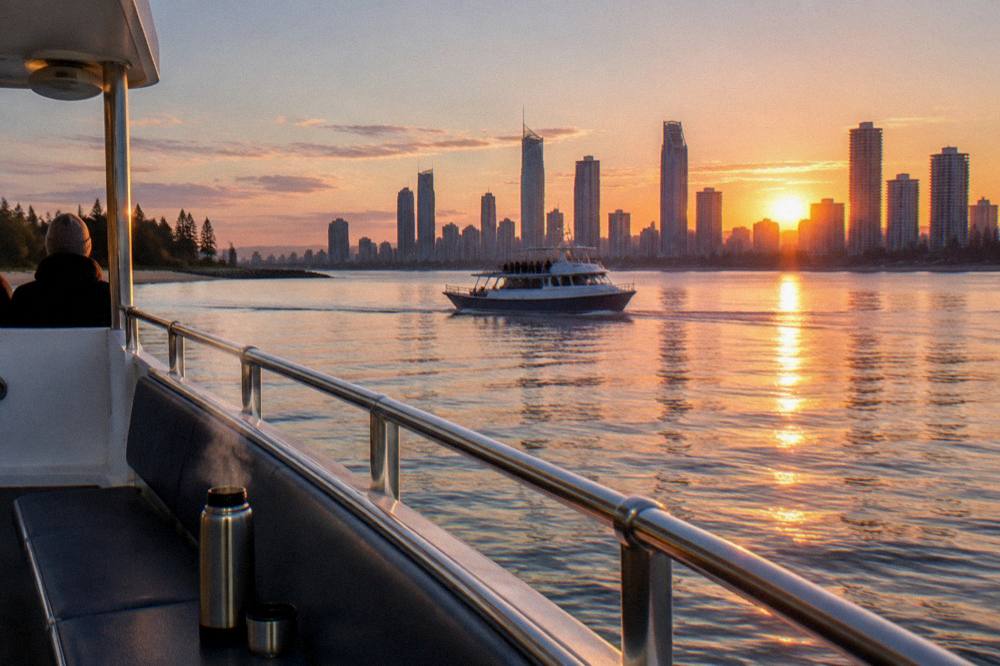
A wet or windy forecast rarely costs you your money: every listing on this roster carries free cancellation, and operator terms provide reschedule or full-refund paths when the operator cancels for weather. Sea World Cruises sends SMS notice at least two hours ahead, and Spirit of Gold Coast allows a refund request within 14 days. Book the morning you want, watch the forecast, and cancel early rather than late if the outlook turns.
Timing matters inside the free-cancellation windows. The Kokomo listing allows free cancellation up to 24 hours ahead, which is the tightest published window on the roster, so a same-day forecast wobble on that boat is a call-the-operator situation rather than a self-service one. The other listings state free cancellation without that 24-hour qualifier, but the exact cut-off is always on the live listing, and reading it before you book is the whole job. This site's Whale Watching On The Gold Coast homepage comparison includes the cancellation terms for all seven listings side by side, which is the fastest way to see the spread.
There is also a case for not over-reacting to a forecast. A shower on the Bureau's icon often means a brief passing band while the morning stays largely fine, and the whales do not pause for drizzle. The forecasts that genuinely reshape a trip are sustained strong winds and big swell, the combination that makes the Seaway bar hazardous, and those are usually visible days out. Between those extremes sits a wide band of ordinary winter weather that a windproof jacket handles completely. The what to expect on a Gold Coast whale watching cruise guide covers the day-of experience, from check-in to the return across the bar.
The last planning note is about the calendar, not the sky. July and August are the busiest whale months and the busiest booking months, and the two listings carrying a real "Likely to sell out" badge, the Sea World Cruises premium cruise and the Blue Seafaris small boat, earn it in this window. Booking ahead in winter is less about discounts and more about getting the departure you want at all, a point the do you need to book in advance post examines in detail.
Common Questions About Gold Coast Winter Whale Weather
Is August Good Weather For Whale Watching On The Gold Coast?
Yes. August typically brings dry, settled winter days with the calmest mornings, and it carries peak whale numbers on the northbound migration. The Bureau of Meteorology's 2026 winter outlook pointed to below-average rainfall and above-average temperatures for southern Queensland, which tilts the odds further toward usable mornings.
How Cold Does A Gold Coast Whale Cruise Feel In Winter?
Colder than the land forecast suggests. Air temperatures are mild, but wind chill on a moving open deck in July can feel like single digits. A windproof jacket over a warm mid-layer, long pants and enclosed shoes are the standard kit, and the small open-sided boats warrant spray jackets, which Cooly Eco supplies.
Do Whale Cruises Get Cancelled For Weather On The Gold Coast?
Sometimes. Operators monitor conditions and cancel or reschedule when unsafe, with the Gold Coast Seaway bar the key hazard point. Sea World Cruises gives SMS notice at least two hours ahead and offers a reschedule or full refund, and Spirit of Gold Coast offers a reschedule or full refund on operator weather cancellations. No cancellation-rate figures exist for the region.
What Should I Wear On A Winter Whale Watching Cruise?
Windproof outer layer, warm mid-layer, long pants, enclosed shoes with grip, a beanie or hood, sunglasses and sunscreen. Add gloves for the smallest open boats, and take any motion sickness remedy before boarding rather than after. General advice for the water: eat lightly, sit mid-boat and keep your eyes on the horizon.
Is Morning Or Afternoon Better For Winter Whale Watching?
Morning. Wind builds through the day, and the Queensland Government's whale watching guidance names calm mornings, before any wind picks up, as the best spotting conditions. Afternoon trips run all season and suit late risers, but expect more wind and choppier water in exchange for warmer air.
Is Whale Watching On The Gold Coast Worth Doing In Winter?
Winter is the season. The migration runs late May or early June to early November, July and August carry peak numbers, and the region's dry, settled winter weather is the most reliable of the year for calm mornings on the water. Boat-based whale watching on this roster runs from $52 to $105.31 per person.