What Is The Natural Enemy Of A Humpback Whale?
Orcas hunt humpback calves, humans nearly wiped the species out, and mother humpbacks defend their young fiercely. Here is what actually threatens humpbacks off the Gold Coast.
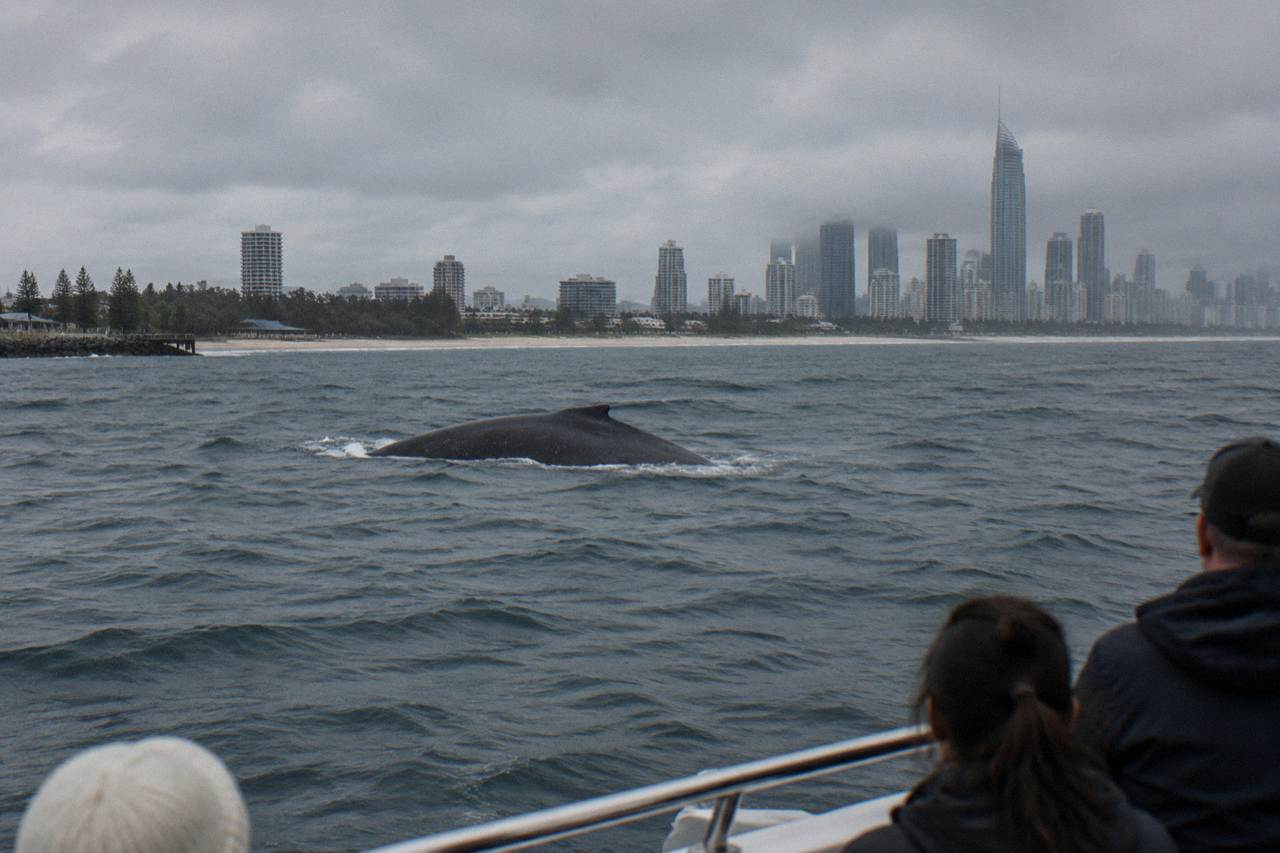
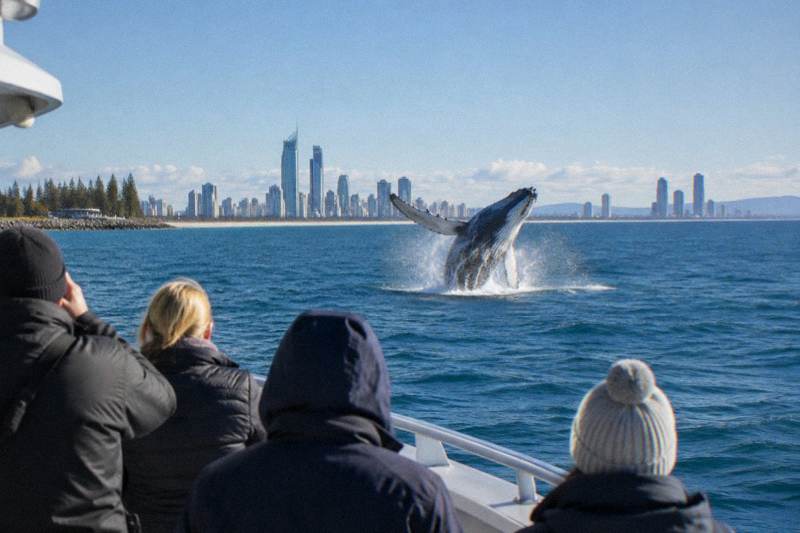
The first thing to understand about a humpback whale is its size. A fully grown adult reaches up to 16 metres long and weighs up to 45 tonnes, which rules out almost every predator in the ocean. The second thing to understand is that none of that bulk protects a newborn calf, and that is where the real story of the humpback's natural enemies begins. Off the Gold Coast, the cruises that track the migration, from the Spirit of Gold Coast marine biologist trip to the Sea World Cruises catamaran and the Blue Seafaris small boat out of Tweed Heads South, are watching a population that survived its deadliest enemy, us, and is now rebuilding in numbers that surprise even the researchers who count them. Once you know what to look for, a whale gives itself away long before it surfaces, and this guide to the visible clues that a humpback is close by explains the blows, slick patches and circling birds that give the game away.
What Is The Natural Enemy Of A Humpback Whale?
The natural enemy of an adult humpback whale is effectively nothing, while the natural enemy of a humpback calf is the orca, also called the killer whale. Transient orca pods hunt humpback calves on the migration route, and large sharks will scavenge or take weakened animals. Historically, humans were the single greatest threat of all, cutting the east Australian population to a little over 100 individuals before whaling ended.
That hierarchy matters because it explains almost everything about how humpbacks behave. A mother with a calf is a different animal to watch than a juvenile racing north: she travels slower, hugs the coastline, and reacts to every unfamiliar shape in the water. The federal environment department notes that groups of young males typically lead the migration north while pregnant cows and cow-calf pairs bring up the rear, which is why the Gold Coast's September and October trips, the months when mothers and newborns pass closest to shore, feel so different to the peak July and August runs of adults. The calves making that journey are the ones orcas want.
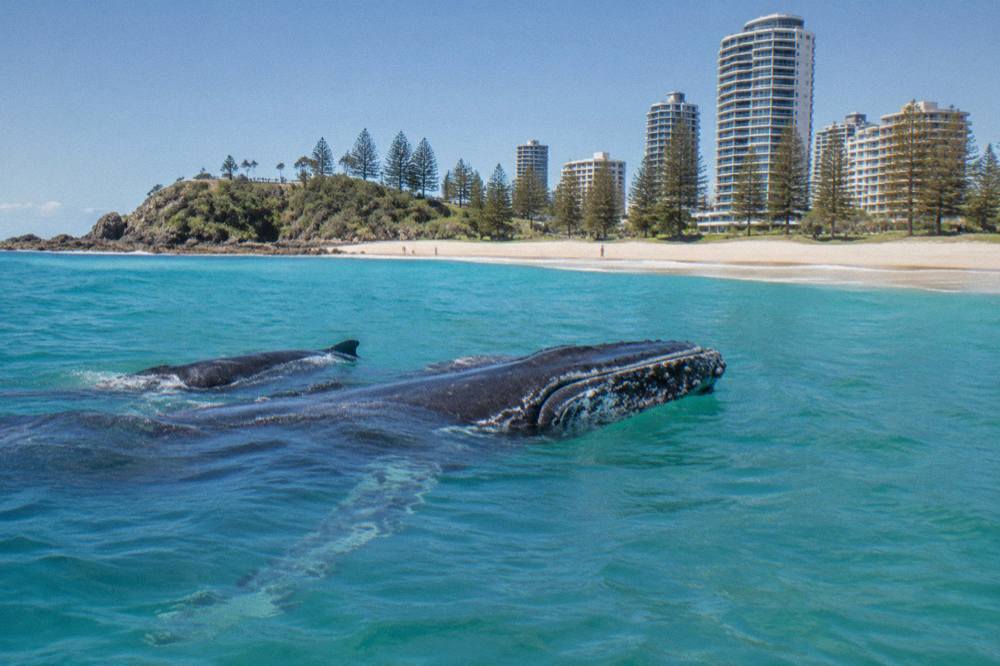
The recovery is the part that would have sounded impossible fifty years ago. Marine scientists estimate there were more than 50,000 eastern Australian humpbacks in 2024, a preliminary figure reported by the ABC, up from around 8,000 in 2006 and a little over 100 individuals when whaling ended in 1963. The population has been growing at roughly 10 to 11 percent a year. Every cruise that leaves Main Beach or Southport in season is sailing through the result of that comeback, whether it is the Spirit of Gold Coast power catamaran with its 360 degree views or the Kokomo boat with its underwater camera out of Marina Mirage.
The threats that remain are real but different in kind. Entanglement in fishing gear and shark nets, ship strikes, and the sheer noise of a busy coastline do not hunt humpbacks the way an orca does, but they kill them all the same, and the Gold Coast saw both sides of that in 2026. This article walks through each threat in turn: orcas first, then the mothers that fight them, then the whaling history, then what still harms whales today and how the rules on the water protect them.
If reading about wild animals in open water makes you want to see them for yourself, these are the three trips from the Gold Coast and the Tweed that put you in the migration corridor with the most capable crews:
Do Orcas Attack Humpback Whales Off Australia?
Orcas do attack humpback whales off Australia, but almost exclusively calves and juveniles, not adults. Transient orca pods work the migration routes and calving grounds, separating mothers from calves or wearing a calf down over hours. No verified count of orca attacks on the Gold Coast migration exists, so no number can honestly be printed here, only the behaviour itself.
The pattern is well documented across humpback populations worldwide even though the east Australian attack figures are not. Orcas are the ocean's only consistent predator of large whales, and they hunt in coordinated pods using the same teamwork they bring to seal colonies. A humpback calf is the ideal target: rich in energy, unable to dive deep for long, and dependent on a single defender. Adult humpbacks, by contrast, are simply too big, too armoured in blubber and muscle, and too capable of landing a serious blow with a tail or a pectoral fin to be worth the effort. A 45 tonne animal with a two metre tail is not prey.
What makes orca predation visible to whale watchers is the escort behaviour around it. Mothers with calves are frequently accompanied by other adult humpbacks, sometimes for hours or days, and researchers have long noted that humpbacks will also interfere when orcas attack other species entirely. The leading explanation is that the defensive response is so strongly wired that it fires even when the orcas are hunting something else. On the Gold Coast leg of the migration, the calves are born in tropical waters to the north and then travel south past Queensland from August to October, which is why the mother and calf pairs reported most in September and October are the group whale cruise crews watch most carefully.
None of the Gold Coast's whale cruises promise orca sightings, and none should, because orcas are uncommon visitors rather than residents on this stretch of the migration. What the cruises do see constantly is the behaviour that predation pressure built: the tight mother and calf pairs, the escort whales, the tail slaps and breaches that may serve as signals to a pod as much as displays for onlookers. If you are weighing which trip to book for the calf season, the question of free cancellation matters, since every listing on this roster offers it, and the Spirit of Gold Coast cruise also states a humpback sighting guarantee from June to November or a complimentary second cruise, that operator's own policy rather than anyone's promise about wild animals.
How Do Mother Humpbacks Protect Their Calves?
A mother humpback protects her calf by keeping it physically close, positioning her body between the calf and any threat, swimming in shallow water near the coast where orcas struggle to manoeuvre, and striking out with her tail and fins when a pod closes in. Calves stay with their mothers for 11 to 12 months, which covers the full first migration south.
The shallow water strategy is the one that connects directly to Gold Coast whale watching. Predation pressure is one of the main reasons mother and calf pairs hug the coastline on the southbound leg, and it is why September and October trips from the Gold Coast so often find whales surprisingly close to shore. The federal environment department describes the migration itself as up to 10,000 kilometres, and a calf making that journey in its first months of life is doing it on milk and nerve. Mothers nurse intensely, and the pair travels slower than the northbound adults, which is exactly what the whale cruise crews look for when they read the water in spring.
The physical defence is genuinely formidable. A humpback's tail is a weapon of real force, and mothers have been observed rolling onto their backs with the calf held on their chest, presenting flukes and fins to an attacking pod while keeping the calf out of reach. Some mothers also lift the calf onto their own body to keep it at the surface where it can breathe. Escort whales add numbers: a single adult defender is a hazard, and two or three make an attack expensive enough that many orca hunts break off. None of this is guaranteed to save every calf, and no source gives a survival rate for the east Australian population, so the honest line is that mothers defend aggressively and that predation remains part of the migration's background.
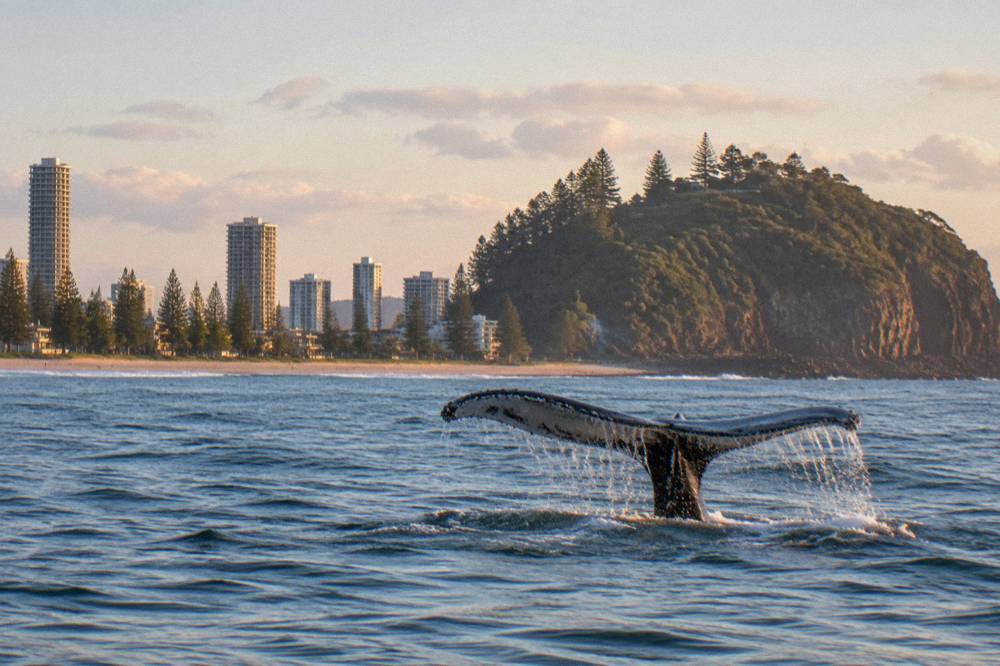
For whale watchers, the protective behaviour is often the show. The tail slaps, pectoral fin slaps and full breaches that make a Gold Coast cruise memorable are the same movements a mother uses to drive off a pod, and the same surface activity the whole species carries through the season. The cruises that report mothers and calves best are the ones on the water through September and October, and the small-boat operators do particularly well at holding a respectful distance without losing the view: the Blue Seafaris small boat takes around 21 guests out of Tweed Heads South, and the Cooly Eco safari-style vessel takes just 12 from Chinderah on the Tweed River. A marine biologist on board, as on the Spirit of Gold Coast trip and the Boattime superyacht, adds the interpretation that turns a tail slap into a story.
| Stage Of The Migration | Who Is Travelling | Main Risk To Calves | What A Cruise Typically Sees |
|---|---|---|---|
| June to July, northbound | Juveniles and young adults first, then adults | Orcas in open water, though calves are rare on this leg | Fast-moving adults, breaching, competitive pods |
| August, transition | Adults heading south, early mothers | Increasing as cows near the coast | High whale numbers, mixed behaviour |
| September to October, southbound | Mothers with newborn calves | Orcas targeting calves, entanglement near the coast | Close-to-shore pairs, slow travel, protective displays |
| November, season's end | Stragglers and late mothers | The same, with fewer boats on the water | Quieter trips, occasional late pairs |
Were Humans The Deadliest Enemy Humpbacks Ever Had?
Yes, and it is not close. Commercial whaling cut the east Australian humpback population to a little over 100 individuals by 1963, from a pre-whaling population estimated at around 30,000. Whaling ended in Australian waters in 1963, and the population has since recovered to more than 50,000, growing at roughly 10 to 11 percent a year.
That collapse and recovery is the single most important fact about the whales passing the Gold Coast today. The animals that a Sea World Cruises catamaran or a Kokomo boat chases each winter are the descendants of roughly a hundred survivors, and the ABC's reporting on the preliminary 2024 estimate notes the current population is around 20,000 more than the estimated pre-whaling population of the early 1900s. Whaling stations along the Australian coast took humpbacks in industrial numbers for decades, and the species was listed as vulnerable under national environment law during its long climb back. The federal department describes the eastern Australian humpbacks' rebound as one of the great recoveries, and the numbers bear that out: about 8,000 in 2006, more than 50,000 by 2024.
The whaling era is worth understanding because it reframes the question this article asks. The natural enemy of a humpback, the orca, takes calves one at a time and always has; it is a pressure the species evolved with and can absorb. Humans took adults by the thousand, and the population only survived because protection came in time. Today the law does the protecting instead: within the Australian Whale Sanctuary, which covers the entire Commonwealth marine area, it is an offence to kill, capture, injure, harass, chase or herd whales, dolphins and porpoises, and the Sea World Cruises whale watch listing places its own trips twenty minutes offshore inside that sanctuary.
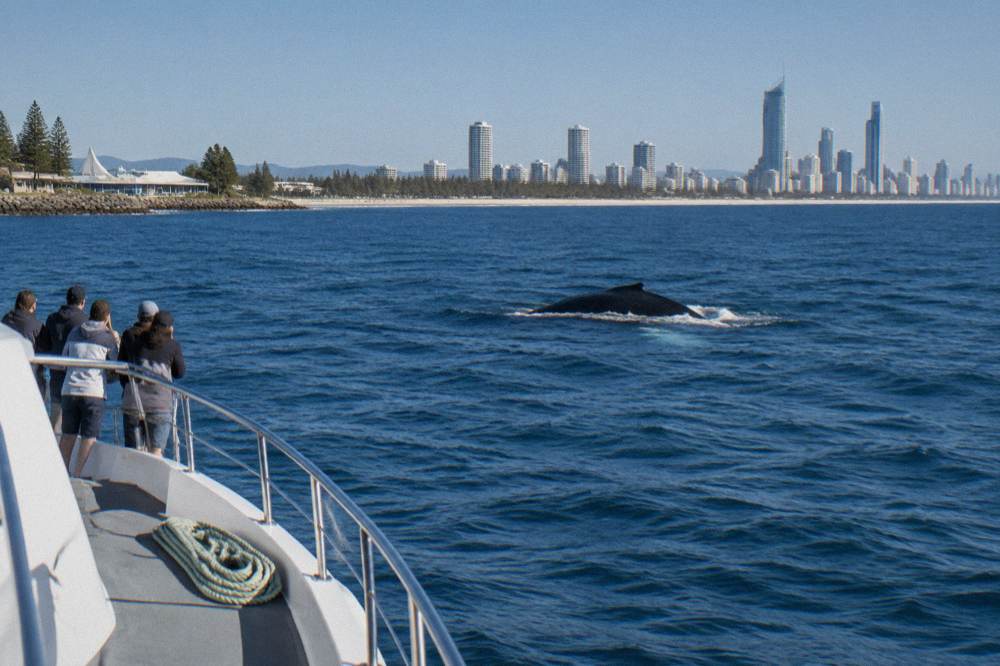
The recovery has consequences whale watchers feel directly. More whales means more close passes, more surface activity, and more days when multiple pods work the same stretch of water. It also means the tourism industry that grew up around the migration, from the purpose-built vessels at Main Beach to the swim trips that depart Chinderah in New South Wales, exists because the species came back from the edge. The Whale Watching On The Gold Coast season now runs from late May or early June to early November, and the deeper story behind those dates is a population that was nearly erased and rebuilt itself in two generations. For more on the animals themselves, the guide to humpback whales on the Gold Coast covers the migration, the behaviours and the numbers in detail.
What Still Threatens Humpbacks Off The Gold Coast Today?
The main modern threats are entanglement in fishing gear and shark nets, ship and boat strikes, and ocean noise, not predation. Two 2026 events on this coast show the pattern: a roughly 10 metre humpback was cut free from shark nets off Currumbin in September, and a tailless humpback, likely scarred by an earlier entanglement, was reported off Cabarita Beach in July. No overall fatality figures for this coast exist.
Entanglement is the threat with a local face. The shark nets that sit off Gold Coast beaches are designed for large sharks, but migrating whales cross them twice a year, and a whale that swims into a net can drown if it cannot reach the surface to breathe. The Sea World Foundation teams that freed the Currumbin whale in September 2026 work these rescues regularly, and the tailless animal seen off Cabarita Beach a couple of months earlier was assessed by researchers as likely carrying the result of an earlier entanglement, a possible first confirmed case of its kind in Australia. Neither event produced a statistic, and none should be invented, but both show that the biggest risks to an adult humpback on this coast are human-made.
Boat strikes and noise are quieter threats. A 45 tonne whale is not fast to move out of the way, and the approach distance rules exist partly to keep vessels from cutting across a whale's path. Noise matters too: humpbacks communicate across long distances, and a busy shipping and boating coast adds a constant hum underneath. The rules that govern every whale cruise on this roster are set by Queensland in state waters and by New South Wales for the Tweed-side departures, and they are the practical answer to the question of how humans, the species' historic enemy, now share the water with an animal we once hunted.
| Threat | Who It Mainly Hits | How It Works | 2026 Gold Coast Evidence |
|---|---|---|---|
| Orcas | Calves and juveniles | Coordinated pods separate and exhaust a calf | No local attack count exists; the behaviour is why mothers defend |
| Shark nets | Adults and calves | Entanglement prevents surfacing to breathe | Currumbin whale freed by Sea World Foundation, September 2026 |
| Fishing gear | Adults | Lines and nets wrap flukes and jaws | The tailless whale off Cabarita Beach, July 2026, likely earlier entanglement |
| Boat strikes | Adults and calves | Hull and propeller impact on slow-moving whales | No incident figures found; approach rules reduce the risk |
| Noise | All ages | Masks communication over distance | No local measurement exists; the effect is described qualitatively |
How Close Are Whale Watching Boats Allowed To Get?
In Queensland waters boats must stay at least 100 metres from a whale and 300 metres in front of or behind it, slow to 6 knots inside the 300 metre caution zone, and no more than three boats may share one whale's caution zone. In New South Wales waters, where the Tweed and Chinderah boats operate, vessels also keep 100 metres from a whale, and swimmers enter the water at least 100 metres away and stay 30 metres clear.
Those distances come from the Queensland Government's rules for watching marine mammals, and they shape every trip on this roster. When a whale approaches a boat on its own, and it happens, the crew must disengage or withdraw slowly rather than chase; the close encounters whale watchers describe are almost always the whale's choice. The three-boat rule is why a good skipper will leave a pod that is getting crowded, and it is why the small-boat trips, which carry fewer passengers to begin with, often end up with the cleanest sustained views. Drones must stay 100 metres away, helicopters 500, and jet skis 300, so the whale watching you do from a licensed cruise is the closest legal way to watch.
The distinction matters most for the swim trip. No authorised swim-with-whales operation departs the Gold Coast itself; licensed swims in Queensland run from Hervey Bay and the Sunshine Coast, and the one swim trip on this roster, the Cooly Eco Adventures four hour trip, departs Chinderah on the Tweed River in New South Wales, just south of the Queensland border, under NSW rules where a swimmer enters the water at least 100 metres from a whale and keeps 30 metres clear. Its listing states that a whale sighting is guaranteed but a swim is not, which is the honest framing for any in-water encounter with a wild animal. The guide to swimming with whales on the Gold Coast explains the geography and the rules in full.
| Rule | Queensland Waters | New South Wales Waters |
|---|---|---|
| Boat distance from a whale | 100 m, plus 300 m in front of and behind | 100 m |
| Speed inside the caution zone | 6 knots within 300 m | Similar approach limits apply |
| Boats per whale | Three in the caution zone | Managed under NSW marine mammal rules |
| Swimmers | Not within 100 m of a whale | Enter 100 m away, stay 30 m clear |
| Drones | 100 m | 100 m |
| White whales such as Migaloo | 500 m for boats | 500 m |
For the boat trips, the rules are the floor, not the ceiling, and the better crews treat them that way. The Spirit of Gold Coast whale watch, which carries a marine biologist and departs Aqua Adventures at Southport, and the Blue Seafaris marine biologist trip out of Tweed Heads South both build their commentary around exactly these protections, which is one reason a naturalist-led trip reads the water differently to a plain sightseeing run. If the biology is what draws you, the question of whether humpback whales are friendly to humans is worth reading next, because the answer is built on the same approach rules.
Where Can You Watch Humpbacks Safely From The Gold Coast?
The safest whale watching is from a licensed cruise or a free shore lookout. Cruises depart Main Beach and Southport on the Gold Coast side and Tweed Heads South and Chinderah on the NSW side, while the tourism board names Point Danger, Burleigh Heads, Miami and Greenmount Point as free vantage points. Every cruise on this roster offers free cancellation, and prices run from $52 to $105.31 for boat-based watching.
The boat trips split into two clear families. On the Gold Coast side, the Sea World Cruises premium cruise, rated 4.6 from 655 reviews, states a whale sighting guarantee with a free return cruise as its own policy, and hotel pickup is not included, so guests make their own way to the departure point. The Spirit of Gold Coast trip, rated 4.6 from 920 reviews, is the roster's deepest review pool. The Kokomo boat from $62.19 per person, rated 4.9 from 381 reviews, caps its vessel at 47 travellers out of Marina Mirage, and the Boattime superyacht from $52 per person, rated 3.7 from 138 reviews, is the roster's cheapest listing and its lowest rated, worth saying plainly if you rank by rating. On the NSW side of the border, the Blue Seafaris small boat, rated 4.9 from 48 reviews, sails with a marine biologist aboard, and the Cooly Eco safari boat, rated 4.9 from 68 reviews, takes just 12 passengers for eye-level viewing. Both run about 2.5 hours.
Choosing between them comes down to what you want from the threat-and-protection story this article tells. The mother and calf season of September and October rewards the small boats and the biologist-led trips, because those crews spend the most time interpreting protective behaviour rather than simply finding whales. The peak of July and August rewards capacity and frequency, which is where the big Main Beach catamarans win, running multiple departures through the highest numbers of the northbound leg. Whichever you pick, the free cancellation every listing carries means a weather call can be made late, and the operators themselves cancel or reschedule when conditions are unsafe, with Sea World Cruises notifying passengers by SMS at least two hours ahead per its own terms.
The shore option deserves the last word because it is the one that costs nothing. The tourism board's own pick for the best free spot is Point Danger at Coolangatta, with Burleigh Heads including Tumgun Lookout, Miami and Greenmount Point also named, and the Queensland Government notes that calm mornings, before any wind picks up, are the best time to spot whales from land, with binoculars making the difference between a distant blow and a confirmed whale. Local guides add Currumbin, Main Beach and The Spit, and Kirra Hill and Snapper Rocks via Point Danger, as spots with regular season sightings. A pair of binoculars on Burleigh Hill in September, watching a mother hold her calf close in the shallows, is the cheapest possible window onto everything this article has described.
However you choose to watch, from a deck or a headland, the migration that passes this coast twice a year is a survival story in motion: a species that outlived its deadliest enemy, defends its calves against the one predator that still hunts them, and now travels past the Gold Coast in numbers its oldest survivors would not have believed. These are the three trips that put you in that corridor with the crews who know it best:
Common Questions About Humpback Whale Predators
What Is The Natural Enemy Of A Humpback Whale?
The orca is the natural enemy of humpback calves, and effectively nothing hunts a healthy adult. Historically, humans were the deadliest threat of all, cutting the east Australian population to a little over 100 individuals before whaling ended in 1963; it has since recovered to more than 50,000.
Do Orcas Attack Adult Humpback Whales?
Orcas almost never take healthy adult humpbacks, which can reach 16 metres and 45 tonnes. Pods target calves and juveniles, separating them from mothers or wearing them down over hours. No verified count of orca attacks on the Gold Coast migration exists.
How Do Mother Humpbacks Protect Their Calves?
Mothers keep calves close, position their bodies between the calf and any threat, use shallow coastal water where orcas struggle to manoeuvre, and strike with tail and fins when a pod closes in. Calves stay with their mothers for 11 to 12 months, covering the full first migration south.
Why Do Humpback Whales Come So Close To Shore?
Shallow water near the coast offers calves some protection from orca pods, which is one reason mother and calf pairs hug the shoreline on the southbound leg from August to October. That is also why September and October cruises and shore lookouts often see whales surprisingly close to land.
What Threatens Humpbacks Off The Gold Coast Today?
Entanglement in shark nets and fishing gear, boat strikes and ocean noise are the main modern threats. In 2026 a roughly 10 metre humpback was freed from shark nets off Currumbin by Sea World Foundation teams, and a tailless humpback, likely scarred by an earlier entanglement, was reported off Cabarita Beach in July.
How Many Humpback Whales Are There Now?
Marine scientists estimate more than 50,000 eastern Australian humpbacks in 2024, a preliminary figure, up from about 8,000 in 2006 and a little over 100 when whaling ended in 1963. The population has been growing at roughly 10 to 11 percent a year.