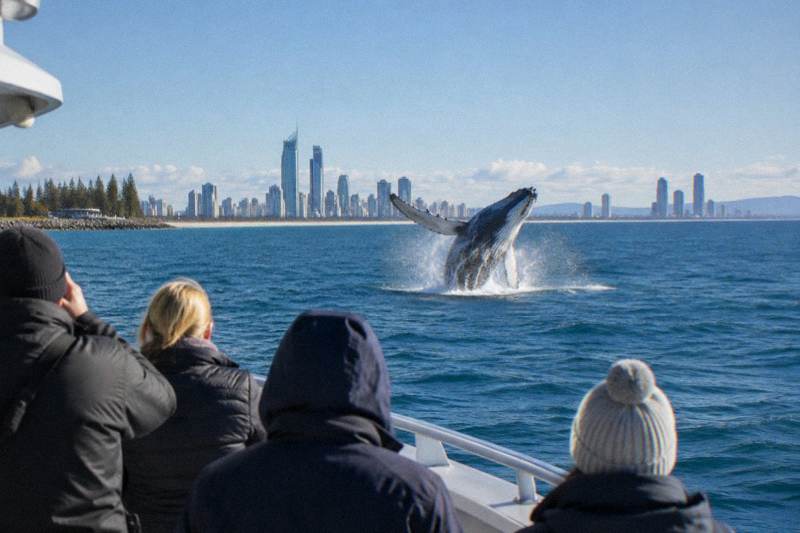
Whale Season On The Gold Coast: The Full Calendar From June To November
The Gold Coast whale season runs from late May or early June to early November, and the calendar underneath it is more predictable than most visitors expect. This guide maps every stretch of that window, from the first juveniles heading north in June to the last mother and calf pairs slipping south in November.
Short answer
The Gold Coast whale season runs from late May or early June to early November. Peak numbers arrive in July and August on the northbound leg, while August to October brings the southbound mothers and newborns travelling slower and closer to shore. Boat tours run daily through the window, last about two to three hours, and cost from $52 to $105.31 per person.
Humpback whales pass the Gold Coast twice a year, once heading north to the breeding grounds and once heading home to the Southern Ocean with calves in tow. The window for all of it is roughly five months long, which makes this one of the longest continuous whale seasons in Australia. The official tourism guidance is blunt about the shape of it: whale season on the Gold Coast runs from June to November, with July and August bringing peak numbers. Everything else on this page, the legs, the peak, the mothers and calves, the quiet November finish, hangs off that single sentence.
When Does The Gold Coast Whale Season Start And Finish?
The season opens between late May and early June and closes in early November, a window of roughly five months. The first whales passing are usually juveniles and young adults heading north, and the last are mother and calf pairs heading south. Tours run daily through that window, typically for two to three hours per trip, departing from Main Beach, Southport and the Tweed side of the border.
The opener moves around a little. Operators generally begin late May or the first days of June, and the 2026 season gave an unusually early marker: a mother and newborn calf were reported just outside the Gold Coast Seaway on 2 June 2026, in roughly eight metres of water, which researchers noted as very early for a pair that size. The previous earliest record for the area was 15 June. An early mother and calf does not mean the floodgates open in the first week of June, though. The volume builds slowly, with young males and juveniles leading the migration while pregnant cows and mother-calf pairs bring up the rear, a pattern the federal environment department describes as typical for the whole eastern Australian corridor.
The close of the season is softer than the opening. Boats keep running through late October and into early November, and the water is emptier by then, but the whales that remain are the ones worth waiting for: mothers with calves travelling slowly and close to shore. If you would rather see a crowded ocean than a quiet one, book July or August. If you would rather see a mother and calf at close range with fewer boats around, September and October are the stronger months.
The month-by-month verdict, which week suits families, photographers or first-timers best, lives in a separate article: Which Month Is Best For Whale Watching. This page owns the calendar itself, so the sections below walk the season in order, stretch by stretch, the way a boat crew would experience it.
What Does Each Stretch Of The Season Look Like From A Boat?
The season splits into two legs. The northbound leg, June and July, carries adults, juveniles and competitive pods moving fast and offshore. The southbound leg, August to October, carries mothers with newborns moving slower and closer to shore, with more surface activity. Peak volume sits in July and August, where the two legs overlap.
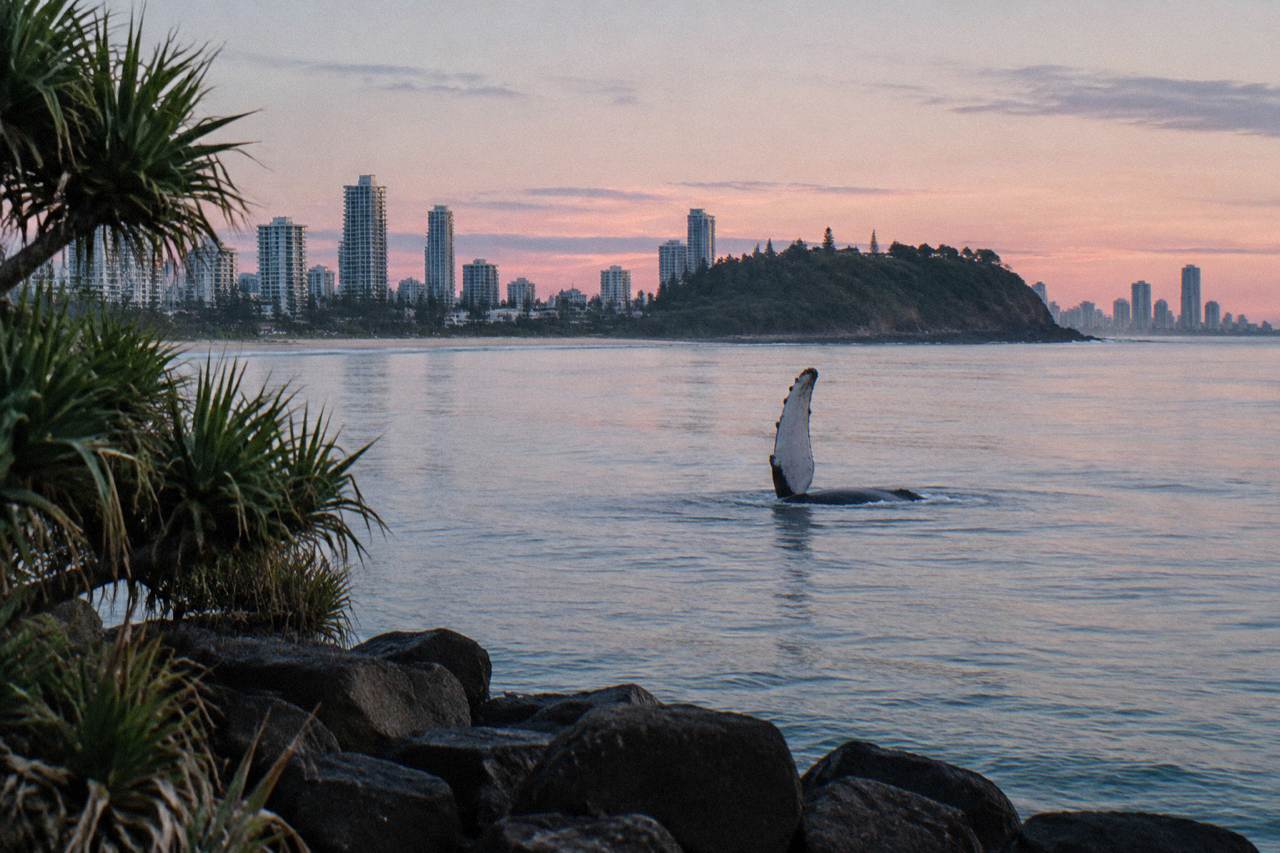
From the deck, the two legs feel like different trips. Northbound whales are commuting. They are pointed at the breeding grounds, they surface in groups of two or three, and they move on quickly. What you get instead of long encounters is variety: breaches, tail slaps, pectoral slaps, and the occasional male pod racing each other. Southbound whales have a calf in tow, so the whole pace drops. A mother will rest between dives while the calf rolls at the surface, and the pair hugs the coastline more closely, which is why September and October are the months when shore-based spotters do best too.
The table below is the shape of the whole season in one view. Treat it as a planning range rather than a promise: whales are wild animals, no operator publishes a sighting rate for any week, and a quiet day is possible in the peak of August just as a spectacular day is possible in late October.
| Stretch | Months | Who is passing | What a cruise typically sees |
|---|---|---|---|
| Season opener | Late May to mid June | Juveniles and young adults first | Small numbers, quick passes, the first breaches of the year |
| Northbound build | Mid June to mid July | Adults, then competitive pods | Rising volume, groups of two or three, surface activity |
| Peak overlap | Mid July to late August | Both legs, maximum numbers | The busiest water of the season, multiple pods per trip possible |
| Southbound mothers | Late August to mid October | Mothers with newborn calves | Slower travel, close-to-shore encounters, calves rolling at the surface |
| Season tail | Mid October to early November | Late mothers, last stragglers | Quiet water, long close encounters when a pair is found |
Every cruise on this roster runs inside that window, and the three below cover three common ways to ride it: the big-boat cruise with the largest review pool, the marine-biologist trip from the Tweed side, and the small-group boat out of Chinderah. None of the seven tours includes hotel pickup, so plan your own way to the departure point.
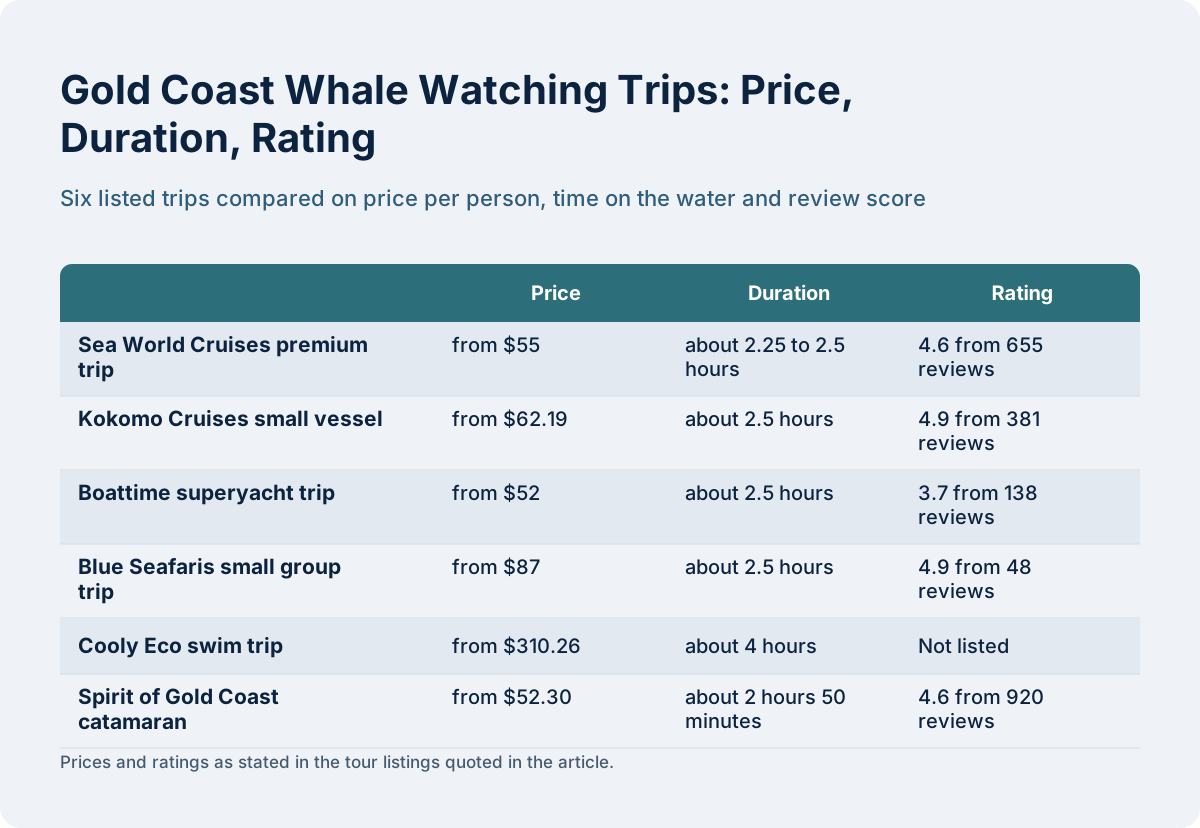
The featured cruise for this calendar is the Sea World Cruises premium trip, a purpose-built whale watching vessel departing the Sea World Cruises Terminal on Seaworld Drive, Main Beach, about 2.25 to 2.5 hours on the water, from $55 per person, rated 4.6 from 655 reviews. Hotel pickup is not included, so you make your own way to the departure point. The listing states a 100% whale sighting guarantee with a free return cruise, which is the operator's own policy rather than a promise about any particular week. It carries a real likely-to-sell-out badge, which matters most in the peak weeks of late July and August. You can read the full Sea World Cruises premium cruise detail page on this site, or Check availability on the operator's live listing.
The Week-By-Week Gold Coast Whale Calendar
Weeks one to six of the season, early June to mid July, are the northbound build, starting with juveniles and ending with adult pods. Weeks seven to twelve, mid July to late August, are the peak, when both legs overlap and the water is busiest. Weeks thirteen to twenty-two, late August to early November, are the southbound tail, dominated by mothers and calves.
That is the calendar compressed to three lines. Expanded, it looks like this, with the caveat that week boundaries are approximate because the migration responds to water temperature and weather, not to dates on a page.
| Approximate weeks | Dates | Leg | Who is moving |
|---|---|---|---|
| Weeks 1 to 2 | Early to mid June | Northbound | First juveniles and young adults, thin numbers |
| Weeks 3 to 4 | Mid to late June | Northbound | Adults joining, groups of two or three |
| Weeks 5 to 6 | Late June to mid July | Northbound | Competitive male pods, rising volume |
| Weeks 7 to 9 | Mid July to early August | Peak overlap | Both legs, maximum numbers of the season |
| Weeks 10 to 12 | Early to late August | Peak into southbound | Adults still north, first mothers heading south |
| Weeks 13 to 16 | Late August to mid September | Southbound | Mothers with newborns, close to shore |
| Weeks 17 to 20 | Mid September to mid October | Southbound | Peak mother and calf viewing, calf surface play |
| Weeks 21 to 22 | Mid October to early November | Season tail | Late pairs and stragglers, quiet water |
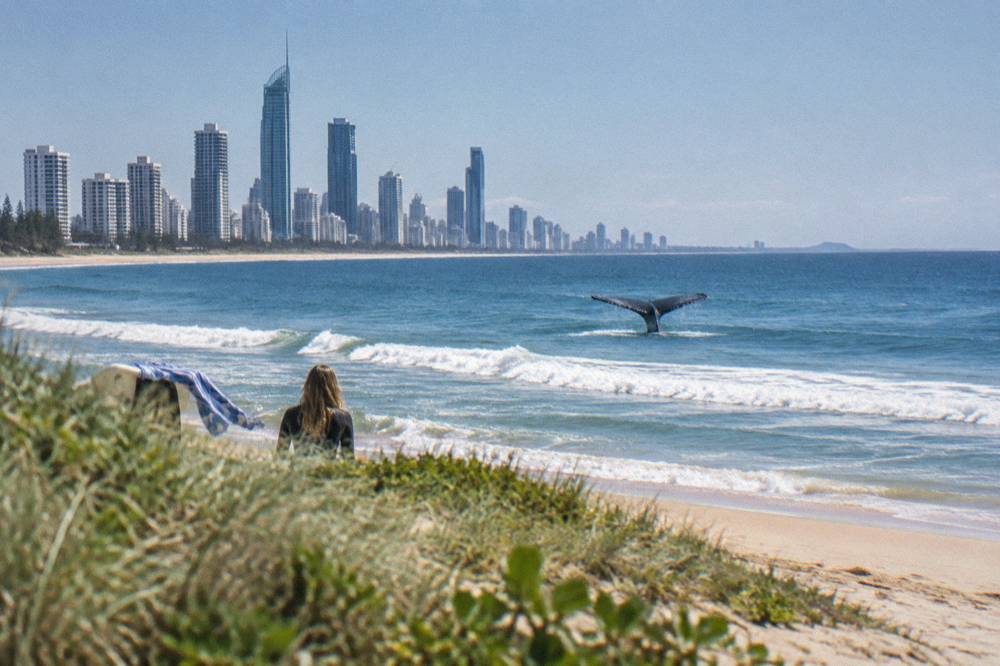
The annual whale census, a volunteer coastal count run across Queensland and into southern NSW, happens in late June each year, and it lands right in the middle of the northbound build. The 2026 count drew a record number of volunteers, with more than 500 humpbacks spotted in two hours across the participating sites. It is a nice piece of context for anyone weighing late June against August: by census day the migration is well and truly underway, but the peak is still weeks away.
Booking against this calendar is mostly a question of what you want to see and how much company you want while seeing it. The peak weeks fill first, and the two cruises carrying a likely-to-sell-out badge, the Sea World Cruises trip and the Blue Seafaris small boat, are the ones where an early booking matters most. Everything else on the roster can usually be booked closer to the day, though the do you need to book in advance question has its own answer worth reading before you decide.
The Northbound Leg: June And July
The northbound leg runs from the season opener in early June through July, carrying juveniles first, then adult females and males, then competitive pods chasing mates. Whales move faster and further offshore than later in the season, so encounters are shorter but more varied, with breaches and tail slaps common. Numbers build steadily toward the August peak.
June is the month of the early risers. The federal environment department notes that groups of young males typically lead the eastern Australian migration while pregnant cows and cow-calf pairs bring up the rear, and the Gold Coast sees exactly that pattern. A June trip is a bet on smaller numbers and younger animals, which sometimes means more acrobatics, since juveniles breach more readily than mothers do. It also means more open water between sightings, so the two-to-three-hour duration of a typical cruise matters: the longer the trip, the more time to find the pods that are there.
July thickens the stream. By mid July the adult migration is in full flow, and the competitive pods, groups of males following a single female, start appearing. These are the groups that produce the chases, the bubble blasts and the raw surface commotion that whale watching brochures are built on. A July trip also sits inside the peak overlap, so the volume is close to its maximum while the mothers and calves are still mostly to the north. If you want a closer look at those competitive pods, the guide to whale watching trips from Surfers Paradise covers which departures put you nearest the surface action.
The boat you pick shapes this leg more than any other. The Kokomo Cruises boat, a smaller vessel capped at 47 travellers departing Marina Mirage on Seaworld Drive, Main Beach, is built for exactly this kind of water: close views, fast repositioning, an underwater camera on board. It runs about 2.5 hours, from $62.19 per person, rated 4.9 from 381 reviews, with free cancellation up to 24 hours ahead. The listing states no sighting guarantee, so treat it as a boat that goes where the whales are rather than a boat that promises them.
If July is your month, the Gold Coast weather in July and August guide covers what the air and water will actually feel like, and the morning or afternoon question is worth settling before you pick a departure time, since calm mornings are the better window for spotting from both boat and shore.
Peak Weeks: Why July And August Bring The Most Whales
Peak weeks run from mid July into August, when the northbound stream is at its thickest and the first southbound mothers have not yet cleared the tropics. This is when the Gold Coast water carries the most whales per trip of the whole season. It is also when bookings are hardest, and when the likely-to-sell-out badges on this roster are most likely to be accurate.
The peak is a volume story, not a behaviour story. Tourism and Events Queensland puts peak numbers in July and August, and the operator seasons align: the Sea World Cruises season runs late May to early November, Spirit of Gold Coast runs from about June, Kokomo from June to late October, all of them straddling the peak. What you get in the peak weeks is redundancy. If one pod is resting, another is likely within reach, and the three-boat rule that governs how many vessels can share a whale's caution zone, no more than three, becomes a real constraint rather than a theoretical one. Other pages covering the same trip are gathered on Whale Watching On The Gold Coast.
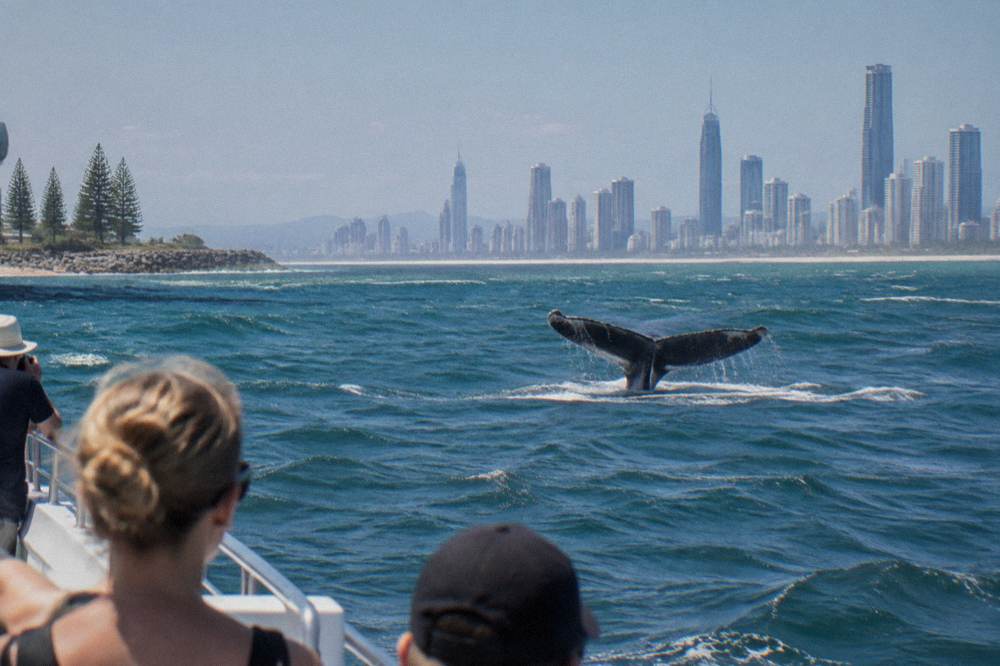
The rules that shape a peak-week encounter are worth knowing because they explain what your crew can and cannot do. Queensland rules keep boats at least 100 m from a whale and 300 m in front of or behind it, slow to 6 knots inside 300 m, and cap the number of boats in one caution zone at three. The full approach distance rules also cover drones at 100 m and helicopters at 500 m. A good crew in the peak weeks is working inside those limits constantly, and the best viewing often comes from a whale that chooses to approach the boat, which the rules allow because the whale decides.
The cheapest listed price on this roster also lives in the peak-friendly category: the Boattime superyacht trip, a luxury yacht with a marine biologist on board, departing the Marine Stadium Jetty and Pontoon at Main Beach, about 2.5 hours, from $52 per person. Its rating of 3.7 from 138 reviews is the lowest on the roster, and it should be said plainly when ranking by rating, but the price and the format, light morning or afternoon tea on arrival, a stated 100% whale sightings guarantee as the listing's own policy, make it a genuine contrast option for a peak-week booking.
The Southbound Leg: Mothers And Calves From August To October
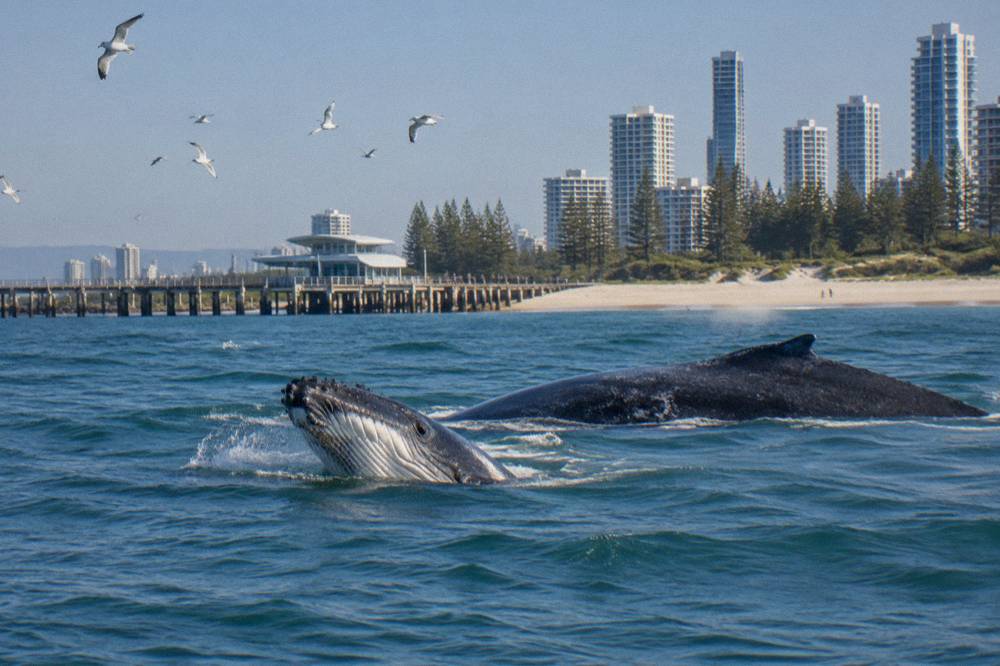
The southbound leg runs from August to October, when mothers with newborn calves travel back toward the Southern Ocean. They move slower, stay closer to shore and rest longer at the surface, which makes this the best stretch of the season for sustained close viewing. September and October are the strongest months for mother and calf encounters.
This is the gentle half of the season, and it is the half that most returning visitors book. A mother-calf pair does not flee the boat or race off toward the horizon. The mother dives to feed or travel while the calf stays near the surface, and calves roll, slap and generally behave like animals with energy to burn. The tourism board's own guidance names September and October as the best time to see mothers and calves, and the local pattern matches: the pairs come through later and slower, hugging the coast.
The southbound leg is also when the Gold Coast's other marine life shows up well. Cruises through this stretch commonly report dolphins, turtles and seabirds alongside the humpbacks, so a quieter whale count on a given day is often cushioned by everything else in the water. The what to expect on a Gold Coast whale watching cruise guide covers the full picture of a day on the water, from check-in to the return to the marina. If you would rather depart from further north, the guide to whale watching from Brisbane and Moreton Bay covers the operators and viewing spots around the bay.
The two small boats from the New South Wales side of the border come into their own in this leg. The Blue Seafaris trip, a small-group cruise with a marine biologist covering Coolangatta and Gold Coast waters per the listing, runs about 2.5 hours, food and drinks not included, rated 4.9 from 48 reviews. The listing says a free tour on the next available slot if no whales are sighted, and it carries a likely-to-sell-out badge. The Cooly Eco Adventures safari-style boat, seating 12, with spray jackets and a marine naturalist, departs Chinderah on the Tweed River, about 2.5 hours, from $105.31 per person, the priciest boat-watching listing on the roster, rated 4.9 from 68 reviews. That one states no sighting guarantee, so book it for the eye-level format, not for a promise.
One southbound option sits outside the boat-watching category entirely. The Cooly Eco swim trip, maximum 9 travellers, wetsuits and snorkel gear included, about 4 hours, from $310.26 per person, departs Chinderah in New South Wales, not the Gold Coast. The listing says a whale sighting is guaranteed but a swim is not, and that distinction is the whole fine print of the product. Licensed swim operations in Queensland run from Hervey Bay and the Sunshine Coast, and no authorised swim tour departs the Gold Coast itself. The swim with whales guide covers the full regulatory picture.
The November Tail End: Last Chances And Quiet Water
The season tail runs from mid October into early November, when the last mother and calf pairs and stragglers pass through. Numbers are well down from the peak, boats run daily until the season closes, and the water is at its quietest. Encounters, when they happen, are long and close, because late pairs move slowly and stay near the coast.
November is the connoisseur's month and nobody else's. The volume that made July and August the headline weeks is gone, and what is left is a thin stream of late mothers, grown calves and the occasional adult that lingered too long in the tropics. The upside is solitude: fewer boats on the water, fewer people on the decks, and the three-boat rule almost never binds. The downside is arithmetic, and it should be said plainly. A late-season trip carries more empty water than a peak-week trip, and no operator on this roster publishes a sighting rate for November, so none is printed here.
If November is your only window, book the longest trip you can. The Spirit of Gold Coast trip, a 24 m power catamaran with a marine biologist guide and 360 degree views, departing Aqua Adventures at 95 Marine Parade, Southport, runs about 2 hours 50 minutes, from $52.30 per person, rated 4.6 from 920 reviews, the deepest review pool on the roster. The listing guarantees a humpback sighting from June to November or a complimentary second cruise, which is the listing's policy, and morning tea is included with food and drinks to buy on board. No hotel pickup here, and none anywhere in this roster: you make your own way to the departure point.
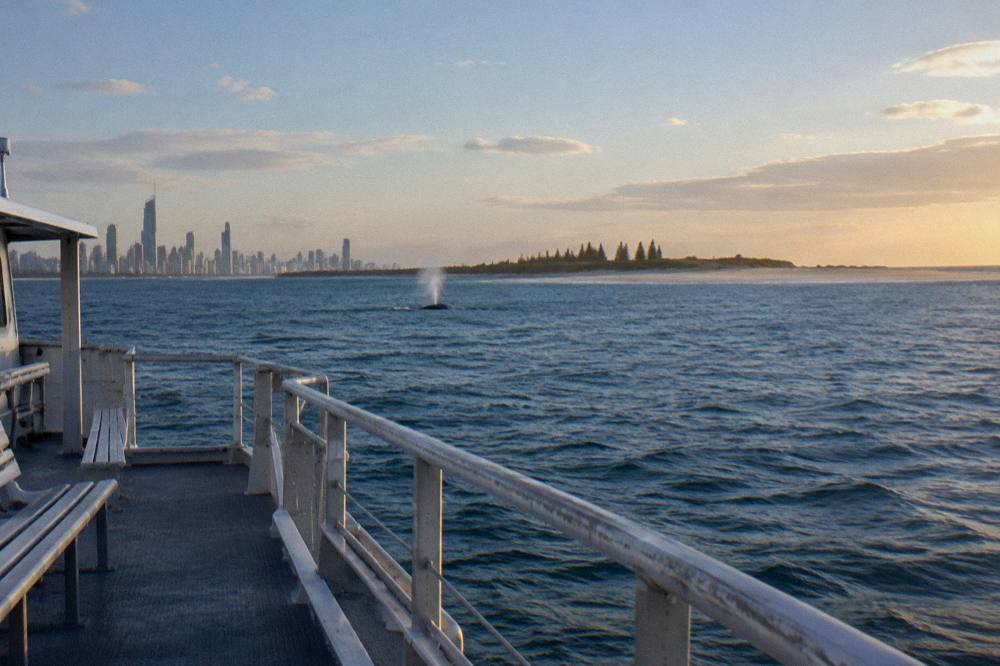
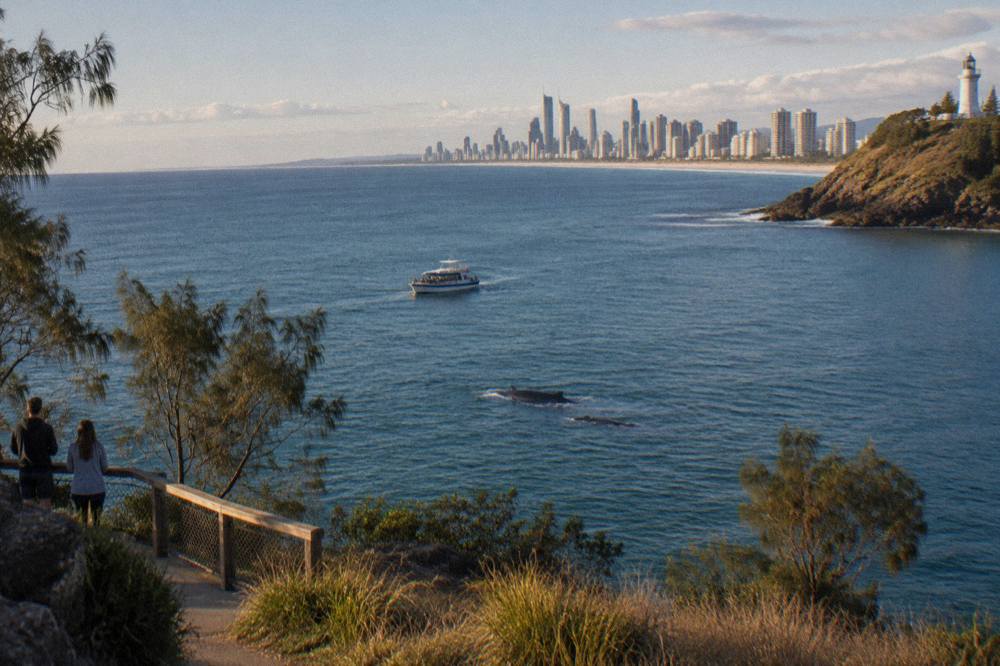
The tail end is also the season for land-based watching on a budget, since the late pairs hug the coast closely enough to be seen from headlands with binoculars. The tourism board names Point Danger at Coolangatta as its pick for the best free spot, alongside Burleigh Heads, Miami and Greenmount Point. The free whale watching spots guide maps all of them, plus the locally reported additions, and pairs them with the calm-morning timing that the Queensland Government itself recommends.
Where The Gold Coast Sits On The Humpback Migration Route
The Gold Coast sits directly on the eastern Australian humpback migration corridor, the path roughly 50,000 whales follow north to tropical breeding grounds and back each year. That is why a city of highrises has a five-month whale season at all. The migration is one of the longest of any mammal, and the Gold Coast intercepts it twice, once in each direction.
The population number behind the season is the real story of the last two decades. The eastern Australian humpback population was a little over 100 individuals when whaling ended in 1963, recovered to around 8,000 by 2006, and a preliminary estimate puts it at more than 50,000 in 2024, per an ABC News report on the rebound estimate. The federal environment department describes the annual migration as one of the great animal journeys, with animals moving north from June to August and back toward the Southern Ocean from September to November. The Gold Coast sits on that corridor with the whales passing close enough to shore that a shore-based census can count them.
That recovery is why the season keeps getting longer and the peak keeps getting busier. Operators expected a record number of whales for 2026 after the first passing animals were spotted off Byron Bay in late May, ahead of tours beginning on 1 June. More whales in the corridor means more whales within reach of the Gold Coast departure points on any given day, and it means the sighting guarantees on this roster, the Sea World Cruises free return cruise, the Spirit of Gold Coast second cruise, the Blue Seafaris free repeat tour, are policies the operators can afford to write because the corridor is crowded with animals again.
| Cruise | Duration | From price | Departs | Sighting policy stated by the listing |
|---|---|---|---|---|
| Sea World Cruises premium | About 2.25 to 2.5 hours | $55 | Sea World Cruises Terminal, Main Beach | 100% guarantee, free return cruise |
| Spirit of Gold Coast | About 2 hours 50 minutes | $52.30 | Aqua Adventures, Southport | Humpback sighting June to November or second cruise |
| Kokomo Cruises | About 2.5 hours | $62.19 | Marina Mirage, Main Beach | No guarantee stated |
| Boattime superyacht | About 2.5 hours | $52 | Marine Stadium Jetty, Main Beach | 100% sightings guarantee |
| Blue Seafaris small boat | About 2.5 hours | $87 | Tweed Heads South, NSW | Free tour next slot if none sighted |
| Cooly Eco safari boat | About 2.5 hours | $105.31 | Chinderah, NSW | No guarantee stated |
| Cooly Eco swim trip | About 4 hours | $310.26 | Chinderah, NSW | Sighting guaranteed, swim not guaranteed |
For the full side-by-side comparison of these products, including which suits families and which suits a tight budget, the Gold Coast whale watching tours compared guide does that job in detail. This page stays on the calendar, and on the simple truth underneath it: the whales come past every year, on schedule, in numbers that keep growing. And if you're weighing whether the Gold Coast is the right base for you at all, the region by region guide to Queensland's whale watching spots sets it against Hervey Bay, Moreton Bay and the Sunshine Coast.
Common Questions About The Gold Coast Whale Season
When Does Whale Watching Season Start On The Gold Coast?
Between late May and early June. The 2026 season's first reported humpbacks off the Gold Coast Seaway were a mother and newborn calf on 2 June 2026, which researchers noted as very early. Most operators begin tours in the first week of June, with juveniles and young adults leading the migration north.
What Is The Peak Time For Whale Watching On The Gold Coast?
July and August. This is when the northbound migration is at its thickest and the first southbound mothers have not yet cleared the tropics, so the water carries more whales per trip than any other stretch of the season. Book early for these weeks, since two cruises on this roster carry a likely-to-sell-out badge.
When Can You See Mother Whales With Calves On The Gold Coast?
September and October, on the southbound leg. Mothers with newborn calves travel slower, rest longer at the surface and stay closer to shore than northbound whales, which makes these months the strongest for sustained close viewing. The tourism board's own guidance names September and October as the best months for mothers and calves.
Does The Whale Season End In November?
Yes, in early November. Boats run daily through late October and into the first days of November, and the last passing animals are late mother and calf pairs and stragglers. Numbers are well down from the peak by then, but the water is at its quietest and encounters, when they happen, are long and close.
How Many Whales Pass The Gold Coast Each Season?
The eastern Australian humpback population that passes the Gold Coast is estimated at more than 50,000 animals, up from about 8,000 in 2006 and a little over 100 when whaling ended in 1963. No operator publishes a per-trip sighting count for the Gold Coast, so no trip-level figure is given here.
Is Whale Watching On The Gold Coast Good In June?
June is the season's opening month, with juveniles and young adults passing first and numbers building through the month. A June trip means smaller crowds and lower prices than the peak, with the trade-off of more open water between sightings. The late June volunteer whale census counted more than 500 humpbacks in two hours across participating sites, so the migration is well underway by then.