The Best Free Whale Watching Lookouts Around The Gold Coast
You do not need a ticket to watch humpbacks pass the Gold Coast. Here is every lookout that works, when to stand on it, and the honest point at which a boat earns its price.
Short answer
The tourism board names four free whale watching spots: Point Danger in Coolangatta, Burleigh Heads including Tumgun Lookout, Miami and Greenmount Point. Local guides add Currumbin, Main Beach and The Spit, and Kirra Hill. Season runs June to November, peaking July and August, and calm mornings with binoculars give the best shore views.
Roughly 50,000 humpbacks now migrate along Australia's east coast each year, and every one of them passes the Gold Coast's front door between late May or early June and early November. A cruise ticket is one way to meet them, but the migration is so close to shore, and the city's headlands are so high, that a large slice of the spectacle is free. This guide covers every lookout worth standing on, from Point Danger in Coolangatta at the southern end to The Spit at the northern tip, and is honest about the one thing a headland cannot do: put you at eye level with a whale.
Which Free Lookouts Does The Tourism Board Actually Name?
The tourism board names four free whale watching spots on the Gold Coast: Point Danger in Coolangatta, Burleigh Heads including Tumgun Lookout, Miami and Greenmount Point, and it singles out Point Danger as its pick for the best free vantage point. Local guides add Currumbin, Main Beach and The Spit, and Kirra Hill, which are reported whale watching spots but not the board's official list. All of them cost nothing and all of them work in season.
That distinction matters more than it sounds. Tourist content loves to inflate every headland into a "whale watching platform", and the result is that visitors hike to places with a nice view and no particular whale traffic. The four named lookouts carry the weight of the state tourism board's own page, which describes whale watching from coastal spots including Burleigh Heads, Miami, Greenmount Point and Point Danger, and names Point Danger, Coolangatta as the best free spot. The extras from local guides are real places with real sightings behind them, but they are the second tier, and this guide labels them that way rather than pretending otherwise.
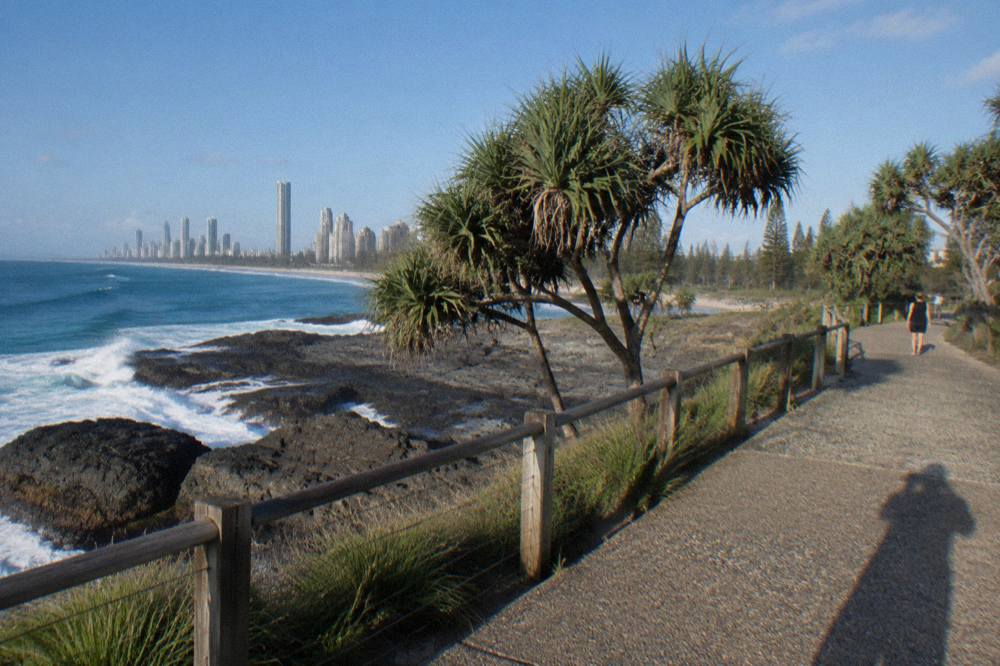
The Queensland Government adds the general principle that makes all of this work: migrating humpbacks can be seen from vantage points such as headlands and even open beaches along the coast, aided by binoculars or spotting scopes. In other words, the free option is not a consolation prize. It is the same migration, watched from land, and the state's own wildlife pages endorse it. What the shore cannot do is cross the distance between you and the animal, and that gap is the whole reason the paid cruises exist. The where Gold Coast whale watching cruises depart guide maps the four wharves if you decide later to buy a seat.
Here is how the named lookouts compare on the things that decide your day: height, ease of access, what else you see, and where the whales actually are relative to your feet.
| Lookout | Area | Height and character | What you see besides whales | Best conditions |
|---|---|---|---|---|
| Point Danger | Coolangatta | High headland at the QLD/NSW border, panoramic ocean views | Snapper Rocks and Duranbah surf breaks, dolphins and turtles year round | Early morning, calm swell, binoculars |
| Burleigh Heads and Tumgun Lookout | Burleigh Heads | Elevated national park headland with ocean-facing trails | Beach sweep north to the highrises, picnic grounds | Morning before the walking track fills |
| Miami headland | Miami | Mid-height headland between two beaches | Unobstructed northern and southern water views | Calm days, whale season mornings |
| Greenmount Point | Coolangatta | Paved trails and platforms on a low headland | Greenmount Beach and the Coolangatta stretch | Any calm morning in season |
Why Is Point Danger In Coolangatta The Best Free Whale Spot?
Point Danger sits directly on the Queensland and New South Wales border at Coolangatta, and the tourism board names it the best free whale watching spot on the Gold Coast because its height and angle put you above a stretch of water the humpbacks pass close to shore, with dolphins and turtles visible year round and the Snapper Rocks and Duranbah surf breaks below. It is free, it is public, and it needs nothing but binoculars. Since Point Danger already puts you right on the state line, our Byron Bay versus Gold Coast whale watching guide covers what changes if you head just a little further south.
The headland looks south and east over open ocean, which is the direction the migration comes from and goes to. In the northbound leg of the season, June and July, the whales are heading up the coast inside the shipping lane, and in the southbound leg, August to October, mothers and calves travel slower and closer to shore, which is exactly what a land-based watcher wants. The board's page notes whales are commonly seen offshore in season, often close to shore, from this lookout. Binoculars or a spotting scope are recommended, and that recommendation deserves respect: "commonly seen offshore" and "visible to the naked eye" are two different experiences, and the second one is never promised from any headland.
There is a practical bonus that few visitors clock. Point Danger also overlooks the border towns' whole southern approach, so a morning there doubles as a survey of the Tweed coast, the same water the Cooly Eco safari boat works from Chinderah and the same corridor the Blue Seafaris small boat crosses from Tweed Heads South. You are, in effect, watching the paid fleet's workplace from the office window. If a cruise passes below you with a whale alongside it, you have just seen both the free and the paid version of the same moment.
The other thing Point Danger gives you is patience. A headland day is a long day: you arrive early, you scan, you wait. Some people love that. Some people, especially with kids, want the animal closer than 400 metres of water allows, and that is the honest moment when the Spirit of Gold Coast marine biologist trip, from $52.30 per person with a 4.6 rating from 920 reviews, or the Sea World Cruises premium cruise, from $55 per person with a 4.6 from 655 reviews, start looking like good value rather than an upsell. Both offer free cancellation, so a forecast that turns bad does not strand your money.
What Makes Burleigh Heads And The Southern Headlands Work?
Burleigh Heads gives you a national park headland with ocean-facing trails and the elevated Tumgun Lookout, one of the Gold Coast's best free whale spots, especially with binoculars, and it works because the headland juts far enough out that the whales pass inside your sightline. Miami and Greenmount Point extend the same advantage down the coast, all three free and all named by the tourism board.
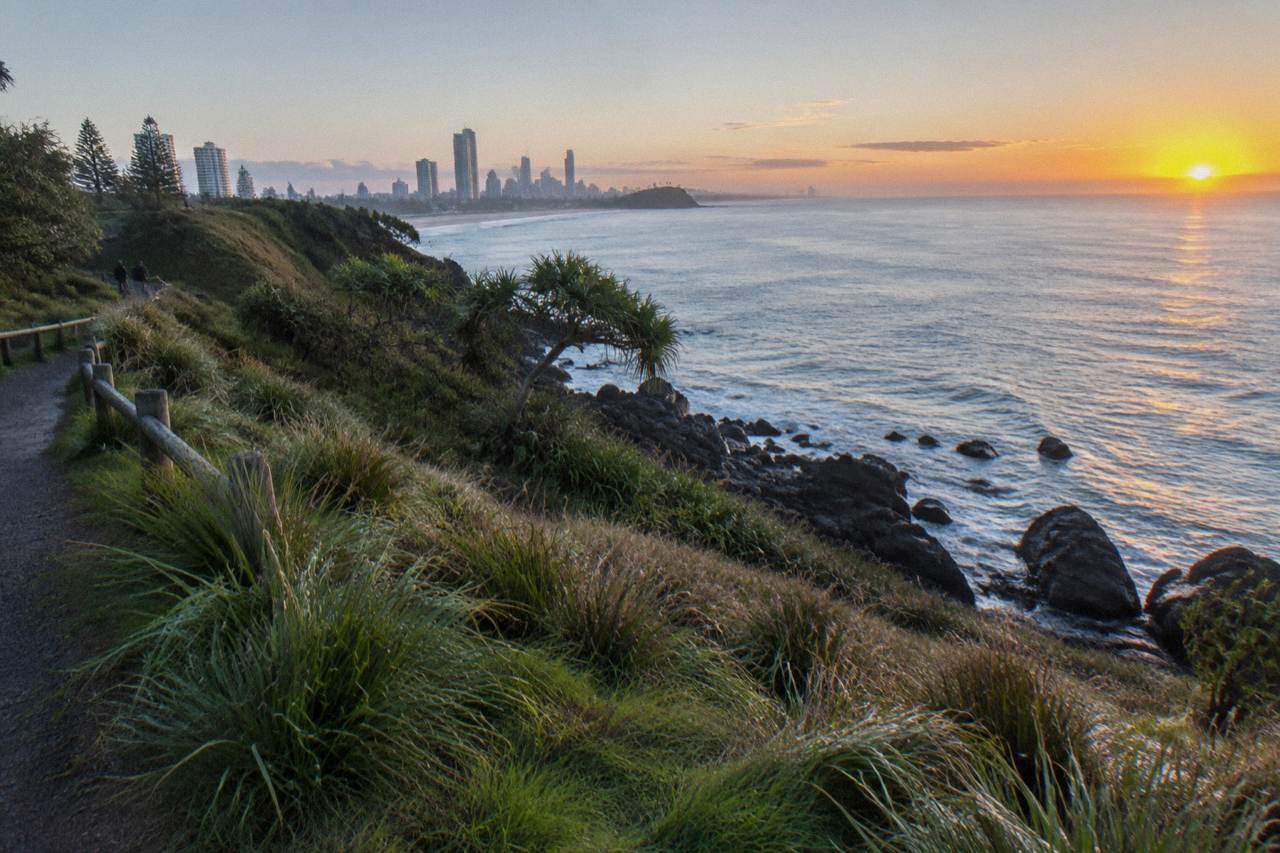
The Burleigh walk is the best free whale watching experience on the coast that also feels like a proper outing. The headland track climbs through the national park, opens onto the ocean side, and passes Tumgun Lookout, where the view sweeps north over the entire beach arc toward Southport and the highrises, and south toward Currumbin. In season, September and October especially, the southbound mothers and calves travel slower and nearer the sand, and a watcher on the Burleigh Hill side of the headland is looking almost straight down the travel lane. The board's page confirms whales are commonly seen from here, and the picnic grounds make it the easiest free spot to turn into a half day with a family.
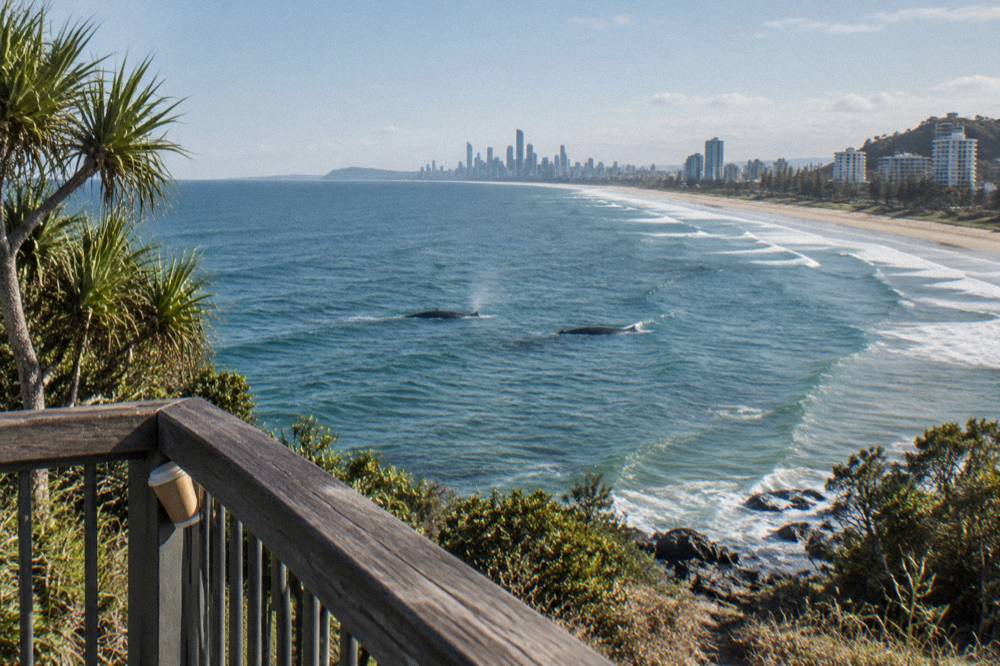
Miami and Greenmount Point are the quieter siblings. Miami headland sits between two beaches with unobstructed water views both ways, and Greenmount Point in Coolangatta has paved trails and platforms, which matters if you are pushing a stroller or walking with someone steady on uneven ground. Neither is as high as Point Danger or Burleigh, but both are on the board's named list, and both catch the same inshore traffic. On a calm July morning any of the three can produce an hour of breaching and tail-slapping without a dollar spent, and the Gold Coast whale watching season guide breaks down which weeks favour which lookouts.
A word on expectations, because free spots attract the wildest claims. No headland guarantees a sighting, and no honest source gives a sighting rate from shore. Whales are wild, weather hides them, and a morning that produces nothing but dolphins and turtles is a good morning that happened anyway. The Queensland Government's own whale watching advice is that sightings from vantage points are possible and binoculars help, not that they are certain. Anyone promising more from a free lookout is selling something.
If a week of dawn scans sounds like work and you would rather the whale come to within metres of you, the boat side of the ledger is short and well documented: boat-based whale watching on the Gold Coast runs from $52 to $105.31 per person, every listing carries free cancellation, and the two small-boat options from the NSW side of the border, Blue Seafaris and the Cooly Eco safari boat, hold 4.9 ratings from small review pools, 48 and 68 reviews respectively. The best Gold Coast whale watching cruise guide compares all of them properly.
Which Extra Spots Do Local Guides Recommend?
Local guides add three more free whale watching spots beyond the board's four: Currumbin with its Elephant Rock viewing platform, the Main Beach and The Spit stretch where the Broadwater meets the ocean, and Kirra Hill Lookout near Coolangatta. These are reported whale vantage points from local sources rather than the board's official list, and they are described here as exactly that, real places with sightings behind them, not certified whale platforms.
Currumbin is the best of the three. Elephant Rock is a volcanic rock formation with a free viewing platform on top, reached by a short stair climb, and local guides call it a prime elevated spot in season. The rock sits at the base of a headland looking straight down the coast, and the climb, short as it is, buys real height. Main Beach and The Spit cover the roughly five kilometre undeveloped stretch north of Main Beach where the Broadwater meets the ocean, with a pier and boardwalk to walk along while you scan. Kirra Hill gives a classic low-effort lookout over Kirra Beach and the water toward Snapper Rocks, which is itself accessible by the coastal paths from Point Danger.
The pattern across all three is the same as the board's four: elevation plus an ocean angle plus patience. None of them is a secret. None of them is a guarantee. What they add is spread, so that wherever you are staying on this 40 odd kilometre coast, a workable free lookout is within fifteen minutes. That is genuinely unusual among Australian whale cities, and it is worth saying plainly: the Gold Coast is one of the easiest places in the country to watch whales for free, because the migration corridor hugs the coast and the headlands are high.
Here is the second tier laid out beside the first, so you can pick by location rather than by hype.
| Spot | Who names it | Access effort | Character | Pair it with |
|---|---|---|---|---|
| Currumbin, Elephant Rock | Local guides | Short stair climb | Volcanic rock platform, prime in season | Point Danger, 15 minutes south |
| Main Beach and The Spit | Local guides | Flat walking, pier and boardwalk | Wild northern stretch, Broadwater meets ocean | Sea World Cruises terminal, same area |
| Kirra Hill Lookout | Local guides | Paved, easy | Low lookout over Kirra Beach | Greenmount Point, 5 minutes north |
One caution the verified research makes clear: none of the sources names Snapper Rocks, Kirra Hill, Currumbin Rock or Narrowneck as official whale vantage points in the way the board's four are named, and this guide will not inflate them either. They are good places to stand. The whales that pass them are the same whales that pass everywhere else on this coast, in the same season, with the same odds.
When Should You Go, And What Should You Bring?
The season runs June to November with peak numbers in July and August on the northbound leg, and mothers with calves most often in September and October on the southbound return. From shore, the Queensland Government advises that calm mornings, before the wind picks up, are the best time to spot whales, and binoculars are the single piece of gear that changes the experience. None of this costs anything.
The timing logic is simple and worth internalising. Early in the season, June and July, the northbound whales are juveniles and young adults first, then adults and competitive pods, all moving with somewhere to be. They pass fast and they pass often, which makes July and August the numbers months. Later, August to October, the southbound mothers and newborns travel slower and closer to shore, which trades quantity for proximity, and for a shore watcher that trade is usually worth taking. A mother and calf rolling together inside the surf line off Burleigh or Point Danger is the best free show this coast offers.
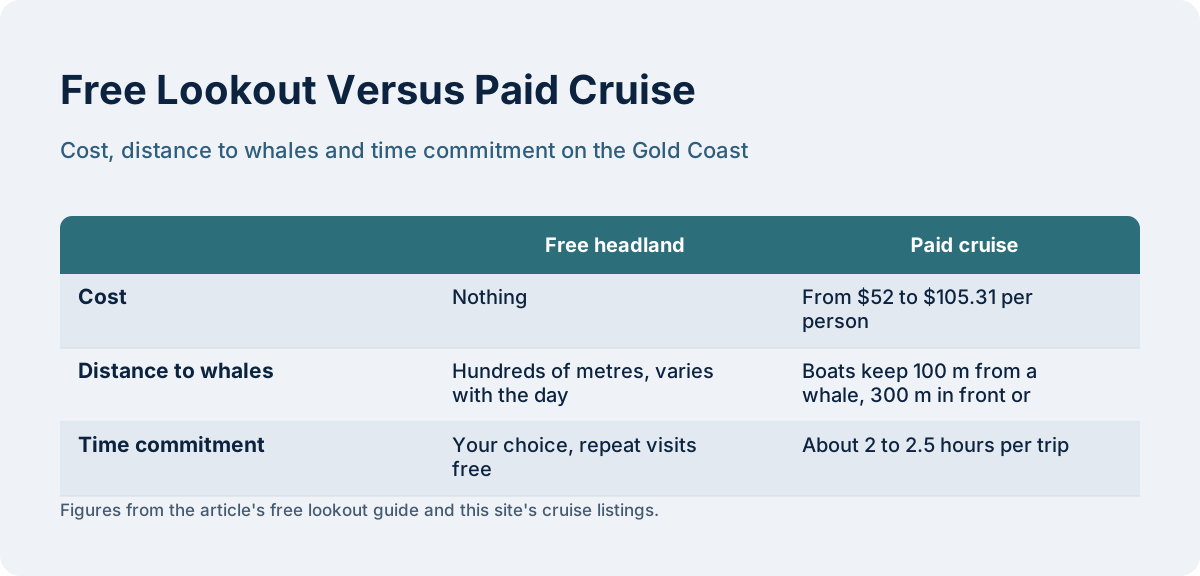
Gear is a short list. Binoculars first, and the strongest ones you can carry, because a 10x pair turns a distant splash into a whale. A spotting scope if you have one. Sun protection, because headlands have no shade. Water, and patience measured in half hours, not minutes. The board's page recommends binoculars or telescopes for Point Danger and the same applies everywhere. The one thing you cannot buy from shore is proximity, and no amount of zoom substitutes for a whale that chooses to pass near a boat.
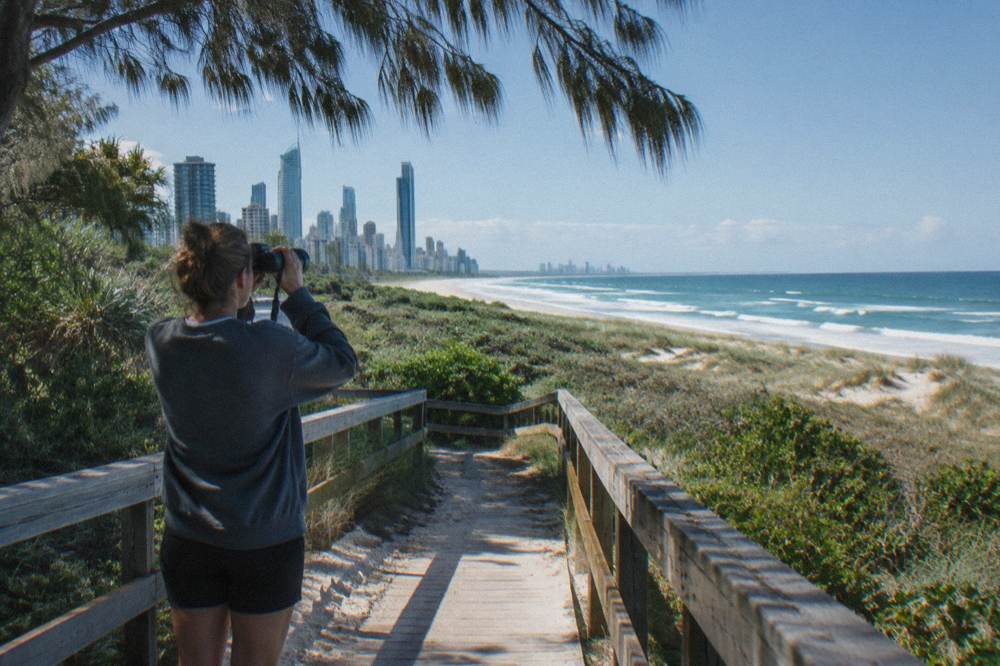
Weather deserves one paragraph, not a chapter. The Bureau of Meteorology's winter outlook for 2026 pointed to below average rainfall and above average temperatures for the south east, which in practice means plenty of clear lookout mornings, and the Queensland Government's advice that calm mornings before the wind picks up are best is the single most useful sentence in this entire guide. Wind ruffles the surface and hides blows; glassy water shows them a kilometre away. Go early, go calm, and if the morning is blown out, the Gold Coast whale watching sea conditions guide explains what the boats do about it.
Can A Free Lookout Really Compete With A Paid Cruise?
Honestly, no, and it is worth saying plainly: a headland gives you the same whales from a few hundred metres back, while a boat gives you water level proximity, a crew who knows where to look, and on the listings that state it, a sighting guarantee with a free return cruise if nothing appears. What the free option gives you is the migration at zero cost, unlimited repeat visits, and no booking pressure at all.
The cruise side of the comparison is documented on this site's roster and is worth restating in one place. Seven listings run the coast, boat-based whale watching from $52 to $105.31 per person, and the Spirit of Gold Coast marine biologist trip, from $52.30 per person, carries a 4.6 from 920 reviews, the deepest review pool on the roster, with the listing's own policy of a guaranteed humpback sighting from June to November or a complimentary second cruise. The Sea World Cruises premium cruise, from $55 per person, states a 100% sighting guarantee with a free return cruise. Those are the listings' policies, attributed as such, not promises of mine, and the honest framing is that a guarantee with a free return is not the same as a guaranteed sighting on the day.
The small boats are the format the headlands genuinely cannot touch. Blue Seafaris runs a small boat with a marine biologist on board, 4.9 from 48 reviews, departing from the Coolangatta side of the border, with food and drinks not included in the ticket, and the Cooly Eco safari boat takes a maximum of 12 guests on an eye-level vessel, 4.9 from 68 reviews, departing Chinderah on the Tweed River, covering Coolangatta, the Gold Coast and the Tweed. Check each live listing for current prices. Eye level with a humpback is a different experience from eye level with a horizon, and everyone who has done both knows which one they remember.
Here is the fair comparison, using only figures this site has verified, with the shore column left blank where no honest number exists.
| Free headland | Paid cruise | |
|---|---|---|
| Cost | Nothing | From $52 to $105.31 per person by boat |
| Distance to whales | Hundreds of metres, varies with the day | Regulated approach: boats keep 100 m from a whale, 300 m in front or behind |
| Time commitment | Your choice, repeat visits free | About 2 to 2.5 hours per trip |
| Guarantee | None, from anyone | Stated by some listings as their own policy with a free return cruise |
| What else | Dolphins, turtles, surf breaks, a walk | Crew commentary, food or drinks on some listings |
| Booking | None | Free cancellation on every listing on this site |
The approach-distance line in that table is the Queensland Government's rule, not marketing: boats keep 100 metres from a whale and 300 metres in front of or behind it, and slow to 6 knots inside 300 metres, with no more than three boats in one whale's caution zone. That is how a licensed cruise gets close without harassing the animal, and it is the same regulation that keeps the whole industry honest. A headland watcher is, in effect, standing outside the whole regulatory frame: no distances, no rules, no limit on how long you stay.
What Free Events And Volunteer Programs Run In 2026?
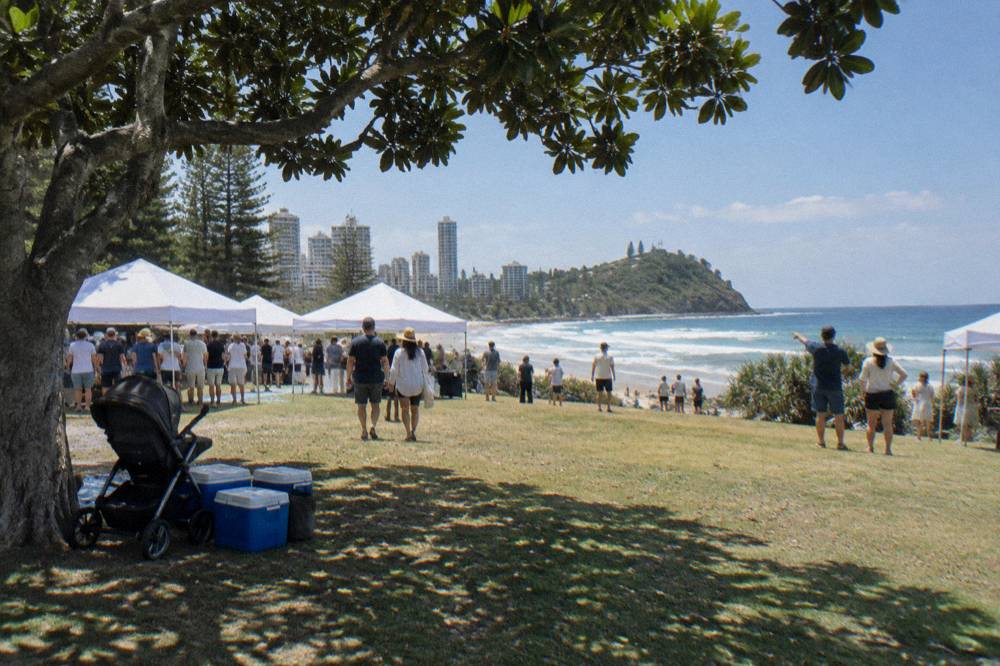
The Gold Coast Whale and Ocean Festival ran free at Justins Park, Burleigh Heads, on 4 July 2026, with stalls, family activities and a guided land-based whale survey from Burleigh Hill, and its organiser, Humpbacks and Highrises, runs Queensland's largest volunteer marine mammal monitoring program, with research expeditions and land-based surveys open to join. The annual whale census, a volunteer coastal count, took place in late June 2026.
This is the part of free whale watching that almost nobody discovers until they live here. The festival is a genuine free event: a full day of stalls, education and family activities on the Burleigh foreshore, plus a guided whale survey from the hill, which is the best possible introduction to shore-based watching because someone experienced is standing next to you calling the sightings. Humpbacks and Highrises, the group behind it, runs the state's biggest marine mammal monitoring effort, and its volunteer surveys and research expeditions are listed on its own site. If a free lookout morning has ever felt thin, standing on Burleigh Hill with a count sheet in your hand fixes that permanently.
The census is the other date worth knowing. The annual whale census, a volunteer count across Queensland coasts run in late June, put over 500 humpbacks into the tally in two hours in 2026 with a record number of volunteers. It is not a Gold Coast exclusive, but Gold Coast sites take part, and it is the one day of the year when the free spots become a coordinated, public, counted exercise. Between the census in late June, the festival in July, and a season that runs to November, the free whale watching calendar on this coast is fuller than most paid programs elsewhere. If the free spots leave you wanting a closer look from the water, our guide to discounted Gold Coast whale watching cruises compares the boat trips that keep the spend reasonable.
One closing note on the species you are watching for free. Humpbacks are the headline, but cruises from these waters also report dolphins, turtles and seabirds, and the shore lookouts at Point Danger carry dolphins and turtles year round, not just in whale season. The humpback whales around the Gold Coast guide covers the behaviour, the breeding cycle and the population comeback in detail, and it makes a good second screen for the morning a headland goes quiet. If your free headland morning leaves the kids wanting a closer look, the guide to Gold Coast whale watching with kids covers trip lengths, family-friendly boats, onboard food and what a cruise costs at different ages.
Common Questions About Free Whale Watching From The Shore
Can You Watch Whales For Free On The Gold Coast?
Yes. The tourism board names four free spots, Point Danger in Coolangatta, Burleigh Heads including Tumgun Lookout, Miami and Greenmount Point, and local guides add Currumbin, Main Beach and The Spit, and Kirra Hill. Every one of them is public land with no entry fee, and the season runs June to November.
What Is The Best Free Whale Watching Spot On The Gold Coast?
The tourism board's own pick is Point Danger in Coolangatta, for its height, its border position and its panoramic ocean views over water the whales pass close to shore. Burleigh Heads headland is the strongest alternative, especially with binoculars and a family in tow.
What Months Can You See Whales From The Gold Coast Headlands?
June to November, with peak numbers in July and August on the northbound leg and mothers with calves most often in September and October on the southbound return. The southbound leg travels slower and closer to shore, which favours shore watchers.
Do You Need Binoculars For Shore-Based Whale Watching?
They help a great deal, and the tourism board recommends them or a spotting scope, especially at Point Danger. A whale's blow is visible to the naked eye on a calm morning, but detail, breaching confirmation and calf spotting all come through glass.
Is A Free Lookout As Good As A Whale Watching Cruise?
It is a different experience rather than an equal one. A headland gives you the same migration for free and unlimited repeat visits, while a cruise gives water level proximity, a crew who knows where to look, and on some listings a stated sighting guarantee with a free return cruise. If you want to be close to the whales, Whale Watching On The Gold Coast compares every cruise on the coast, from $52 per person by boat.
Are There Free Whale Events On The Gold Coast?
Yes. The Gold Coast Whale and Ocean Festival ran free at Justins Park, Burleigh Heads, on 4 July 2026 with a guided land-based whale survey from Burleigh Hill, and its organiser, Humpbacks and Highrises, runs Queensland's largest volunteer marine mammal monitoring program with surveys and expeditions open to join.