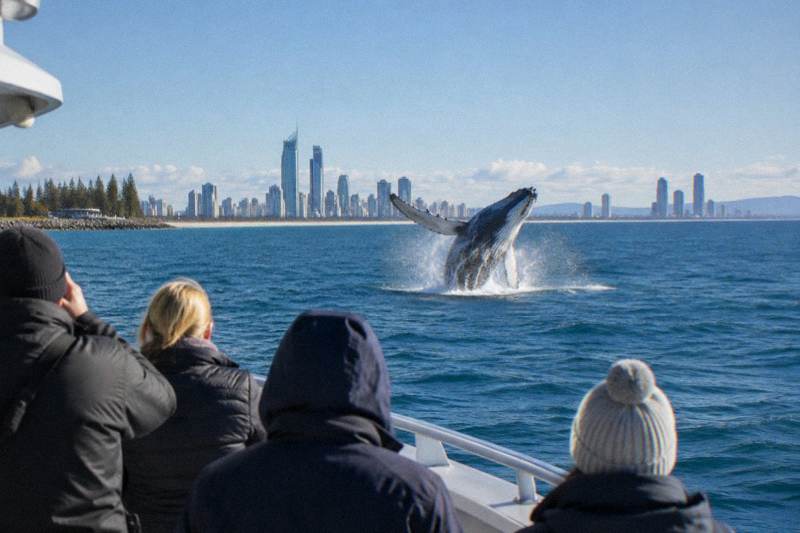
Is Whale Watching Off The Gold Coast Good For Kids?
A family-focused look at Gold Coast whale cruises: trip lengths, which boats suit children, food on board, age and pricing questions, and the free shore lookouts that cost nothing at all.
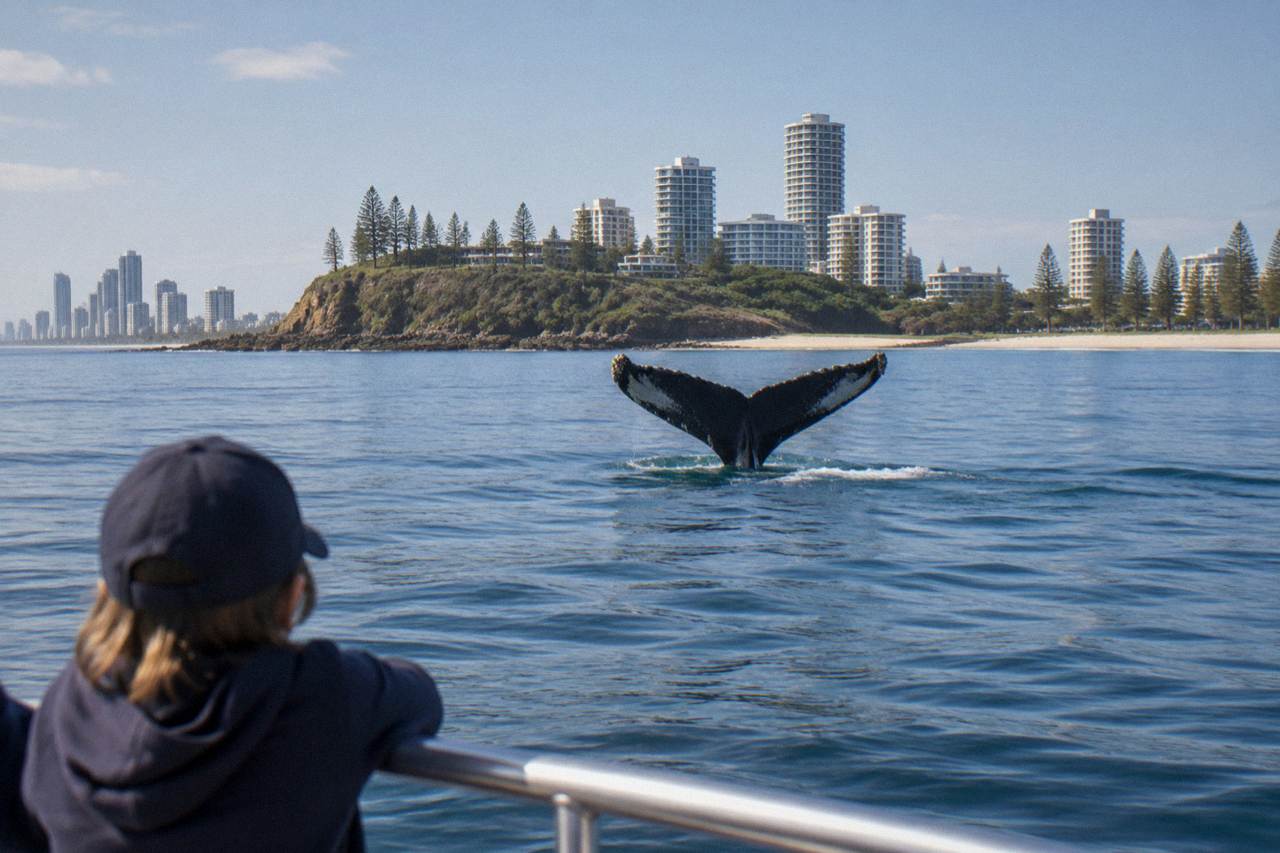
Is Whale Watching Off The Gold Coast Good For Kids?
Yes, in most cases whale watching off the Gold Coast suits families well: cruises run about 2 to 3 hours, which fits a child's attention span, departures are close to shore, and the season runs late May or early June to early November so you can pick calm weather. Age minimums and child prices are not stated on the listings, so those details need checking with each operator before you book. To compare how each trip stacks up and plan your day around the departure times, see our guide to how long a Gold Coast whale watching cruise lasts.
That is the short version. The longer version is that the Gold Coast is one of the easier places in Australia to put a child on a whale boat, and the reason is geography as much as anything. The humpback highway runs close to the coast here, so boats are often alongside whales within half an hour of leaving the dock, which matters enormously when your fellow passenger is six years old and losing patience with the open ocean. The east coast humpback population is now estimated at more than 50,000 animals, up from about 8,000 in 2006, so the odds of a slow, boring trip are lower than they were a generation ago.
The season helps too. It runs from late May or early June to early November, with peak numbers in July and August on the northbound leg and mothers with newborn calves travelling slower and closer to shore from August to October. A calf beside its mother, tail-slapping in shallow water, is the single best thing a child can see from a boat, and September and October are when that scene is most reported. The first humpbacks of 2026 were spotted off the Gold Coast Seaway on 2 June, a mother and newborn calf noted as a very early arrival, which set the tone for a season operators expected to be a big one. If that peak window has you weighing up timing, our guide to visiting the Gold Coast in July covers the whales, the winter weather and what else is happening that month.
The practical question for a parent is which boat, and that is where the differences between the listings start to matter. The Spirit of Gold Coast cruise carries a marine biologist, which turns two hours on the water into a moving science lesson. The Sea World Cruises premium cruise does not include hotel pickup, so plan your own way to the departure point and allow extra time for parking with kids in tow. The Kokomo boat caps numbers at 47 travellers, so a restless child is never far from a rail with a view. We compared the family-relevant details of each below.
For a fuller walkthrough of what a trip is actually like, the guide to what to expect on a Gold Coast whale cruise covers boarding, deck layout and the rhythm of a typical departure, and the homepage comparison on Whale Watching On The Gold Coast puts all seven listings side by side.
How Long Is A Gold Coast Whale Cruise, And Can Children Manage It?
Every boat-based whale watching listing on the Gold Coast runs between about 2 and 2 hours 50 minutes, which sits inside most children's tolerance for a structured activity. The Spirit of Gold Coast trip is the longest at about 2 hours 50 minutes, the Sea World Cruises and Kokomo trips run about 2.5 hours, and all of them include transit time to and from the whales. Once you've settled on a trip length that suits your family, our guide to whale watching prices on the Gold Coast shows what each operator charges and what the ticket covers.
Two to three hours is the sweet spot for families. It is long enough that a boat can reach the migration corridor, find whales and spend real time with them, and short enough that nobody is trapped on the water past the point of no return with a bored or queasy child. Compare that with full-day whale watching in some other parts of Australia and the Gold Coast's short, sharp format looks deliberately family-shaped.
| Cruise | Duration | Departs From | Food On Board |
|---|---|---|---|
| Sea World Cruises premium whale watch | About 2.25 to 2.5 hours | Sea World Cruises Terminal, Main Beach | Food and drinks sold at the on-board bar, not included in the ticket |
| Kokomo whale watching cruise | About 2.5 hours | Marina Mirage, Main Beach | Not stated on the listing |
| Spirit of Gold Coast whale watch | About 2 hours 50 minutes | Aqua Adventures, Southport | Morning tea included, food and drinks to buy |
| Boattime superyacht whale escape | About 2.5 hours | Marine Stadium Jetty, Main Beach | Light morning or afternoon tea and snacks on arrival |
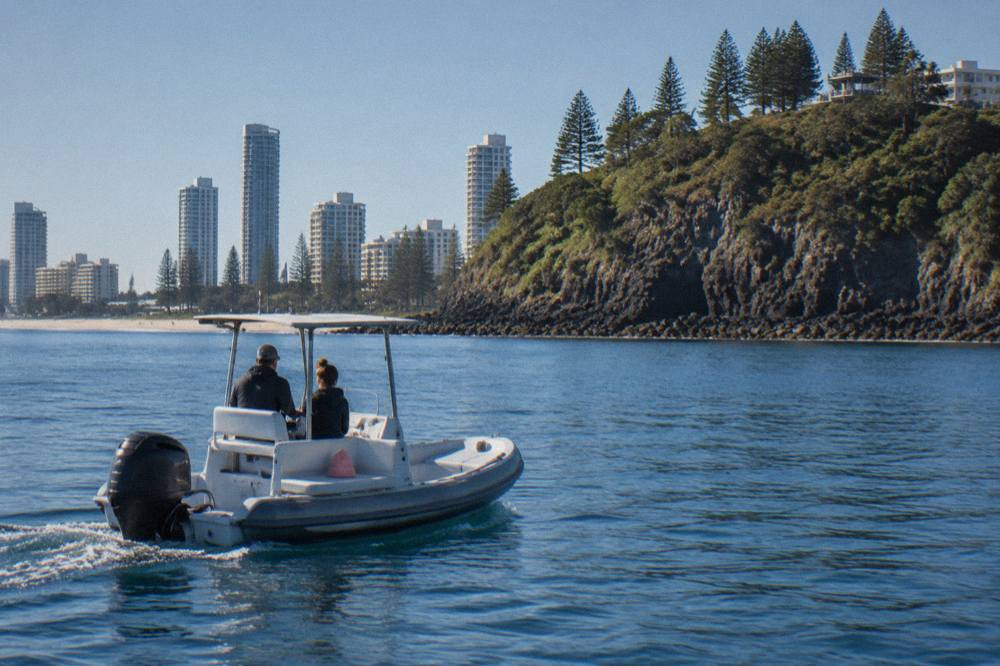
The transit matters as much as the total. Because the whales pass close to the Gold Coast, boats leaving Main Beach and Southport are often in the action quickly, and the Gold Coast Seaway exits straight into the migration corridor. A child who spends twenty minutes watching the skyline recede and then forty minutes watching whales is having a very different day from one who spends two hours of a four-hour trip just getting there.
Food is the other parent-critical detail. The Spirit of Gold Coast listing includes morning tea, with food and drinks available to buy on top, and the Boattime superyacht trip includes a light morning or afternoon tea with snacks on arrival. The Sea World Cruises listing excludes food and drinks; the on-board bar sells them. None of that replaces packing your own water bottle and snacks, because a hungry child on a boat is a clock ticking, but it means a two-and-a-half-hour trip does not have to carry a full picnic.
One honest note on timing: morning departures are generally the calmer window, and the Queensland Government notes that calm mornings, before any wind picks up, are the best conditions for spotting whales. If your children are first-timers or prone to queasiness, booking the earliest sailing of the day is the single easiest decision you can make.
Which Boats Suit Families Best?
For most families the Sea World Cruises premium cruise is the easiest logistics thanks to a short 2.25 to 2.5 hour run and a departure from the Main Beach area, the Spirit of Gold Coast trip is the best for curious kids because it gives them nearly three hours on the water, and the Kokomo cruise suits families after a highly rated mid-size option. All three offer free cancellation on the listing, so a wobbly weather forecast does not have to mean losing your money.
The differences between these three are real, and they map onto different kinds of children. Some kids want facts: what the whale is doing, why it breaches, what the barnacles are. The Spirit of Gold Coast listing puts a marine biologist on board, and a child who asks questions will get answers from someone whose job is to give them. That trip runs about 2 hours 50 minutes from Aqua Adventures at Southport, on a 24 m power catamaran with 360 degree views, and the listing states a humpback sighting guarantee from June to November or a complimentary second cruise, which is the operator's own policy rather than a promise of nature.
Other families just need the day to be simple. The Sea World Cruises premium cruise, rated 4.6 across 655 reviews, advertises a 100% whale sighting guarantee with a free return cruise if no whales are seen, again as the operator's own policy. None of the seven tours includes hotel pickup, so guests make their own way to the departure point. It carries a "Likely to sell out" badge on the listing, which is worth knowing if you are booking around school holidays.
Then there is the small-boat option. The Kokomo cruise, from $62.19 per person and rated 4.9 from 381 reviews, caps the boat at 47 travellers and runs a purpose-built vessel with an underwater camera from Marina Mirage. Fewer people means every child gets a rail position, and the operator's own season guide describes the experience as fast-paced with unobstructed views. The listing states no sighting guarantee, so book it for the intimacy, not for a promise.
| Listing | Price From | Rating And Reviews | Boat Size | Departure Point |
|---|---|---|---|---|
| Sea World Cruises premium | price on the live listing | 4.6 from 655 reviews | Purpose-built whale watching vessel | Sea World Cruises Terminal, Main Beach |
| Kokomo cruise | $62.19 pp | 4.9 from 381 reviews | Capped at 47 travellers | Marina Mirage, Main Beach |
| Spirit of Gold Coast | $52.30 pp | 4.6 from 920 reviews | 24 m power catamaran | Aqua Adventures, Southport |
| Boattime superyacht | $52 pp | 3.7 from 138 reviews | Luxury yacht | Marine Stadium Jetty, Main Beach |
| Blue Seafaris small boat | $87 pp | 4.9 from 48 reviews | Around 21 guests | Tweed Heads South, NSW |
Two further options sit just south of the border and are worth knowing about. The Blue Seafaris trip, departing Tweed Heads South in New South Wales, takes a small group out with a marine biologist, though food and drinks are not included in the ticket. The listing offers a free tour on the next available slot if no whales are sighted. The Cooly Eco safari boat, departing Chinderah on the Tweed River, seats just 12 on an eye-level vessel covering Coolangatta and Gold Coast waters, from $105.31 per person. Both are pricier than the Gold Coast big boats, and both involve a longer drive from the central Gold Coast, but for a child who wants to be close to the water line, an eye-level safari boat is a different kind of experience. The Boattime superyacht, from $52 per person, is the cheapest listing on the roster and carries a marine biologist too, though its 3.7 rating from 138 reviews is the lowest on the roster and worth weighing honestly.
What Keeps Children Engaged On The Water?
A Gold Coast whale cruise holds a child's attention through three things: visible whale behaviour, on-board commentary, and the side cast of dolphins, turtles and seabirds that cruises routinely report. Humpbacks breach, tail-slap and spy-hop through the season, and the southbound leg from August to October adds mothers with newborn calves moving slowly close to shore, which is the most reliably gripping sight of all.
The behaviour is the headline. A breaching humpback is an animal of up to 45 tonnes throwing itself clear of the water, and even a child immune to scenery reacts to it. Surface activity runs through the whole season, and the September-October window, when mothers and calves travel south close to the coast, tends to produce the long, slow, close encounters that let a child actually follow one animal with their eyes instead of chasing distant blows (see Cruise Length).
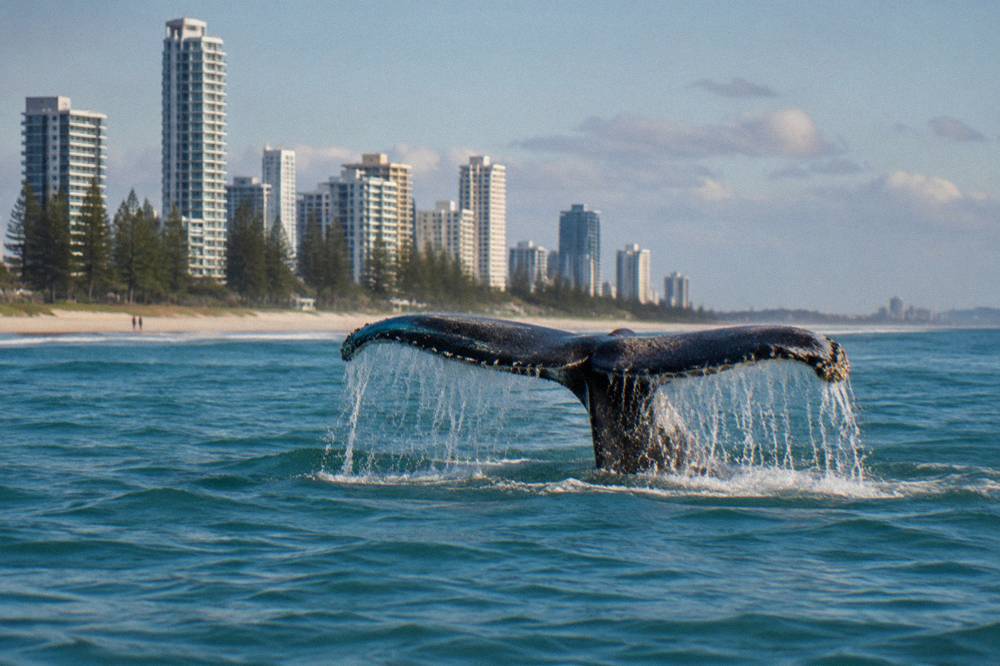
Commentary is the second hook. The Spirit of Gold Coast trip has a marine biologist on board, the Blue Seafaris small boat has one too, and the Cooly Eco safari boat carries a marine naturalist with spray jackets for all. A good guide turns waiting time into story time, and there is waiting time on every whale trip. The Sea World Cruises operation adds technology to the mix: its newest vessel, the Spirit of Migaloo II, is described on the operator's own site as carrying an underwater camera and a hydrophone, so children can listen to whales as well as watch them. The Kokomo boat also runs an underwater camera.
The side cast matters more than parents expect. Cruises commonly report dolphins riding the bow, turtles on the surface and seabirds working the same water as the whales, and a child who has lost interest in a sleeping whale two hundred metres away will snap back for dolphins at the hull. It is worth setting that expectation before boarding: a whale trip is not two hours of continuous breaching, it is two hours of looking, with bursts of spectacle.
For a child who wants to understand what they are looking at, the federal environment department's page on eastern Australian humpbacks notes that young males typically lead the migration while pregnant cows and cow-calf pairs bring up the rear, and that the round trip can cover up to 10,000 kilometres. That is a fact a seven-year-old can hold onto for the whole trip.
What About Ages, Child Prices And Seasickness?
Age minimums, child prices and accessibility details are not stated on the Gold Coast whale watching listings, so the honest answer is to check the listing or ask the operator directly before booking. General seasickness advice applies to children as to adults: eat lightly beforehand, sit mid-boat where motion is least, keep eyes on the steady horizon, and pick a calm morning departure.
This is the section where a lot of travel content invents reassurance, so this one will not. The listings on this roster do not print minimum ages, child fares or pram policies, and the site's rule is to say so rather than guess. What the listings do print is free cancellation across the board: every whale watching listing here offers it, and the Kokomo cruise specifies free cancellation up to 24 hours ahead. That is the practical safety net for families, because a child who wakes up with a cold on cruise morning should cost you nothing.
On seasickness, no verified statistics exist for Gold Coast whale cruises, and none will be invented here. What can be said is general and applies to any boat: motion is least amidships and lowest on the lower deck, a light meal beforehand beats an empty stomach, staring at the horizon helps the inner ear settle, and morning trips usually meet the calmest water. The Bureau of Meteorology's winter outlook issued 28 May 2026 pointed to below-average rainfall and above-average temperatures for the season, which is a favourable background signal but no guarantee of a flat sea on your particular morning.
Weather cancellations are handled by the operators, and their own terms spell it out. Sea World Cruises' terms say you notify at check-in if rough seas are expected and can then proceed, reschedule or take a full refund if conditions are unsafe, with operator cancellations notified by SMS at least two hours ahead. Spirit of Gold Coast's terms offer a reschedule or a full refund when the operator cancels for weather. A family booking should read those terms on the live listing before paying, because they are the difference between a spoiled day and a moved one.
Are There Free Or Land-Based Options For Families?
Yes, and they are genuinely good: the tourism board names Point Danger at Coolangatta as its best free whale watching spot, along with Burleigh Heads, Miami and Greenmount Point, and local guides add Currumbin, Main Beach and The Spit, Kirra Hill and Snapper Rocks via Point Danger. Binoculars, an early start and calm conditions turn a headland into a free whale watch.
This is the budget answer for families with very young children, or for a first test of whether the kids can handle two hours of looking at the ocean. The lookouts cost nothing, there is no booking, and a bored child can leave the moment they are done. The tourism board's own page on Gold Coast whale watching names Point Danger, Burleigh Heads, Miami and Greenmount Point as free spots, with Point Danger at Coolangatta flagged as the pick of them. The other headlands are reported by local guides as regular vantage points, which is how they should be read.
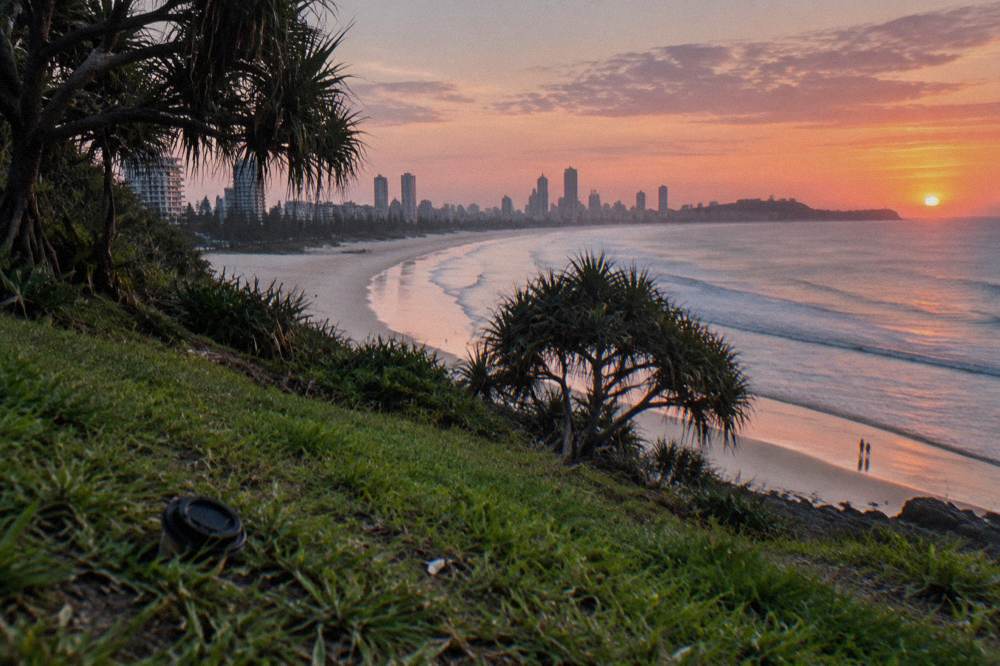
The technique is the same everywhere: go early, before wind chops up the surface and makes distant blows hard to spot, and bring binoculars. The Queensland Government notes that calm mornings are when whales are most visible from shore. The southbound season helps here too, because mothers and calves from August to October travel closer to the coast than the fast-moving adults of June and July, so a shore-based family has a better window later in the season than the peak-numbers logic suggests.
There is also a calendar angle. Humpbacks and Highrises, the volunteer group that runs Queensland's largest marine mammal monitoring program, held a free Whale and Ocean Festival at Justins Park, Burleigh Heads, on 4 July 2026, with stalls, family activities and a guided land-based whale survey from Burleigh Hill. The annual whale census runs in late June, and in 2026 volunteers counted over 500 humpbacks in two hours. A free festival day with whales counted from a hillside is about as kid-friendly as whale education gets. The full list of viewpoints and how to work them is in the guide to free whale watching spots on the Gold Coast.
The trade-off is honesty: from a headland you are a spectator at distance, with no guarantee of a close pass, and no boat can promise one either. Whales are wild, and a quiet morning from Point Danger happens, just as a quiet morning on the Spirit of Gold Coast catamaran can. The difference is that the boat listings carry their own policies for that: Sea World Cruises, Spirit of Gold Coast and Boattime all state sighting guarantees or free return cruises as their own policy, while Kokomo and the Cooly Eco boat trip state none, and the swim trip from Chinderah guarantees a sighting but not a swim. Read the policy, not the marketing. If you're weighing what that honesty costs you, the cheapest ways to watch whales on the Gold Coast lays out how the price climbs from a free headland spot to a seat on a boat.
What Rules Keep Whales And Passengers Safe On A Family Trip?
Queensland rules require boats to stay at least 100 m from a whale and 300 m in front of or behind it, slow to 6 knots inside 300 m, and share no more than three boats in one whale's caution zone. Swimmers must stay 100 m from a whale, drones 100 m, helicopters 500 m, and white whales like Migaloo get 500 m from any boat.
These are worth knowing as a parent for two reasons. First, they explain why the boat does not simply pull up next to the animal: the distance rules are law, not timidity, and the official rules for watching marine mammals, updated 5 March 2026, set those approach distances for every commercial operator in Queensland waters. A child asking why the boat stays back can be told the truth, that the rules protect the whale, and that humpbacks often come to the boat on their own terms anyway.
Second, the rules shape what a family can and cannot book. There is no authorised swim-with-whales tour from the Gold Coast itself: licensed swim operations in Queensland run at Hervey Bay and the Sunshine Coast, and the one swim trip on this roster departs Chinderah on the Tweed River in New South Wales, just south of the border. NSW rules let swimmers enter the water at least 100 m from a whale and then keep 30 m clear, which is how that trip operates. It is a 4-hour trip for a maximum of 9 travellers from $310.26 per person, wetsuits and snorkel gear included, which puts it in the category of a once-in-a-lifetime teenage experience rather than a primary-school outing.
For ordinary boat trips the rules are invisible in the best way. The crew manages them, the whales frequently approach within view on their own, and the family on deck just watches. The federal environment department's humpback page adds the context that makes the whole season possible: the eastern Australian population, once down to a little over 100 individuals when whaling ended in 1963, has recovered to more than 50,000. A child growing up on the Gold Coast today watches a conservation story in progress, and every trip from the Sea World Cruises terminal or Marina Mirage is a seat at the front of it.
Common Questions About Whale Watching With Kids
Is Whale Watching On The Gold Coast Good For Kids?
Yes, for most families. Trips run about 2 to 3 hours, departures are close to shore, and the season runs late May or early June to early November. Family-friendly touches vary by operator: a marine biologist guides the Blue Seafaris trip from Tweed Heads South, and every tour here carries free cancellation, though none includes hotel pickup, so you make your own way to the wharf. Check each listing for age minimums and child pricing, which are not stated.
How Long Is A Gold Coast Whale Watching Cruise?
Boat-based listings run from about 2 hours to 2 hours 50 minutes. The Spirit of Gold Coast trip is about 2 hours 50 minutes, the Sea World Cruises, Kokomo and Boattime trips are about 2.5 hours, and the Sea World Cruises premium listing shows 2.25 to 2.5 hours.
Do Gold Coast Whale Cruises Include Food For Children?
Some do. The Spirit of Gold Coast listing includes coffee or tea, with other food and drinks for sale on board. Sea World Cruises excludes food and drinks, though its bar sells them. The Blue Seafaris small boat also excludes food and drinks, and the Kokomo listing mentions no catering either way. Packing your own snacks is still sensible.
What Happens If We Do Not See A Whale With The Kids On Board?
It depends on the listing. Sea World Cruises, Spirit of Gold Coast and Boattime all state sighting guarantees or a free return cruise as their own policy, and Blue Seafaris offers a free tour on the next available slot if no whales are sighted. Kokomo and the Cooly Eco boat trip state no guarantee. Whales are wild, so no operator can promise a sighting in its own voice.
Are There Age Limits Or Child Prices On Gold Coast Whale Cruises?
Age minimums and child prices are not stated on the listings, so check the live listing or ask the operator before booking. Every listing on this roster offers free cancellation, and the Kokomo cruise specifies free cancellation up to 24 hours ahead, which protects a family booking against sick-day surprises.
Can We Watch Whales With Kids For Free From Shore?
Yes. The tourism board names Point Danger at Coolangatta as its best free spot, plus Burleigh Heads, Miami and Greenmount Point, and local guides report Currumbin, Main Beach and The Spit, Kirra Hill and Snapper Rocks via Point Danger. Go early on a calm morning with binoculars, and note that September and October are the best months to see mothers and calves.