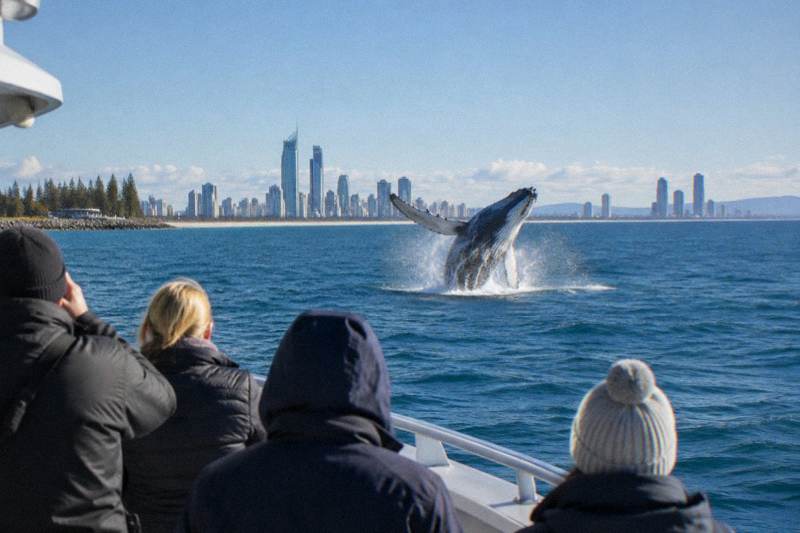
What To Expect On A Gold Coast Whale Cruise
A whale watching cruise on the Gold Coast runs about two and a half hours from a Main Beach or Southport terminal, but the outing itself starts well before the boat leaves the dock. Here is what actually happens, hour by hour, from arrival to disembarking.
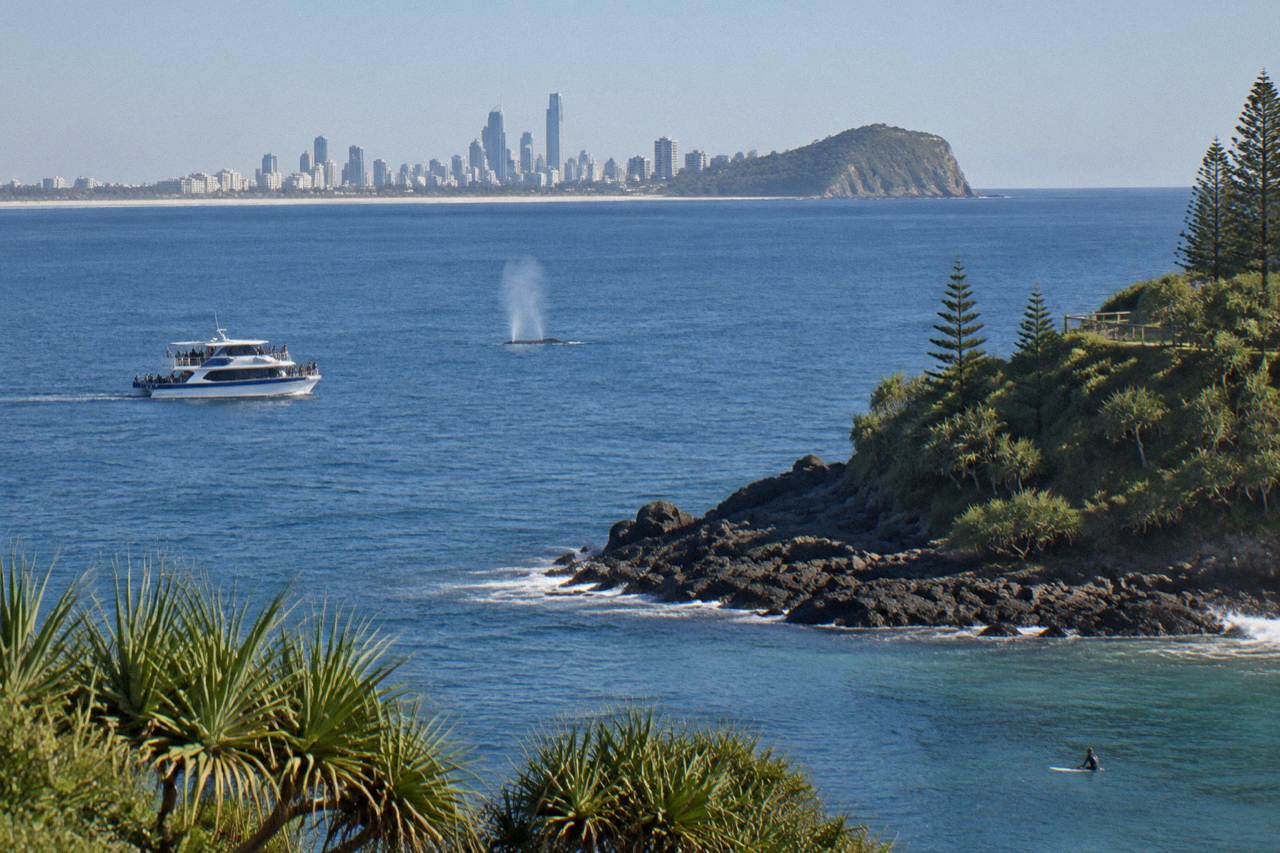
Short answer
A typical Gold Coast whale watching cruise lasts 2.25 to 2.5 hours, with Spirit of Gold Coast running 2 hours 50 minutes and the swim option about 4. Departures are from Main Beach or Southport terminals, and prices sit on the live listing. Crews brief you on safety, position you on deck, and approach whales under Queensland rules that keep boats at least 100 m away. Peak season is July and August.
The first humpbacks of the 2026 season were reported off the Gold Coast Seaway on 2 June 2026, a mother and newborn calf in shallow water, unusually early for a run that normally builds through June. By July and August the northbound migration peaks, and the boats leaving Main Beach and Southport terminals each morning are full of people who booked on the strength of that promise. What those passengers actually get, from the moment they arrive at the terminal to the moment they step back onto the pontoon, is a fairly predictable sequence of events. This guide walks through that sequence as a worked example: arrival, the briefing, deck positions, how the crew handles a whale under Queensland approach rules, what a sighting looks like, and what a quiet day means for your booking.
What Happens On A Whale Watch Cruise From The Gold Coast?
A standard outing runs about two to two and a half hours on the water, plus 30 to 45 minutes either side for check-in, boarding and disembarking. You arrive at a Main Beach or Southport terminal, get a safety briefing, head out through the Seaway, spend roughly 90 minutes among the migrating whales, and come back to the same dock. Most listings on this site follow that same shape, differing in boat size and passenger count.
The shape matters because it sets expectations. The Spirit of Gold Coast trip, a 24 m power catamaran with 360 degree views, runs about 2 hours 50 minutes from Aqua Adventures at 95 Marine Parade, Southport. The Sea World Cruises premium cruise runs about 2.25 to 2.5 hours from the Sea World Cruises Terminal on Seaworld Drive, Main Beach. The Kokomo boat, capped at 47 travellers, runs about 2.5 hours from Marina Mirage. None of these is an all-day expedition; you are back on land before lunch if you take a morning departure.
What fills the time is the migration itself. The east coast humpback population is estimated at more than 50,000 animals, up from about 8,000 in 2006, and a healthy share of them pass the Gold Coast between June and November each year. Young males lead the migration north, pregnant cows and mother-calf pairs trail at the back, which is why September and October deliver the close-in, slow-moving sightings near shore while July and August deliver sheer numbers. The Gold Coast whale watching season guide breaks the months down in detail if you are still choosing a date.
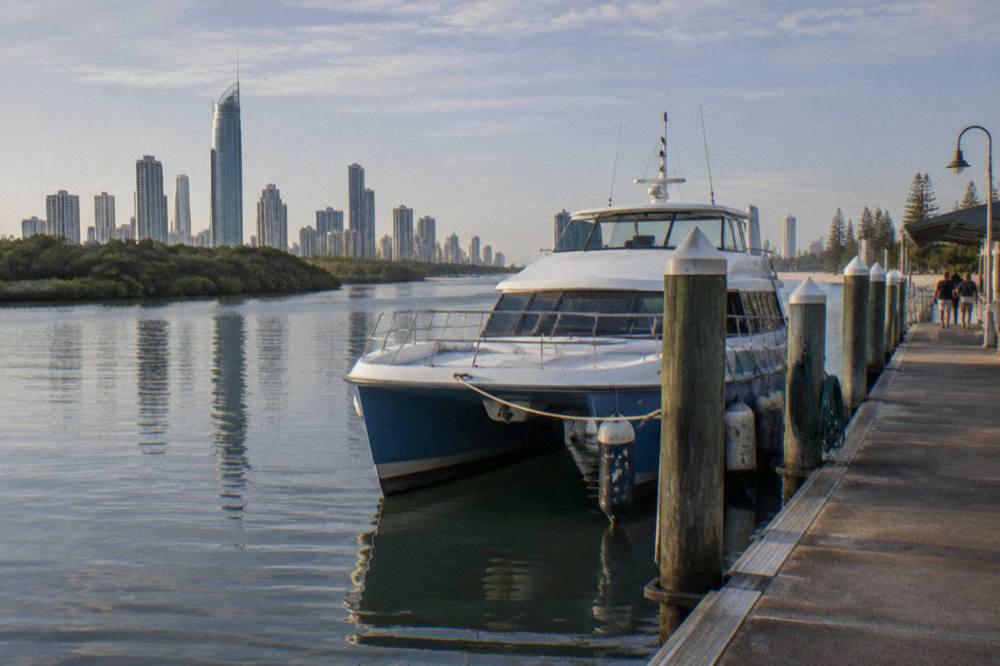
Getting There And Boarding: When To Arrive?
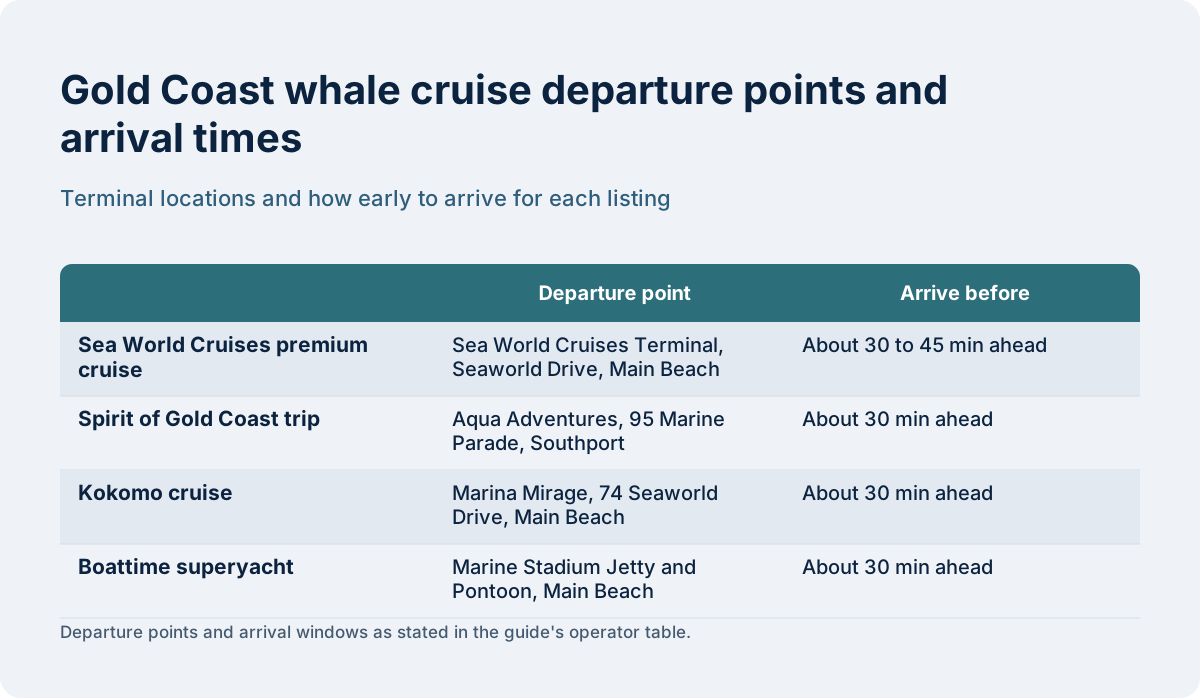
Plan to arrive 30 to 45 minutes before your listed departure. Check-in, boarding and the safety briefing all happen in that window, and late arrivals are not always held for. No listing on this roster includes hotel pickup, so every guest makes their own way to the departure terminal, so most travellers make their own way to the terminal by car, rideshare or the tram.
The terminals cluster on the Main Beach and Southport side of the Gold Coast, near where the Broadwater meets the ocean through the Gold Coast Seaway. The Sea World Cruises terminal sits on Seaworld Drive. Marina Mirage, where the Kokomo boat departs, is at 74 Seaworld Drive, Main Beach. Aqua Adventures, the Spirit of Gold Coast base, is at 95 Marine Parade, Southport. If you are staying in Surfers Paradise or Broadbeach, all three are a short tram or rideshare hop; the where the cruises depart guide maps every terminal against the accommodation strips.
Two listings sit on the other side of the Queensland border. The Blue Seafaris small boat, around 21 guests with a marine biologist, departs Tweed Heads South in New South Wales, from 1A Minjungbal Drive. Food and drinks are not included in the ticket. The Cooly Eco safari-style vessel and the swim trip both depart Chinderah on the Tweed River, also NSW, covering the Coolangatta and Gold Coast waters per their listings. If you are based at the southern end of the coast, those can be closer than Main Beach, but budget for border traffic at peak hour.
Here is the practical boarding picture across the main Gold Coast departures:
| Listing | Departure point | Arrive before | Hotel pickup |
|---|---|---|---|
| Sea World Cruises premium cruise | Sea World Cruises Terminal, Seaworld Drive, Main Beach | About 30 to 45 min ahead | No, hotel pickup not included |
| Spirit of Gold Coast trip | Aqua Adventures, 95 Marine Parade, Southport | About 30 min ahead | No, make your own way |
| Kokomo cruise | Marina Mirage, 74 Seaworld Drive, Main Beach | About 30 min ahead | No |
| Boattime superyacht | Marine Stadium Jetty and Pontoon, Main Beach | About 30 min ahead | No |
Parking is the one variable worth checking the night before. Marina Mirage and the Sea World precinct have paid parking that fills on winter weekends, and the Southport marine parade side mixes metered street spots with private lots. The tram stops near both precincts, and the is a cruise worth it blog post weighs the car-versus-tram question against the ticket price.
The Briefing And Deck Positions: Where Should You Stand?
After check-in the crew runs a short safety briefing covering life jacket locations, rail rules and where to move if the boat manoeuvres, then passengers spread across the decks. On a twin-deck catamaran the lower deck sits closer to the water and gives eye-level views, while the upper deck gives a wider horizon for spotting blows. On smaller boats the choice mostly disappears, everyone is within a few steps of the rail.
Deck position is worth a little thought because whales surface where they surface, and a boat under power will swing to keep the animal in view. The which side of the boat is best question gets asked constantly, and the honest answer is that the crew rotates the vessel rather than the passengers rotating around the vessel. A 360 degree boat like the Spirit of Gold Coast catamaran makes the whole debate mostly moot. What actually matters is staying mobile: the person planted in one deck chair for two hours sees less than the person who moves to whichever rail the whale is nearest.
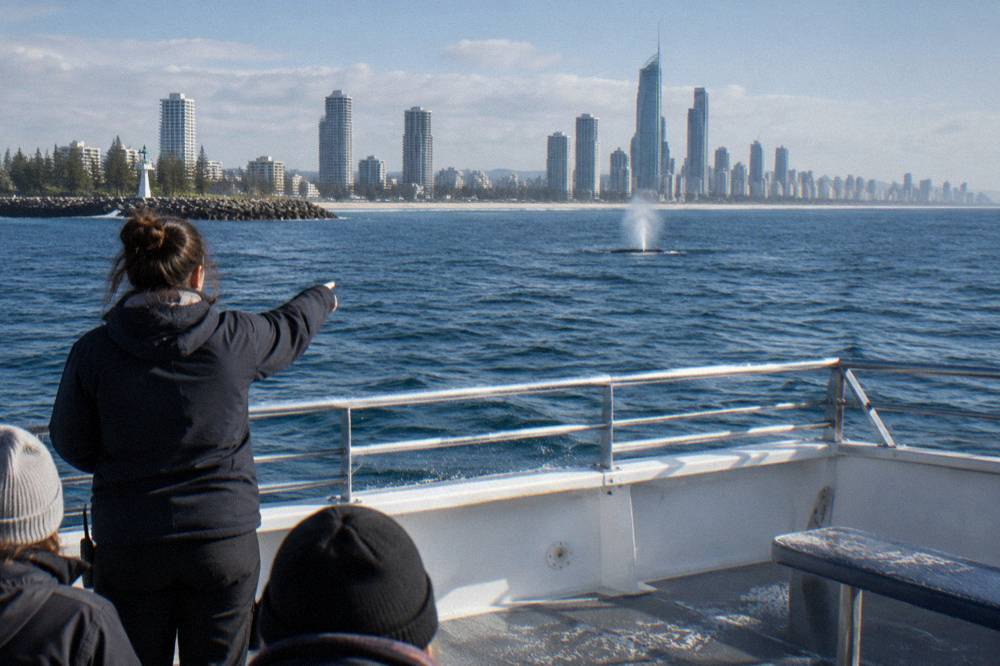
The briefing also covers the rules passengers are expected to follow, and those come from Queensland law rather than the operator's preference. Drones are not permitted within 100 m of a whale, helicopters 500 m, and no one may enter the water within 100 m of one. On a boat trip this mostly reduces to: no leaning out over the rail for a selfie, follow crew instructions when the engines change, and keep children within arm's reach near the rails. The Queensland Government's rules for watching marine mammals page is the primary source for all of it.
A quick reference for what each deck position buys you:
| Position | Best for | Trade-off |
|---|---|---|
| Lower deck, bow side | Eye-level views of close passes, spray, surface activity | More motion in swell, wetter in wind |
| Lower deck, stern | Calmer ride, sheltered from spray | Whale often behind the boat during approaches |
| Upper deck | Spotting blows on the horizon, photography | Further from the water, more wind |
| Cabin or lounge | Rest breaks, kids needing downtime | Obstructed views, you will miss sightings |
The Spirit of Gold Coast listing is the one to look at if deck mobility matters to you, since its 24 m power catamaran offers 360 degree views from multiple levels and a marine biologist guide narrating throughout. Check availability on the operator's live listing before you settle on a departure time, because morning slots fill first in peak season.
How The Crew Approaches A Whale Under Queensland Rules?
Queensland rules keep boats at least 100 m from a whale, and 300 m in front of or behind it, with speed dropped to 6 knots inside the 300 m caution zone. No more than three boats may share one whale's caution zone, and if a whale enters the 100 m no-approach zone the crew cuts or disengages the engines and lets it pass. The boats you ride on are working inside those limits all trip.
This is the part of the cruise most passengers never notice, and it is worth understanding because it explains why the boat behaves the way it does. When a spotter calls a blow, the skipper does not charge at the whale. The boat closes to inside the caution zone at reduced speed, stops or holds station at a legal distance, and waits. Humpbacks are curious animals and frequently approach the vessel themselves, which is legal and is how the famous close encounters happen: the whale comes to the boat, not the boat to the whale. The do whales come close to the boat post covers what guests report from those approaches.
The distances are set out in the Nature Conservation (Animals) Regulation 2020, and the state summarises them plainly: a no-approach zone of 100 m surrounding the animal extending 300 m ahead and behind, a caution zone out to 300 m with a 6 knot speed cap, and a three-boat limit in the caution zone. One special case matters here: predominantly white whales, the Migaloo class of animals, carry a 500 m boat exclusion and a 610 m aircraft one. Migaloo has only unconfirmed 2026 reports off NSW, so no Gold Coast trip should be sold on the idea of him.
For the NSW-based trips in this roster, the Blue Seafaris and Cooly Eco boats, the equivalent NSW rules apply: a vessel may move no closer than 100 m to a whale, and a swimmer enters the water at least 100 m away then keeps 30 m clear. The NSW Environment page on approach distances for whales and dolphins is the primary source for those figures.
| Zone or rule | Queensland | NSW |
|---|---|---|
| Boat distance from a whale | 100 m, plus 300 m ahead and behind | 100 m |
| Caution zone speed | 6 knots inside 300 m | Similar 100 m vessel limit |
| Boats per caution zone | Maximum of three | Vessel-specific rules |
| Person in the water | Not within 100 m of a whale | Enter at 100 m, then keep 30 m clear |
| White whales | 500 m for boats | 500 m always |
What Does A Sighting Actually Look Like?
A sighting usually starts with a blow: a tall, bushy exhale of vapour visible from hundreds of metres away, often before the crew announces it. Then the whale surfaces in a slow roll, dives with a fluke raise if it is going deep, and the pattern repeats every few minutes. Breaching, tail slapping and pectoral fin slapping happen through the season, and mothers with calves in September and October travel slower and closer to shore.
The rhythm surprises first-timers. A humpback is not on screen continuously; it surfaces for a handful of breaths, then sounds for five, ten, sometimes twenty minutes. A good crew tracks the dive time and repositions for where the animal is likely to resurface, and the on-board commentary, from a marine biologist on the Spirit of Gold Coast trip or the Blue Seafaris boat, or a marine naturalist on the Cooly Eco safari vessel, turns the waiting into education: what the pod is doing, why the calf stays on the mother's dorsal side, what the spy-hop means. The full index of guides sits on Whale Watching On The Gold Coast.
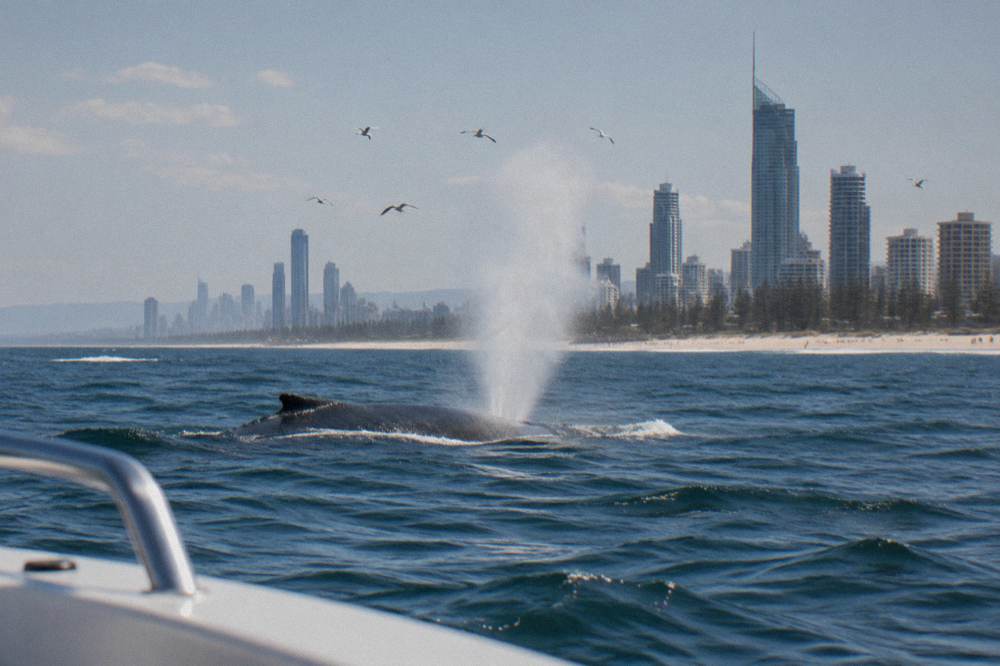
What you are most likely to see, roughly in order of frequency:
| Behaviour | What it looks like | When it is common |
|---|---|---|
| Blow and surface roll | Vapour plume, then back and dorsal fin | Every sighting |
| Fluke-up dive | Tail raised vertically as the whale sounds | Between feeding or travelling stops |
| Pectoral fin slap | Long white fin lifted and slapped on the surface | Through the season |
| Tail slap | Repeated tail lobbing, audible at distance | Often near calves |
| Breach | Full body clear of the water | Unpredictable, unforgettable |
| Mother and calf pair | Calf staying close to the mother's flank | September and October |
Cruises also report the supporting cast: dolphins riding the bow, turtles on the surface, and seabirds working wherever the whales are feeding. The humpback whales of the Gold Coast guide goes deeper on the species itself, including the entanglement rescues that Sea World Foundation teams performed off Currumbin in September 2026, when a roughly 10 m humpback was freed from shark nets around its head and blowhole.
What Does A Quiet Day Mean For Your Cruise?
A quiet day means the boat returns without a confirmed sighting, and what happens next depends on the listing. Four listings on this roster state a sighting guarantee or a free return: Sea World Cruises offers a free return cruise, Spirit of Gold Coast guarantees a humpback sighting from June to November or a complimentary second cruise, Boattime states a 100 per cent sightings guarantee, and Blue Seafaris offers a free tour on the next available slot.
Kokomo and the Cooly Eco boat trip state no guarantee, and that distinction is the single most important small print on the site. Whales are wild animals in open ocean, and no honest page will promise you one. What the guarantee listings do is cap your downside: you pay once and, if the day goes quiet, you go out again. The what happens if you do not see a whale post works through each policy in full.
For the swim trip the distinction is even sharper, and the listing states it plainly: a whale sighting is guaranteed, a swim is not. The animal decides whether to linger near the swimmers, and the crew's permits, NSW rules and the whale's behaviour all govern what actually happens in the water. That trip, run by Cooly Eco Adventures from Chinderah on the Tweed River in New South Wales, is the only swim product on this roster, and it is not a Gold Coast departure. Licensed Queensland swim operations run from Hervey Bay and the Sunshine Coast, per the state's own tourism and regulation pages.
Every listing on this roster carries free cancellation on the platform listing, most up to 24 hours ahead. Weather cancellations are handled by the operator: Sea World Cruises' terms offer a choice to proceed, reschedule or take a full refund if conditions are unsafe, with operator cancellations notified by SMS at least two hours ahead, and Spirit of Gold Coast's terms provide a reschedule or a full refund when it cannot reschedule, requested within 14 days. The sea conditions guide covers the rough-weather question in detail.
Commentary, Food And Comfort On Board
Most Gold Coast listings include live commentary, and the strongest versions come from the marine biologist guides named on the Spirit of Gold Coast and Blue Seafaris listings and the marine naturalist on the Cooly Eco safari boat. Food ranges from nothing included on the Kokomo boat to morning tea on Spirit, a light refreshment on the Boattime superyacht, and nothing included on Blue Seafaris. Dress in layers and take the seasickness question seriously.
The commentary is not decoration. A biologist who can read a pod's behaviour will tell you when a calf is about to surface, why a competitive group is jostling, and when the dive interval signals a deep feed. On the Spirit of Gold Coast trip the listing names a marine biologist guide explicitly, and the boat carries lower and upper decks so you can move between the biologist's announcements and your own rail spot. The Sea World Cruises vessel, the Spirit of Migaloo II per the operator's own site, adds an underwater camera and hydrophone, so on some passes you hear the whale as well as see it.
Food and comfort, listing by listing:
| Listing | Rating and reviews | Food included | Comfort notes |
|---|---|---|---|
| Sea World Cruises premium cruise | 4.6 from 655 reviews | Food and drinks sold at the on-board bar, not included | Purpose-built vessel, multiple decks |
| Spirit of Gold Coast | 4.6 from 920 reviews | Morning tea included, food and drinks to buy | 24 m catamaran, 360 degree views |
| Kokomo cruise | 4.9 from 381 reviews | Not stated as included | 47-guest cap, smaller boat |
| Boattime superyacht | 3.7 from 138 reviews | Light morning or afternoon tea and snacks on arrival | Luxury yacht with a marine biologist |
| Blue Seafaris small boat | 4.9 from 48 reviews | Food and drinks not included | Around 21 guests, Tweed Heads South departure |
On seasickness: general advice stays general. Eat lightly beforehand, sit mid-boat where motion is least, keep your eyes on a steady horizon, and take medication before boarding if you know you are prone, because it works better as prevention than cure. No listing on this roster prints a seasickness policy, so check the listing for anything specific. The will I get seasick post covers the rest.
Winter Gold Coast mornings are cooler than the summer brochures suggest, and the Bureau of Meteorology's winter 2026 outlook pointed to above-average temperatures with below-average rainfall, but a 20 knot afternoon sea breeze still feels cold on a moving deck at 10 knots. Layers, a windproof jacket and a beanie are the standard kit. The Gold Coast in winter guide handles the clothing question month by month.
Coming Back: The Return Leg And Disembarking
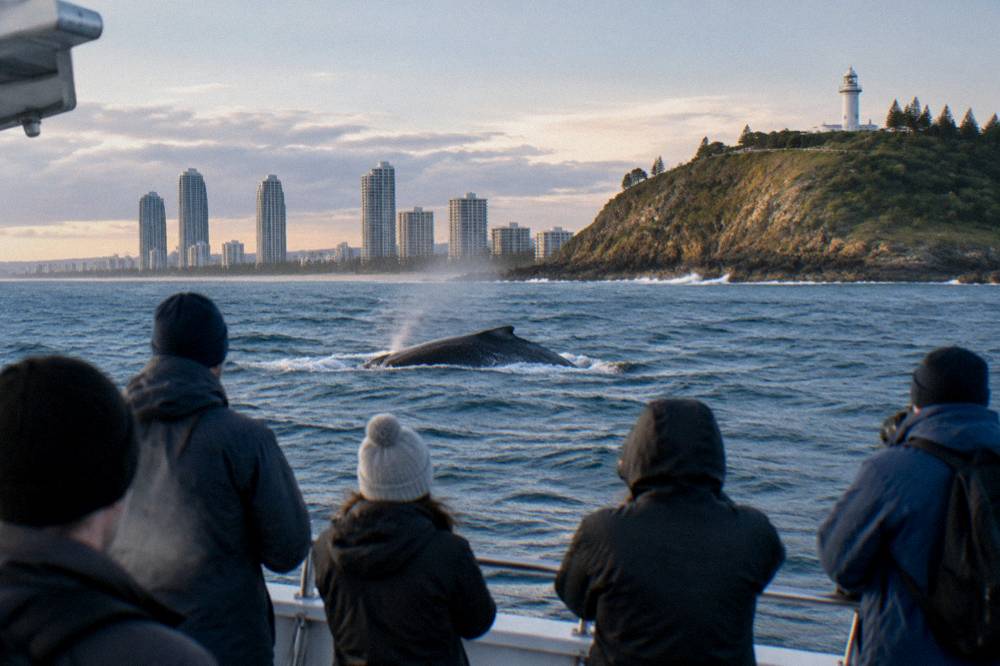
The return leg runs about 20 to 30 minutes from the whale grounds back through the Seaway to the terminal, and it is when most of the photography review happens. Disembarking is by deck order, usually within 10 minutes of docking, and the whole outing lands at roughly three hours door to door from terminal arrival. If your listing carries a free return policy and the day was quiet, that is the moment to book the repeat.
The geography explains the timing. The whale grounds sit a short run offshore from the Seaway, which is why the Gold Coast runs some of the shortest transit times of any whale watching port in Australia: the how long is the cruise post puts the typical on-water time at about two to two and a half hours against Hervey Bay's longer format. Twenty minutes offshore, an hour and a half among the whales, twenty minutes home. That shorter format also tends to keep ticket prices friendlier, and the guide to current Gold Coast whale watching deals and discounts shows where the best savings are right now.
Two practical notes for the dock. First, the Gold Coast Seaway is a designated coastal bar, and Maritime Safety Queensland warns conditions can change quickly, worst on an ebb tide with large swell or strong wind; the crew's go and no-go decision is made on that basis, not on sunshine. Second, if you parked at Marina Mirage or the Sea World precinct, allow time for the exit queue on a busy Saturday, which is the real reason a 30 minute buffer on arrival is worth mirroring at departure.
The Boattime superyacht listing is the one to compare here if comfort on the return matters as much as the whales: a luxury yacht with a marine biologist, from $52 per person, the cheapest listed price on the roster, though it also carries the lowest rating at 3.7 from 138 reviews, which is worth weighing honestly. Every listing offers free cancellation, so a weather doubt does not have to become a sunk cost.
The Sea World Cruises premium cruise is the listing that pairs the sighting guarantee with the most on-board infrastructure: food and drinks on board, and the Spirit of Migaloo II vessel per the operator's site. No hotel pickup here or on any of the seven tours, so you make your own way to the departure point."Likely to sell out" flag in peak weeks. Book the morning departure if you want the calmest water, which the Queensland Government itself notes is the best spotting window, before the wind picks up.
Common Questions About A Gold Coast Whale Cruise
How Long Is A Gold Coast Whale Watching Cruise?
About two to two and a half hours on the water, plus 30 to 45 minutes for check-in and boarding. The Spirit of Gold Coast trip runs about 2 hours 50 minutes, the Sea World Cruises premium cruise about 2.25 to 2.5 hours, and the Kokomo and Blue Seafaris boats about 2.5 hours each.
Do Gold Coast Whale Cruises Guarantee A Sighting?
Four listings state a guarantee or free return: Sea World Cruises a free return cruise, Spirit of Gold Coast a humpback sighting from June to November or a complimentary second cruise, Boattime a 100 per cent sightings guarantee, and Blue Seafaris a free tour on the next available slot. Kokomo and the Cooly Eco boat trip state no guarantee. Whales are wild, so treat every guarantee as the listing's policy, not a promise of nature.
What Should I Wear On A Whale Watching Cruise?
Layers, a windproof jacket and flat shoes with grip. Winter mornings on a moving deck run cool even when the forecast is mild, and spray is common on the lower deck. A hat that will not blow off, sunglasses and sunscreen complete the kit.
Can I Get Seasick On A Two Hour Cruise?
Yes, easily. Eat lightly beforehand, sit mid-boat where motion is least, keep a steady horizon in view, and take any medication before boarding rather than after symptoms start. No listing on this roster prints a seasickness policy, so check the listing for specifics.
Is Whale Watching On The Gold Coast Good For Kids?
The shorter two to two and a half hour format suits families better than longer formats elsewhere, and the twin-deck boats give restless children room to move. Age policies are not printed on these listings, so check the listing for the trip you want. The is it good for kids post covers the question in full.
What Is The Cheapest Way To Watch Whales On The Gold Coast?
Boat-based watching starts from $52 per person on this roster, and free shore-based viewing is available from the lookouts the tourism board names: Point Danger at Coolangatta, its pick for best free spot, plus Burleigh Heads including Tumgun Lookout, Miami and Greenmount Point. Binoculars and calm early mornings make the land option work.
The worked example above is the shape of nearly every departure on this roster. For a deeper comparison of the boats themselves, the best cruise comparison guide ranks all seven listings by rating, price and format, and the tours compared guide puts them side by side in a single table.
The Kokomo cruise, 4.9 from 381 reviews and from $62.19 per person, is the small-format Gold Coast option if the 47-guest cap appeals more than a large catamaran. It departs Marina Mirage, carries free cancellation up to 24 hours ahead, and states no sighting guarantee, so weigh that against the guarantee listings when you choose.
Whether the outing you take is the Spirit of Gold Coast biologist trip, the Sea World Cruises premium cruise, the Kokomo boat, the Boattime superyacht or one of the Tweed-side small boats, the sequence above is what waits at the dock: arrive early, listen to the briefing, stand where you can move, respect the 100 m rules the crew is working to, and take the quiet days as the price of watching wild animals rather than a show. That is whale watching on the Gold Coast, honestly described.