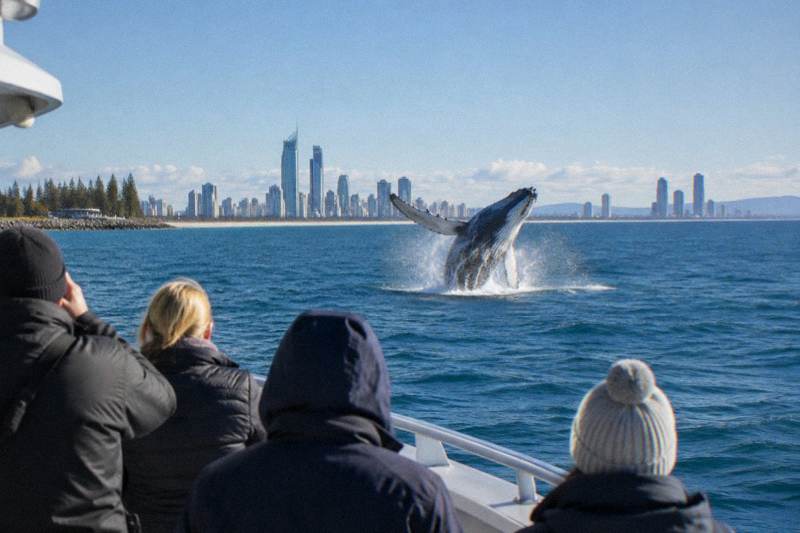
How Long Is A Gold Coast Whale Cruise?
Gold Coast whale watching cruises run about 2.25 to 2.5 hours, with one 2 hour 50 minute trip and a four hour swim option. Here is how each listing's duration stacks up and how to plan your day around it.
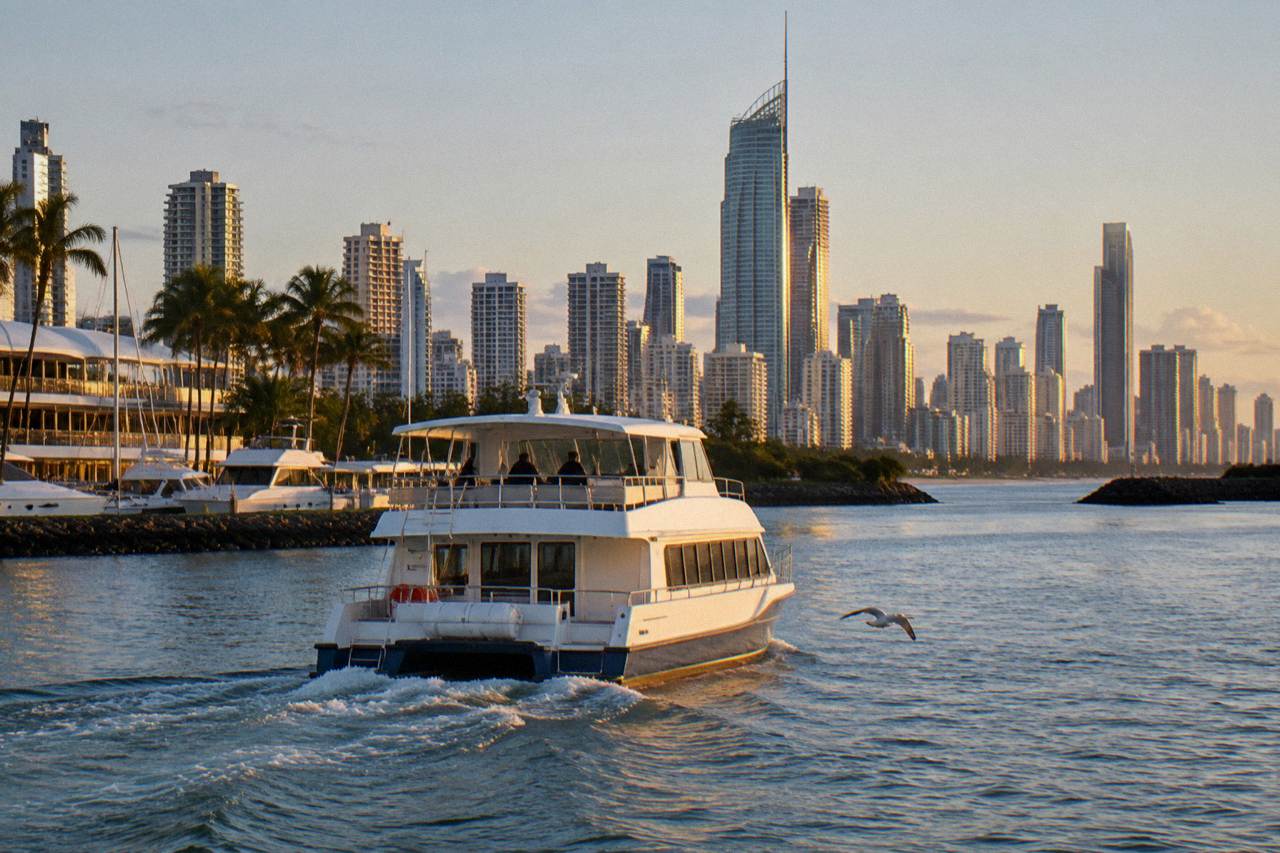
How Long Is A Gold Coast Whale Cruise?
A typical Gold Coast whale watching cruise lasts about 2.25 to 2.5 hours on the water. The Sea World Cruises premium trip runs about 2.25 to 2.5 hours, the Kokomo and Boattime cruises about 2.5 hours, and the Spirit of Gold Coast trip 2 hours 50 minutes. The only longer option is the swim trip from Chinderah, at about 4 hours. However long you decide to spend on the water, popular departures can fill up quickly, so read up on whether you need to book Gold Coast whale watching ahead of time before you settle on a date.
Those numbers come straight from the live listings, and they hold up well against the tourism board's own guidance, which describes a typical tour length of 2 to 3 hours on this coast. So if you are blocking out time in a holiday itinerary, the honest planning figure for a standard cruise is roughly half a morning or half an afternoon: about two and a half hours of sailing, plus whatever it takes to get to the wharf and back.
The variation between listings is real, though, and it comes from three things. Faster purpose-built vessels, such as the Sea World Cruises catamaran and the smaller Kokomo boat, spend less time in transit and more of their two and a half hours in the whale zone. The Spirit of Gold Coast power catamaran takes a slightly longer window, 2 hours 50 minutes, which the listing pairs with a marine biologist guide and both lower and upper decks. And the two small-boat operators on the Tweed side of the border, Blue Seafaris and Cooly Eco Adventures, both list about 2.5 hours for their trips out of Tweed Heads South and Chinderah.
There is a useful way to think about the spread. The shortest window on the roster, about 2.25 hours, and the longest standard window, 2 hours 50 minutes, differ by roughly half an hour, which is less than the time most travellers spend deciding where to have lunch afterwards. The bigger differences in your day come from where the boat leaves from, not the printed duration, and no cruise here includes hotel pickup, so you make your own way to the wharf. Hotel pickup is not included on any of the seven listings, so getting to the departure point, whether that is Main Beach or Coolangatta, is on you, and that leg of the trip can cost more time than any difference in cruise duration.
If you want the full picture of what each trip includes alongside its duration, the what to expect on a Gold Coast whale cruise guide breaks down the on-board experience deck by deck. For choosing between the boats themselves, start with the trio below.
| Listing | Duration on the water | Departure point | From (per person) |
|---|---|---|---|
| Sea World Cruises premium cruise | About 2.25 to 2.5 hours | Sea World Cruises Terminal, Main Beach | $55 |
| Kokomo whale watching cruise | About 2.5 hours | Marina Mirage, Main Beach | $62.19 |
| Spirit of Gold Coast whale watch | 2 hours 50 minutes | Aqua Adventures, Southport | $52.30 |
| Boattime superyacht cruise | About 2.5 hours | Marine Stadium Jetty, Main Beach | $52 |
| Blue Seafaris small-boat trip | About 2.5 hours | Tweed Heads South, NSW | $87 |
| Cooly Eco safari-style trip | About 2.5 hours | Chinderah, NSW | $105.31 |
| Cooly Eco swim with whales | About 4 hours | Chinderah, NSW | $310.26 |
One nuance worth flagging: the swim trip is the outlier, and it is not a Gold Coast departure. It runs from Chinderah on the Tweed River in New South Wales, just south of the Queensland border, and no authorised swim-with-whales tour departs the Gold Coast itself. Licensed swim operations in Queensland sit at Hervey Bay and the Sunshine Coast. If you're weighing Hervey Bay against the Sunshine Coast for your trip, our comparison of Queensland's whale watching regions covers season length, swim tours and travel time from Brisbane.
A practical point on timing your day: the Sea World Cruises Terminal at Main Beach, Marina Mirage, and Marine Stadium Jetty are all in the Main Beach area, while the Spirit of Gold Coast departure point sits at Aqua Adventures in Southport. That means three of the four Gold Coast departures share a broadly similar corner of the coast, which can matter if you are comparing the $52 Boattime yacht cruise, the Kokomo cruise, and the Sea World Cruises premium trip against one another. If you are staying near Surfers Paradise or Southport, the Spirit of Gold Coast trip at $52.30 per person may be the shortest transfer of the standard options.
For the Tweed-based operators, remember that Blue Seafaris departs Tweed Heads South at $87 per person and Cooly Eco Adventures departs Chinderah at $105.31 for the safari-style trip and $310.26 for the swim. Those NSW departures sit just south of the Queensland border, so travellers based on the southern Gold Coast may find the drive shorter than expected, while anyone staying in Southport or Main Beach should factor a longer transfer into the half-day block. The swim trip's 4-hour window also means budgeting closer to a full morning or full afternoon, not the half-day figure that covers the standard cruises.
How Much Of The Trip Is Actually Spent Near Whales?
On a 2.5 hour Gold Coast cruise, the transit to the whale grounds takes a meaningful bite out of the total. The Sea World Cruises listing places its whale watch about twenty minutes cruise offshore, so a large share of the trip is spent with the engines running. Boats must also obey approach rules: 100 metres from a whale, slowing to 6 knots within 300 metres.
That regulatory detail matters more than most travellers realise. Under the Queensland rules for watching marine mammals, a boat cannot enter a whale's caution zone if three boats are already present, and inside 300 metres it must slow to 6 knots. The practical effect is that the final approach to a pod is slow and deliberate, and operators build that slowness into their schedules. A trip that lists 2.5 hours is not 2.5 hours of full-speed running; it is transit out, a slow and careful period with the whales, and transit home.
The Gold Coast Seaway adds its own time pressure. It is a designated coastal bar where conditions can change quickly, worst on an ebb tide with large swell or strong wind, according to Maritime Safety Queensland. The Main Beach and Southport operators all cross it, and skippers time the crossing rather than rushing it. On a calm morning this costs minutes; on a lively day it can shape the whole route.
This is also where the smaller boats earn their keep. The Kokomo boat, capped at 47 travellers, is built for closer, faster positioning, and the Cooly Eco safari vessel from Chinderah seats just 12 at eye level. Neither makes the whales appear faster, but both spend less of their window shuffling a big crowd around the deck.
What Time Of Day Do Cruises Depart?
Gold Coast whale cruises run daily through the season, generally from late May or early June to early November, with multiple departures across the day. The Queensland Government notes calm mornings, before the wind picks up, as the best spotting conditions, so the first departure of the day is often the steadiest on the water.
Morning trips have two practical advantages. The wind is usually lighter, which means a smoother crossing of the Seaway bar and better surface conditions for spotting blows at a distance. And a morning departure finishes by late morning, leaving the whole afternoon free. Sea World Cruises runs multiple daily departures in season, and the Spirit of Gold Coast trip, with its 2 hours 50 minute window, slots into a morning or an early afternoon equally well.
Afternoon departures are not a consolation prize. Humpbacks are active through the middle of the day, and an afternoon cruise pairs naturally with a relaxed morning. The trade-off is the sea breeze, which on the Gold Coast typically builds through the day; if steady conditions matter to you, the morning or afternoon comparison works through the choice in detail.
Booking windows deserve a mention too. Peak season is July and August, with mothers and calves most reported in September and October, and the two listings carrying a "Likely to sell out" badge, Sea World Cruises and the Blue Seafaris small boat, genuinely do fill. If you are locked to one date, book ahead; if your dates flex, a midweek departure gives you the widest choice of time slots.
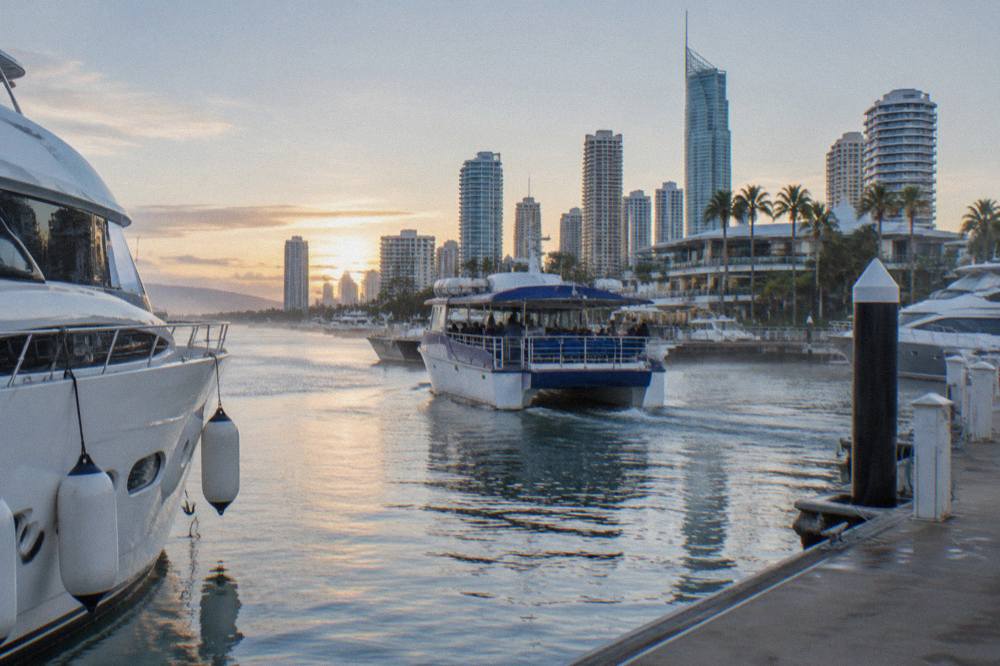
How Early Should You Arrive At The Wharf?
Check-in times vary by operator, and the honest advice is to read the listing's own check-in rule before you travel, because only some operators state one. As a planning figure, treat the wharf arrival as adding 30 to 45 minutes to the listed cruise duration, plus travel time from your accommodation.
The operators that do publish timing rules are explicit about them. Sea World Cruises asks passengers to flag expected rough seas at check-in, and its terms say operator cancellations are notified by SMS at least two hours ahead. Spirit of Gold Coast's terms cover weather cancellations with a reschedule or a full refund when a reschedule is not possible. Neither is a check-in deadline in the strict sense, but both tell you the crew is actively managing the clock before anyone boards.
Two practical points about the departure points themselves. The four Gold Coast cruises leave from Main Beach and Southport, all within a short drive of Surfers Paradise. None of the listings includes hotel pickup, so plan to make your own way to the departure point. If you are staying further afield without a car, a departure point close to your accommodation saves more time than any difference in cruise duration.
The Tweed-side boats need extra schedule margin. Blue Seafaris departs Tweed Heads South and Cooly Eco departs Chinderah on the Tweed River, both in New South Wales, and both list about 2.5 hours on the water. From central Gold Coast allow a 30 to 40 minute drive south, plus check-in, so the door-to-door commitment is closer to four hours even though the cruise itself is the standard length.
What Does The Four-Hour Swim Trip Involve?
The swim with whales trip runs about 4 hours, roughly double a standard cruise, and departs Chinderah on the Tweed River in New South Wales, not the Gold Coast. It takes a maximum of 9 travellers, includes wetsuits, snorkel gear and spray jackets, and the listing states a whale sighting is guaranteed but a swim is not. Because a swim depends on whales being present and active near the boat, timing matters even more than on a standard cruise, and our month by month guide to whale season on Australia's east coast shows which part of the migration suits this kind of trip.
That last distinction is the whole risk profile of the trip. Whales are wild animals and no operator can promise in-water time; the listing's own wording guarantees the sighting, not the swim. The extra hour and a half over a standard cruise exists to give the crew room to find a pod whose behaviour permits a safe, permitted encounter. In NSW waters the rules require swimmers to enter the water at least 100 metres from a whale and then keep 30 metres clear, per the NSW approach distance rules, so the encounter happens on the whales' terms.
For most visitors the four-hour swim trip and the 2.5 hour cruises answer different questions rather than competing. The cruises suit families, tight schedules and first-timers; the swim suits confident snorkellers who accept that the in-water portion depends on the day. The full trade-off, including the fact that no authorised swim tour departs the Gold Coast itself, is laid out in the swim with whales guide.
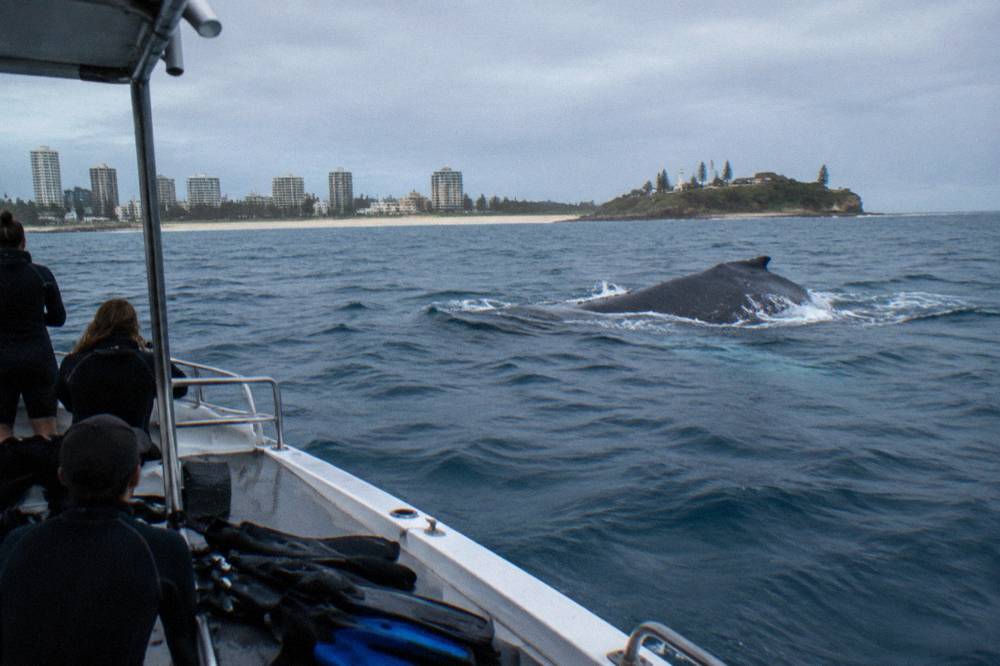
How Does Cruise Length Fit The Whale Season?
Cruise length does not change with the calendar, but what fills those 2.5 hours does. June and July bring the northbound adults and juveniles, July and August are the peak for numbers, and August to October brings mothers and newborns southbound, travelling slower and closer to shore.
The season itself ran late May or early June to early November in 2026, and the first humpbacks of that year were reported off the Gold Coast Seaway on 2 June 2026, a mother and newborn calf noted as a very early sighting. By late season the boats are working closer to the coast, which can shorten the transit leg of a cruise, though no operator publishes a split between travel time and whale time, and none should be assumed.
The length of daylight is the quiet variable. In June a morning cruise departs in genuine winter low light; by October the same departure happens in bright spring sunshine. Neither changes the listed duration, but both change what you pack, and the Gold Coast winter and whale season weather guide covers the practical side of both months.
How To Fit A Cruise Into A Gold Coast Day
Treat a standard whale cruise as a half-day commitment: about 2.5 hours on the water, plus 30 to 45 minutes at the wharf, plus travel. A morning departure from Main Beach or Southport fits comfortably before lunch, and an afternoon departure leaves the morning free for the beach.
The sample day plans below are planning ranges, not operator schedules; departure times vary by operator and by day, so confirm the slot on the live listing when you book.
| Day plan | On-water time | Door-to-door block | Best paired with |
|---|---|---|---|
| Morning cruise from Main Beach | About 2.25 to 2.5 hours | 3.5 to 4 hours | Beach afternoon, Burleigh Heads headland walk |
| Morning Spirit of Gold Coast trip | 2 hours 50 minutes | About 4 hours | Southport Broadwater lunch after |
| Afternoon cruise from Marina Mirage | About 2.5 hours | 3.5 to 4 hours | Relaxed morning, early lunch before boarding |
| Small-boat trip from Tweed Heads South | About 2.5 hours | 4.5 to 5 hours with travel | Coolangatta and Point Danger either side |
| Swim trip from Chinderah | About 4 hours | 5.5 to 6 hours with travel | Nothing else ambitious that day |
Two families of travellers tend to misjudge the block. Cruise-ship passengers on a port day should pick the shortest transit: a Main Beach or Southport departure keeps the door-to-door time tight. No cruise on this page includes hotel pickup, so allow extra time to make your own way to the berth. Families with young children usually do better on the morning slot, when the sea is calmest and nobody is tired.
The other misjudge is the opposite: treating a whale cruise as a whole-day expedition and over-scheduling around it. Two and a half hours on the water is a substantial morning, but it is not exhausting, and whether a whale watching cruise is worth it usually comes down to what you do with the rest of the day rather than the cruise itself.
A final note on pairing the cruise with the free shore lookouts. The tourism board names Point Danger at Coolangatta, Burleigh Heads, Miami and Greenmount Point as free vantage points, and a morning cruise plus an afternoon on a headland gives you two very different whale watching experiences inside one day without doubling the cost. Binoculars help from shore, and calm early mornings are the best conditions there too, so the same logic that favours a morning cruise favours a morning lookout run.
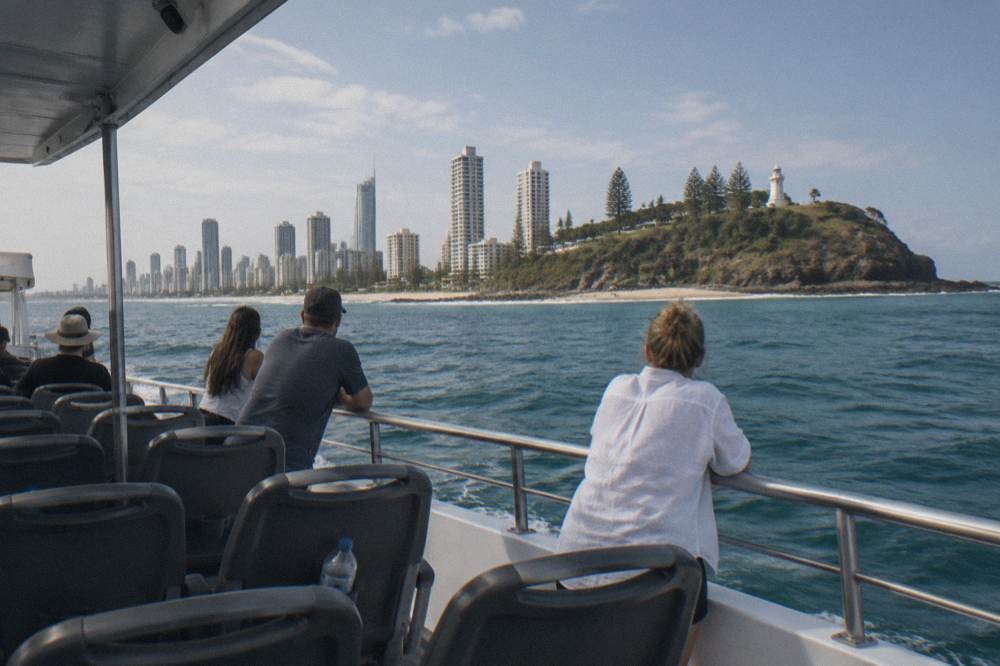
Whichever duration you land on, the same three listings cover most travellers' needs, and every one of them can be checked against the live schedule before you commit a day of the holiday to it. The site's own Whale Watching On The Gold Coast comparison keeps the full roster side by side.
Common Questions About Whale Watching Cruise Length On The Gold Coast
How Long Is A Gold Coast Whale Watching Cruise?
Most Gold Coast whale watching cruises run about 2.25 to 2.5 hours on the water. The Spirit of Gold Coast trip is the longest standard cruise at 2 hours 50 minutes, and the swim with whales trip from Chinderah in New South Wales runs about 4 hours.
How Long Should I Allow For The Whole Experience?
Plan for a half-day block: the cruise itself, plus 30 to 45 minutes at the wharf, plus travel from your accommodation. If you are driving to the Tweed-side departures at Tweed Heads South or Chinderah, allow 30 to 40 minutes of driving each way from central Gold Coast.
Do Longer Cruises See More Whales?
Not necessarily. Duration mostly reflects boat speed, departure point and how much time the crew keeps in reserve for the slow, regulated approach to a pod. The longer Spirit of Gold Coast window pairs with a marine biologist guide rather than a promise of more whale time.
Are There Morning And Afternoon Departures?
Yes. Operators including Sea World Cruises run multiple daily departures through the season, which generally runs late May or early June to early November. The Queensland Government notes calm mornings, before the wind picks up, as the best conditions for spotting whales.
Is The Four-Hour Swim Trip A Gold Coast Cruise?
No. The swim with whales trip departs Chinderah on the Tweed River in New South Wales, just south of the Queensland border. No authorised swim-with-whales tour departs the Gold Coast itself; licensed Queensland swim operations are at Hervey Bay and the Sunshine Coast.
What Happens If The Cruise Runs Short On Time?
Every listing on this roster offers free cancellation, and operator weather cancellations carry a reschedule or a refund under the operators' own terms. If no whales are sighted, the policies differ by listing: Sea World Cruises, Spirit of Gold Coast and Boattime state sighting guarantees or free return cruises, while the Kokomo and Cooly boat trips state no guarantee.